For many foreigners, working at a Japanese company is both exciting and intimidating.
Japan is famous for its:
- Discipline
- Efficiency
- Respect
- Attention to detail
- Strong work ethic
But daily life inside a Japanese office can feel very different from workplaces in North America, Europe, or other parts of Asia.
From strict punctuality to workplace hierarchy and after-work drinking parties, Japanese company culture has developed its own unique customs over decades.
So what is it actually like to work at a Japanese company?
The answer depends on the company, industry, and generation—but several cultural patterns remain surprisingly common.
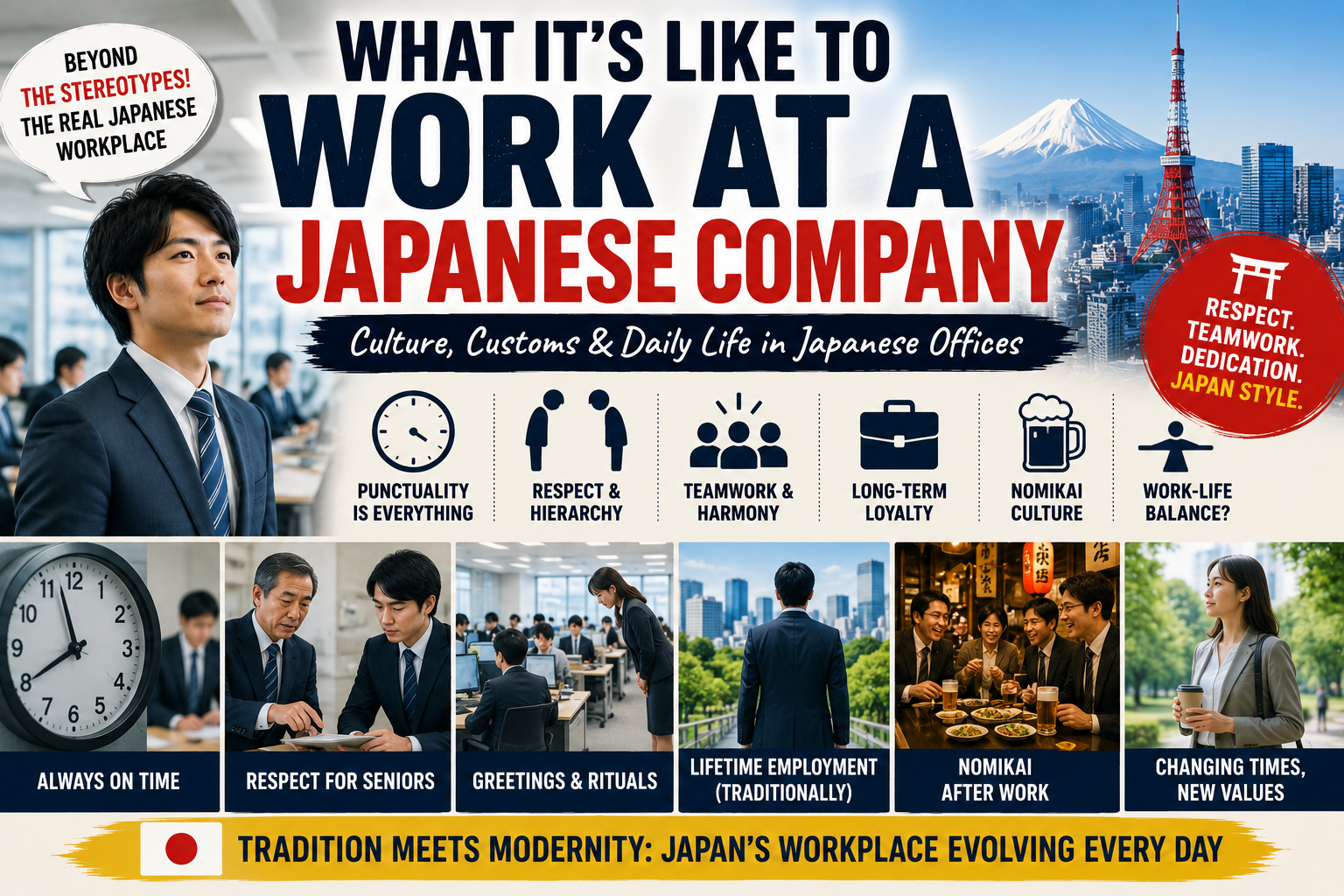
Punctuality Is Extremely Important
One of the first things foreigners notice is how seriously Japanese companies treat punctuality.
In many workplaces:
- Arriving exactly on time is considered late.
- Employees often arrive 10–30 minutes early.
- Meetings usually begin precisely on schedule.
- Deadlines are taken very seriously.
Being late may be viewed as:
- Unprofessional
- Disrespectful
- A sign of poor preparation
This emphasis on punctuality reflects broader Japanese cultural values of respect and responsibility.
Hierarchy Plays a Major Role
Japanese companies traditionally operate using clear hierarchies.
Factors that often determine workplace status include:
- Age
- Years of service
- Job title
- Position within the company
Employees are generally expected to show respect toward senior colleagues and supervisors.
This often includes:
- Using formal language (keigo)
- Following workplace etiquette
- Deferring to senior employees
- Respecting established procedures
For foreigners from more egalitarian cultures, adapting to workplace hierarchy can sometimes be challenging.
Greetings and Workplace Rituals Matter
Japanese offices often have routines that may surprise foreign workers.
For example, employees commonly greet coworkers by saying:
“Ohayō gozaimasu” (Good morning)
throughout the office when they arrive.
Other workplace customs may include:
- Morning meetings
- Team briefings
- Company announcements
- Group exercises
- Radio calisthenics (rajio taisō)
Although some traditional practices are becoming less common, they still exist in many workplaces.
These rituals help strengthen group identity and workplace cohesion.
Teamwork Often Comes Before Individual Achievement
Japanese workplace culture traditionally emphasizes:
- Cooperation
- Consensus
- Group harmony
As a result, decision-making may take longer than in some Western companies.
Employees often:
- Consult multiple departments
- Seek approval from managers
- Build consensus before acting
- Avoid making unilateral decisions
This process can sometimes feel slow.
However, supporters argue that it reduces conflict and promotes long-term stability.
Long-Term Loyalty Has Historically Been Important
For many decades, Japanese companies operated under the concept of lifetime employment (shūshin koyō).
Workers were expected to:
- Remain with one company for many years
- Demonstrate loyalty
- Prioritize company interests
- Build long-term relationships
Although this system has weakened significantly, some aspects of this culture still remain.
Many companies continue to value:
- Commitment
- Stability
- Long-term employment relationships
However, younger workers increasingly prioritize flexibility and career mobility.
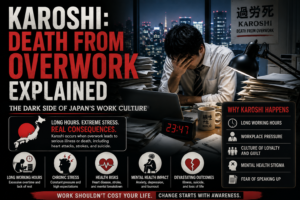
Overtime Can Still Be Common
Japan’s long-hours work culture remains one of its most famous characteristics.
In some workplaces, employees may:
- Stay after official working hours
- Attend evening meetings
- Work overtime regularly
- Feel pressure to leave with their coworkers
The reasons vary and may include:
- Workplace culture
- Labor shortages
- Group expectations
- Heavy workloads
Fortunately, attitudes toward overtime have begun changing in recent years.
Many companies now actively promote better work-life balance.
Nomikai: Drinking With Coworkers
One of the most famous aspects of Japanese office culture is the nomikai (飲み会).
A nomikai is an after-work social gathering, usually held at:
- Izakaya pubs
- Restaurants
- Karaoke venues
The purpose is to:
- Build relationships
- Improve communication
- Strengthen team bonds
For some employees, nomikai can be enjoyable.
For others, they can feel like an unofficial extension of the workday.
Fortunately, younger generations increasingly feel comfortable declining these events.
Vacation and Work-Life Balance Are Changing
Japan has long been known for poor work-life balance.
Historically, many workers avoided using their paid vacation because of:
- Workplace pressure
- Feelings of guilt
- Concern about burdening coworkers
However, recent reforms have encouraged:
- Taking paid leave
- Remote work
- Flexible schedules
- Better mental health support
Younger workers also place greater importance on:
- Family life
- Personal time
- Hobbies
- Mental well-being
As a result, Japanese work culture is slowly evolving.
Working at a Japanese Company Depends on the Company
One common misunderstanding is that all Japanese companies operate the same way.
In reality, experiences vary dramatically depending on:
- Industry
- Company size
- Management style
- Region
- International exposure
For example:
Traditional companies may emphasize:
- Hierarchy
- Long working hours
- Formal procedures
- Group consensus
International or modern companies may emphasize:
- Flexibility
- Performance
- Remote work
- Work-life balance
There is no single “Japanese company experience.”
Why Are Foreigners Fascinated by Japanese Work Culture?
Japanese workplace culture attracts global attention because it combines:
- Discipline
- Loyalty
- Respect
- Group harmony
- Tradition
At the same time, it also raises questions about:
- Overtime
- Mental health
- Individual freedom
- Work-life balance
- Workplace pressure
Understanding Japanese companies provides valuable insight into Japanese society itself.
FAQ
Are Japanese companies really strict?
Some are, especially traditional companies. However, many modern companies have become more flexible.
Do Japanese workers really work long hours?
In some industries, yes. However, average working hours have decreased compared to previous generations.
What is a nomikai?
A nomikai is an after-work social gathering with coworkers, usually involving food and drinks.
Is hierarchy important in Japanese companies?
Yes. Respect for seniority and workplace hierarchy remains an important part of many Japanese companies.
Is working at a Japanese company difficult for foreigners?
It can be challenging due to language barriers and cultural differences, but many foreigners also find it rewarding.