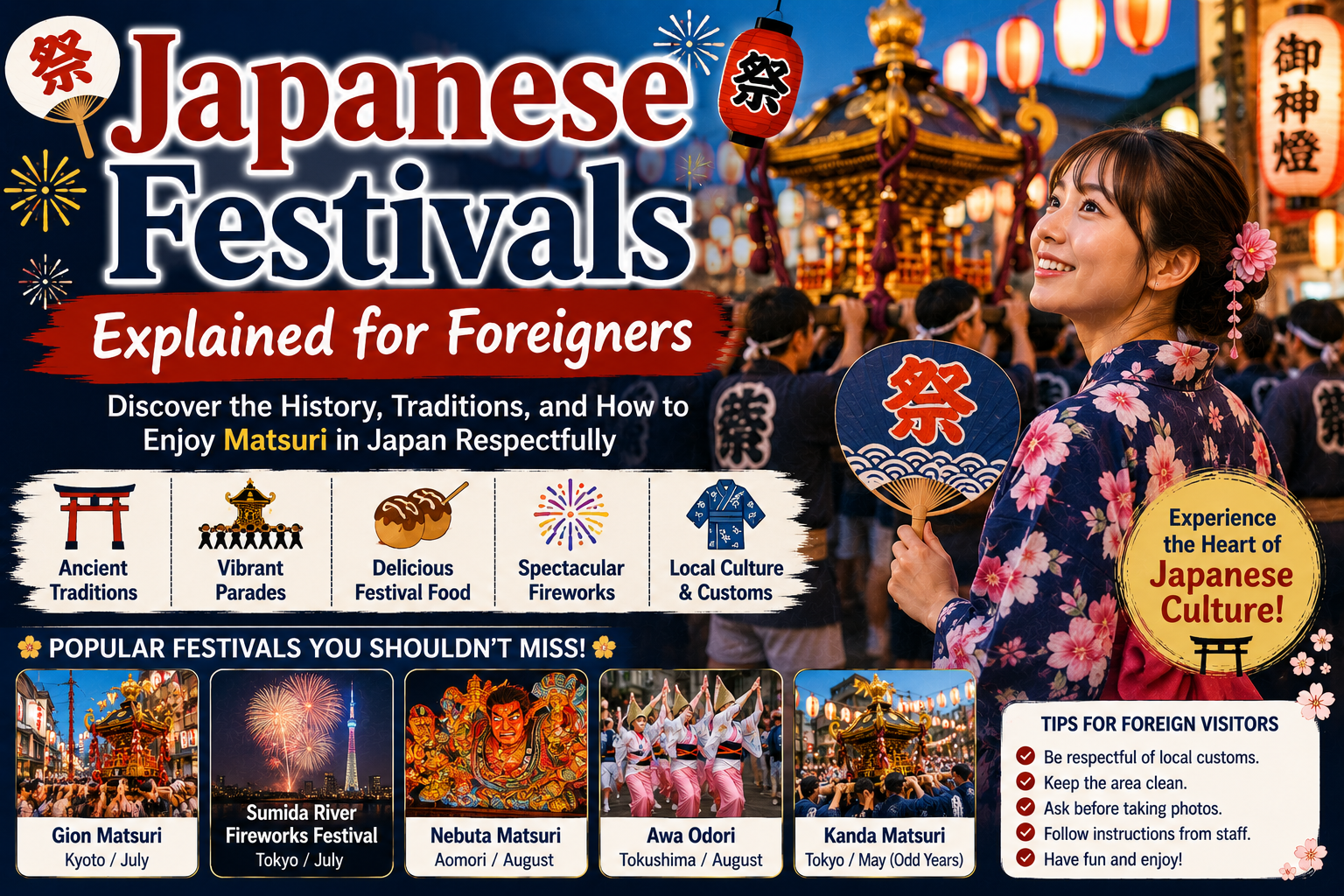
If you visit Japan during festival season, you’ll quickly discover that Japanese festivals are unlike anything else in the world.
You’ll see:
- People wearing traditional yukata.
- Giant floats moving through crowded streets.
- Portable shrines carried by shouting participants.
- Spectacular fireworks displays.
- Food stalls serving delicious local specialties.
These events, known as matsuri (祭り), are among the most exciting and memorable experiences Japan has to offer.
But what exactly are Japanese festivals? Why are they so important? And how can foreign visitors enjoy them respectfully?
In this guide, we’ll explain everything you need to know about Japanese festivals.
What Is a Japanese Festival (Matsuri)?
A Japanese festival, or matsuri, is a traditional celebration that often combines:
- Religion
- Community
- History
- Seasonal events
- Entertainment
Many festivals have been celebrated for hundreds or even thousands of years.
Traditionally, festivals were held to:
- Pray for good harvests
- Honor local gods and spirits
- Protect communities
- Celebrate seasonal changes
- Strengthen social bonds
Today, matsuri continue to play an important role in Japanese culture and community life.
The Religious Origins of Japanese Festivals
Most Japanese festivals originated from:
Shinto
Shinto, Japan’s indigenous religion, places great importance on:
- Nature
- Purification
- Local deities (kami)
- Seasonal rituals
Many festivals are still organized by local shrines.
Buddhism
Some festivals also have Buddhist origins and commemorate:
- Ancestors
- Historical events
- Religious traditions
Over time, religious ceremonies evolved into large public celebrations enjoyed by everyone.
Why Are Festivals So Important in Japan?
Japanese festivals serve several important social functions.
They help:
- Preserve local traditions
- Strengthen community identity
- Connect generations
- Celebrate history
- Create social harmony
For many Japanese people, annual festivals are deeply connected to childhood memories, family traditions, and local pride.
What Happens at a Japanese Festival?
Every festival is different, but common elements include:
Mikoshi (Portable Shrines)
Participants carry portable shrines through the streets while chanting and cheering.
Traditionally, this allows local deities to temporarily travel through the community.
Festival Floats
Some festivals feature enormous decorated floats weighing several tons.
These floats often display:
- Historical scenes
- Religious imagery
- Traditional craftsmanship
Traditional Performances
Visitors may enjoy:
- Taiko drumming
- Traditional dancing
- Folk music
- Religious ceremonies
- Parades
Food Stalls (Yatai)
Food is one of the highlights of any matsuri.
Popular festival foods include:
- Takoyaki
- Yakisoba
- Okonomiyaki
- Grilled squid
- Kakigori (shaved ice)
- Candied fruit
For many visitors, trying festival food becomes one of the best memories of their trip.
The Most Famous Japanese Festivals
Japan hosts hundreds of thousands of festivals every year.
Here are some of the most famous:
Gion Matsuri (Kyoto)
Held every July, Gion Matsuri is one of Japan’s oldest and most famous festivals.
Highlights include:
- Giant decorative floats
- Traditional costumes
- Historic ceremonies
Kanda Matsuri (Tokyo)
One of Tokyo’s most important festivals, Kanda Matsuri features:
- Portable shrines
- Parades
- Traditional performances
Nebuta Matsuri (Aomori)
Known for its enormous illuminated floats, Nebuta Matsuri is one of Japan’s most visually spectacular festivals.
Awa Odori (Tokushima)
This famous dance festival invites everyone to participate.
Its unofficial philosophy is:
“If you’re dancing, you’re a fool. If you’re watching, you’re also a fool. So you might as well dance.”
Sumida River Fireworks Festival (Tokyo)
One of Japan’s most famous fireworks festivals attracts hundreds of thousands of visitors every summer.
Why Do People Wear Yukata?
Many Japanese people wear:
Yukata (浴衣)
during summer festivals.
A yukata is a lightweight traditional garment often worn for:
- Festivals
- Fireworks displays
- Summer celebrations
Wearing a yukata helps create the festive atmosphere and allows participants to experience traditional Japanese culture.
Foreign visitors are generally welcome to wear yukata as well.
Japanese Festival Etiquette for Foreign Visitors
Most festivals are open and welcoming to tourists.
However, visitors should follow some basic etiquette:
Respect Religious Areas
Some parts of festivals involve sacred rituals and ceremonies.
Observe quietly and follow local instructions.
Dispose of Trash Properly
Japanese festivals can become crowded, so disposing of waste responsibly is important.
Ask Before Taking Close-Up Photos
Some participants, performers, and religious ceremonies may prefer not to be photographed.
Follow Crowd Instructions
Large festivals often attract hundreds of thousands of visitors.
Following staff instructions helps ensure safety.
Are Japanese Festivals Only Traditional?
No.
Modern Japan also hosts many contemporary festivals, including:
- Anime festivals
- Music festivals
- Food festivals
- Illumination festivals
- Cultural events
However, traditional matsuri remain among the most beloved events in Japanese society.
Why Do Japanese Festivals Feel So Different?
Many visitors notice that Japanese festivals combine:
- Celebration
- Religion
- Community
- History
- Entertainment
Unlike some festivals that focus mainly on spectators, Japanese matsuri often encourage active participation and community involvement.
This creates a unique atmosphere that many travelers remember for years.
What Japanese Festivals Reveal About Japanese Culture
Japanese festivals reflect many of Japan’s most important values:
- Community
- Tradition
- Cooperation
- Respect
- Spirituality
- Celebration of the seasons
A matsuri is more than just a festival.
It is a way for communities to remember their history, strengthen their relationships, and celebrate what connects them.
For many foreign visitors, attending a Japanese festival becomes one of the most unforgettable experiences of visiting Japan.
FAQ
What does “matsuri” mean?
Matsuri is the Japanese word for a festival or traditional celebration.
Are Japanese festivals religious?
Many originated from Shinto or Buddhist traditions, although many are now largely cultural events.
Can tourists participate in Japanese festivals?
Yes. Most festivals welcome foreign visitors and encourage participation.
What should I wear to a Japanese festival?
Comfortable clothing is fine, but wearing a yukata can enhance the experience.
When is the best time to experience Japanese festivals?
Summer (July and August) features many of Japan’s largest and most famous festivals.