Many foreigners visiting Japan notice something about personal space:
Japanese people often keep more physical and emotional distance than people in many Western countries.
You may notice that Japanese people:
- Rarely hug.
- Avoid touching strangers.
- Stand farther apart during conversations.
- Keep quiet on public transportation.
- Respect each other’s privacy.
This often leads visitors to ask:
Why do Japanese people value personal space so much?
The answer involves history, culture, social harmony, communication styles, and respect for others.
In this article, we’ll explore how personal space works in Japan and what it reveals about Japanese society.
What Is Personal Space in Japan?
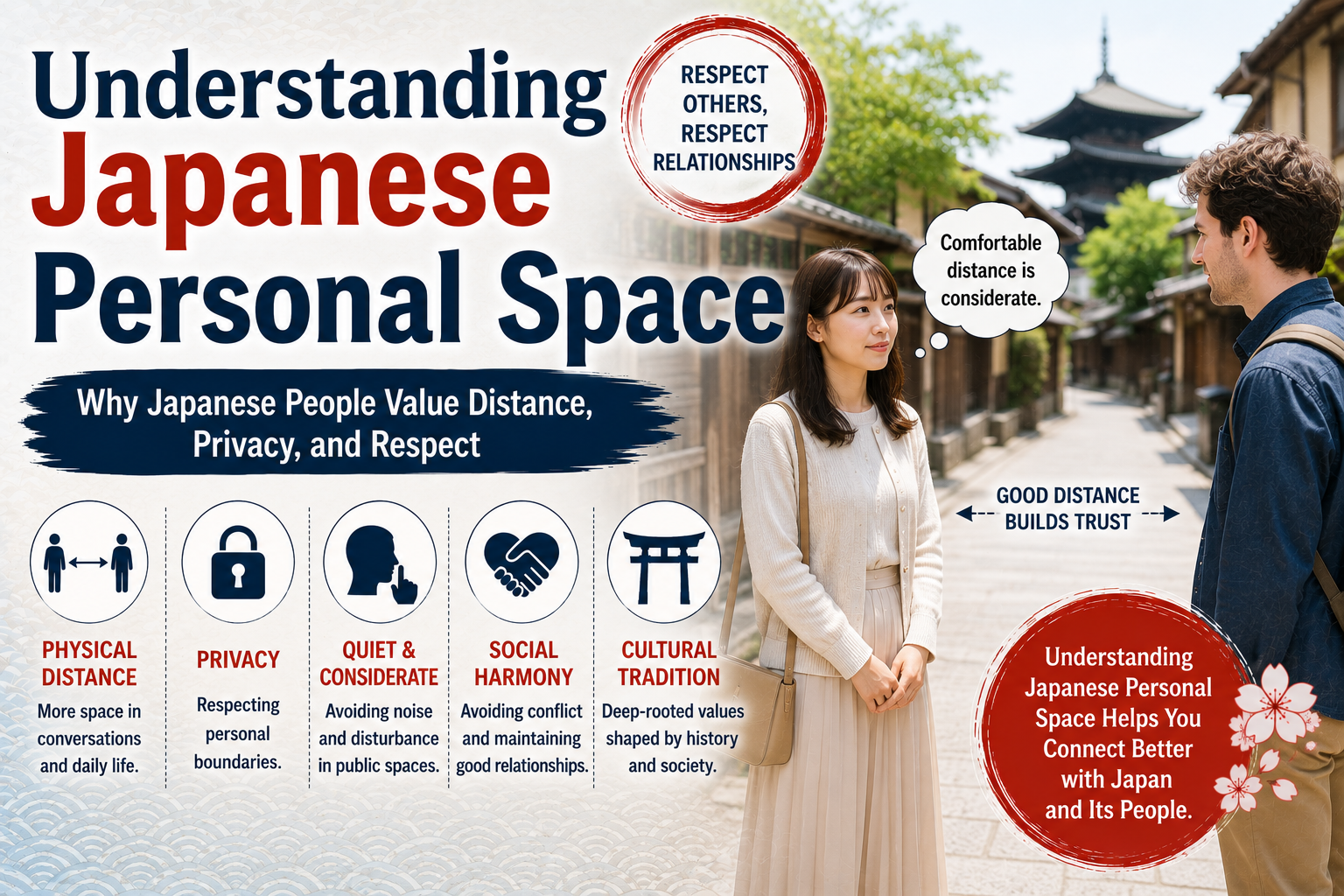
Personal space refers to the physical and emotional distance people maintain between themselves and others.
In Japan, personal space often includes:
- Physical distance
- Emotional boundaries
- Privacy
- Social roles
- Respectful behavior
Unlike some cultures where closeness and physical touch demonstrate friendliness, Japanese culture often expresses respect by maintaining appropriate distance.
Do Japanese People Prefer More Personal Space?
Generally speaking, yes.
Many Japanese people feel comfortable maintaining greater personal distance than people from countries where:
- Hugging is common
- Touching during conversation is normal
- Emotional expression is more direct
This doesn’t mean Japanese people are unfriendly.
Rather, maintaining distance is often considered:
- Respectful
- Polite
- Considerate
- Socially appropriate
Why Don’t Japanese People Hug Very Often?
One of the biggest surprises for many foreigners is that hugging is relatively uncommon in Japan.
Traditionally, Japanese greetings involve:
- Bowing
- Verbal greetings
- Facial expressions
rather than:
- Hugs
- Kisses
- Physical affection
Several factors contribute to this:
Respect for Personal Boundaries
Physical contact can feel overly intimate or intrusive, especially with people who are not close friends or family.
Cultural Tradition
Historically, Japanese social customs emphasized formality and emotional restraint.
Social Harmony
Maintaining comfortable distance helps avoid making others feel uncomfortable.
This doesn’t mean Japanese people lack affection—it is simply expressed differently.
Emotional Personal Space Is Also Important
Personal space in Japan isn’t only physical.
Japanese people often maintain emotional boundaries as well.
For example:
- Personal problems may remain private.
- Feelings may not be openly expressed.
- Conflict may be avoided.
- Opinions may be communicated indirectly.
This behavior is closely connected to concepts such as:
- Wa (harmony)
- Tatemae (public behavior)
- Honne (true feelings)
Maintaining emotional distance can help preserve social relationships.
Why Are Japanese Trains So Quiet?
One of the most noticeable examples of Japanese personal space is public transportation.
Despite crowded trains, passengers often:
- Avoid conversation
- Wear headphones
- Avoid eye contact
- Keep their voices low
- Respect others’ privacy
The unspoken rule is simple:
Don’t invade someone else’s personal space unnecessarily.
Even in physically crowded environments, Japanese people often try to preserve psychological space.
Why Don’t Japanese People Make Eye Contact?
Foreign visitors sometimes feel that Japanese people avoid eye contact.
In many cases, this is true.
However, in Japanese culture, prolonged eye contact can sometimes feel:
- Aggressive
- Confrontational
- Intimidating
- Overly intimate
Instead, Japanese communication often emphasizes:
- Listening carefully
- Reading context
- Observing body language
- Showing modesty
This communication style prioritizes comfort over directness.
Personal Space in Japanese Friendships
Japanese friendships often develop more slowly than friendships in some Western cultures.
People may:
- Spend considerable time building trust.
- Avoid asking overly personal questions.
- Respect emotional boundaries.
- Gradually become closer over time.
Once strong trust develops, however, friendships can become extremely loyal and long-lasting.
Personal Space in Japanese Dating
Personal space also affects romantic relationships.
For example:
- Public displays of affection are less common.
- Physical intimacy often develops gradually.
- Couples may communicate affection indirectly.
- Emotional expression can be subtle.
Foreigners sometimes misinterpret this as lack of interest.
In reality, affection is often expressed through:
- Actions
- Consideration
- Reliability
- Shared experiences
rather than constant verbal or physical affection.
Why Do Japanese People Value Privacy So Much?
Privacy is highly valued in Japanese society.
Examples include:
- Avoiding personal questions
- Respecting quiet spaces
- Maintaining boundaries
- Protecting family matters
- Limiting public emotional displays
Many Japanese people consider respecting another person’s privacy to be a form of politeness.
Does Personal Space Mean Japanese People Are Cold?
Absolutely not.
This is one of the most common misunderstandings foreigners have about Japan.
Japanese people often express warmth through:
- Thoughtfulness
- Reliability
- Hospitality
- Acts of kindness
- Consideration
Rather than:
- Physical affection
- Emotional displays
- Frequent compliments
The expression of care simply looks different.
Is Japanese Personal Space Changing?
Yes, to some extent.
Younger generations are increasingly influenced by:
- Globalization
- Social media
- International travel
- Foreign entertainment
As a result, younger Japanese people may be more comfortable with:
- Hugging friends
- Open emotional expression
- Direct communication
However, traditional attitudes toward personal space remain strong in many areas of Japanese society.
What Japanese Personal Space Reveals About Japanese Culture
The Japanese approach to personal space reflects several important cultural values:
- Respect
- Consideration
- Harmony
- Privacy
- Emotional self-control
- Social responsibility
What may appear distant or cold to foreigners is often intended as a sign of respect and politeness.
Understanding Japanese personal space helps visitors better understand how relationships, communication, and social harmony function in Japan.
FAQ
Do Japanese people dislike physical contact?
Not necessarily. Physical contact is generally reserved for close relationships.
Why don’t Japanese people hug?
Traditional greetings emphasize bowing and respecting personal boundaries rather than physical contact.
Are Japanese people emotionally distant?
Japanese people often express emotions more subtly, but this doesn’t mean they lack emotional depth.
Why are Japanese trains so quiet?
Passengers generally try to respect others’ personal space and avoid causing inconvenience.
Are younger Japanese people becoming more physically affectionate?
Some younger people are adopting more international communication styles, but traditional norms remain influential.