If you’ve ever visited Japan, you may have noticed something surprising: Japanese people give a gift all the time.
They bring souvenirs back from vacations. They exchange seasonal gifts. They give presents to coworkers, clients, friends, and family members. Even small acts of kindness are often accompanied by gifts.
For many foreigners, Japanese gift culture can seem incredibly complex.
Why do Japanese people place so much importance on gift giving?
The answer lies in some of Japan’s most important cultural values: respect, gratitude, reciprocity, and social harmony.
In this guide, we’ll explain how Japanese gift giving works, why it’s so important, and what every visitor should know.
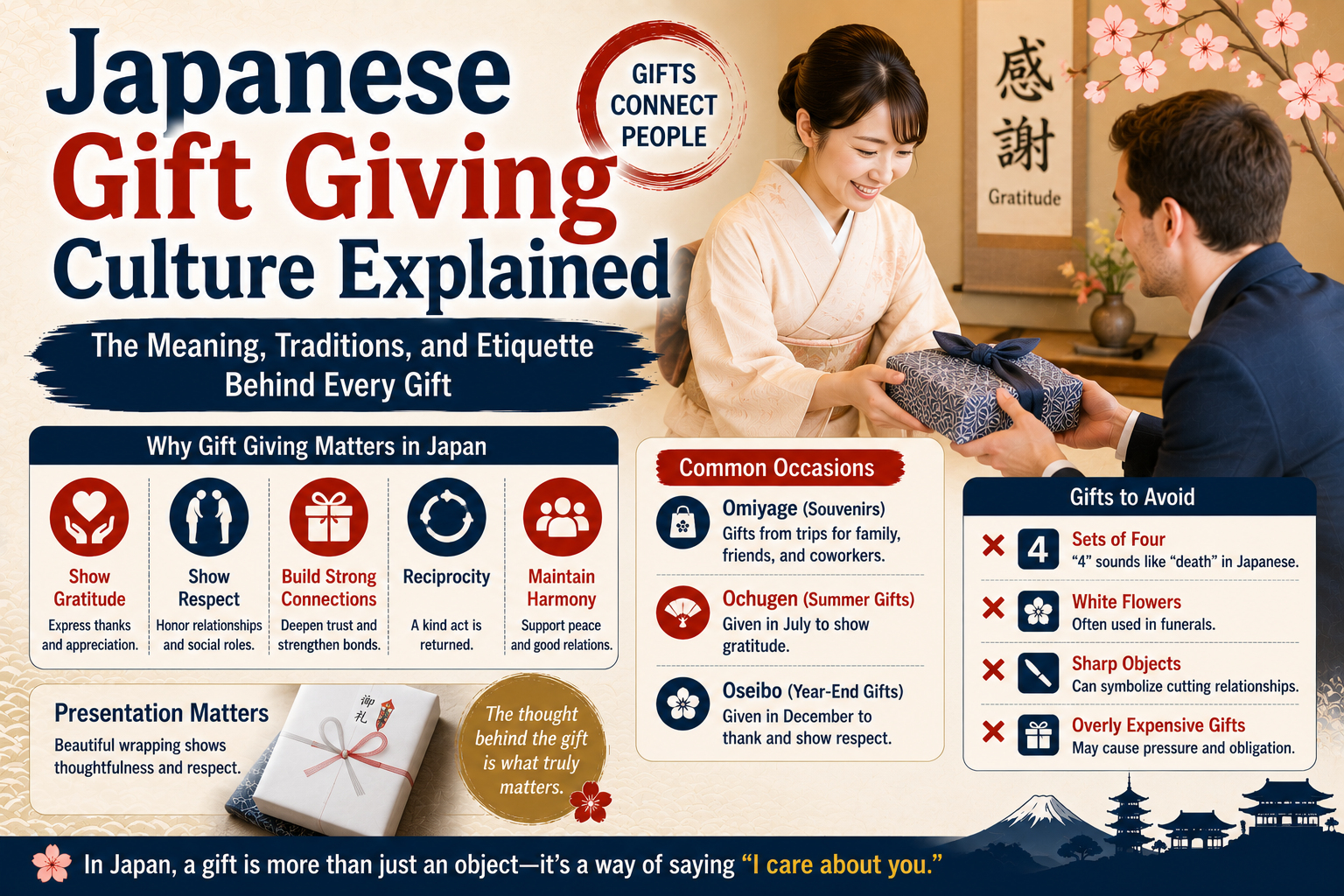
Why Is Gift Giving So Important in Japan?
In Japan, gifts are not simply objects.
They serve as a way to express:
- Gratitude
- Respect
- Apology
- Appreciation
- Social connection
- Relationship building
Giving a gift often communicates:
“I value our relationship.”
In many cases, the thoughtfulness and presentation of the gift matter more than its monetary value.
The Importance of Reciprocity
One of the key principles behind Japanese gift culture is:
Reciprocity.
When someone receives a gift, they often feel an obligation to return the kindness.
This concept helps maintain:
- Social harmony
- Mutual respect
- Balanced relationships
As a result, gift giving often creates an ongoing exchange of appreciation rather than a one-time transaction.
What Is Omiyage?
Perhaps the most famous Japanese gift tradition is:
Omiyage (お土産).
Unlike souvenirs in many countries, omiyage are not purchased primarily for yourself.
Instead, Japanese travelers commonly buy local specialty products for:
- Family members
- Friends
- Coworkers
- Teachers
- Neighbors
For example, after visiting Kyoto, someone might bring back:
- Matcha sweets
- Traditional snacks
- Regional specialties
Returning from a trip without bringing omiyage for colleagues can sometimes feel impolite.
Why Do Japanese Workers Bring Gifts Back From Vacation?
This practice often surprises foreigners.
When Japanese employees take vacations, they frequently bring omiyage to the office.
This tradition serves several purposes:
- Showing appreciation to coworkers
- Acknowledging their absence
- Maintaining good workplace relationships
- Demonstrating consideration
The gifts are usually modest and shared among everyone.
Seasonal Gift Giving: Ochugen and Oseibo
Japan has traditional gift-giving seasons.
Ochugen (お中元)
Given during summer, usually in July.
Common recipients include:
- Family members
- Business associates
- Teachers
- Clients
Oseibo (お歳暮)
Given at the end of the year.
These gifts express gratitude for support received throughout the year.
Common gifts include:
- Food
- Alcohol
- Seasonal products
- Luxury household items
Although less common among younger generations, these traditions remain important in many families and businesses.
Gift Wrapping Matters in Japan
In Japanese culture, presentation is extremely important.
A beautifully wrapped gift demonstrates:
- Respect
- Care
- Thoughtfulness
- Attention to detail
Many department stores provide elaborate wrapping services because the appearance of the gift is often considered part of the gift itself.
A simple gift with elegant wrapping may be preferred over an expensive gift with poor presentation.
Why Do Japanese People Refuse Gifts at First?
Foreigners are often confused when a Japanese person initially refuses a gift.
For example:
“Oh, you shouldn’t have.”
Or:
“I couldn’t possibly accept.”
This is usually a form of modesty and politeness rather than an actual rejection.
Traditionally, the recipient may refuse once or twice before accepting graciously.
This behavior demonstrates:
- Humility
- Respect
- Modesty
Do Japanese People Open Gifts Immediately?
Not always.
In many situations, Japanese people wait until later to open a gift.
This custom helps avoid:
- Embarrassment
- Disappointment
- Pressure to react immediately
In some settings, opening a gift in front of the giver may even feel impolite.
Gifts You Should Avoid Giving in Japan
Certain gifts carry negative cultural associations.
Avoid Giving Sets of Four
The number four (shi) sounds similar to the Japanese word for “death.”
As a result, gifts in sets of four are often avoided.
Avoid White Flowers
White flowers are commonly associated with funerals.
Avoid Sharp Objects
Items such as knives or scissors can symbolize:
“Cutting off the relationship.”
Avoid Overly Expensive Gifts
Extremely expensive gifts may create discomfort because the recipient may feel obligated to give an equally valuable gift in return.
Gift Giving in Japanese Dating
Gift giving also plays an important role in romantic relationships.
Examples include:
Valentine’s Day
Traditionally, women give chocolate to men.
White Day
One month later, men are expected to return the favor.
Gift exchanges in relationships often emphasize:
- Thoughtfulness
- Effort
- Consideration
rather than monetary value.
Gift Giving in Japanese Business Culture
Business gifts remain important in many industries.
Business gifts help:
- Build trust
- Show respect
- Strengthen relationships
- Express gratitude
Common business gifts include:
- Local specialties
- Premium sweets
- Traditional products
- Seasonal gifts
Proper presentation and timing are often considered as important as the gift itself.
Is Japanese Gift Culture Changing?
Yes.
Younger generations are increasingly influenced by:
- Globalization
- Online shopping
- International customs
- Changing lifestyles
However, gift giving remains deeply rooted in Japanese culture, particularly in:
- Families
- Business relationships
- Seasonal traditions
- Travel customs
What Japanese Gift Giving Reveals About Japanese Culture
Japanese gift culture reflects several core values:
- Respect
- Gratitude
- Reciprocity
- Humility
- Social harmony
- Consideration for others
For Japanese people, gifts are rarely just objects.
They are a way of maintaining relationships and expressing feelings that may not always be communicated directly.
Understanding Japanese gift giving provides valuable insight into how Japanese society values human connections.
FAQ
Why do Japanese people give so many gifts?
Gift giving is a way to express gratitude, maintain relationships, and show respect.
What is omiyage?
Omiyage are gifts purchased while traveling and given to family, friends, and coworkers.
Why do Japanese people refuse gifts at first?
This is usually an expression of politeness and humility.
Is it rude to open gifts immediately in Japan?
In some situations, yes. Many people prefer to open gifts later.
What gifts should foreigners avoid giving in Japan?
Avoid gifts associated with death, funerals, broken relationships, or excessive financial obligation.