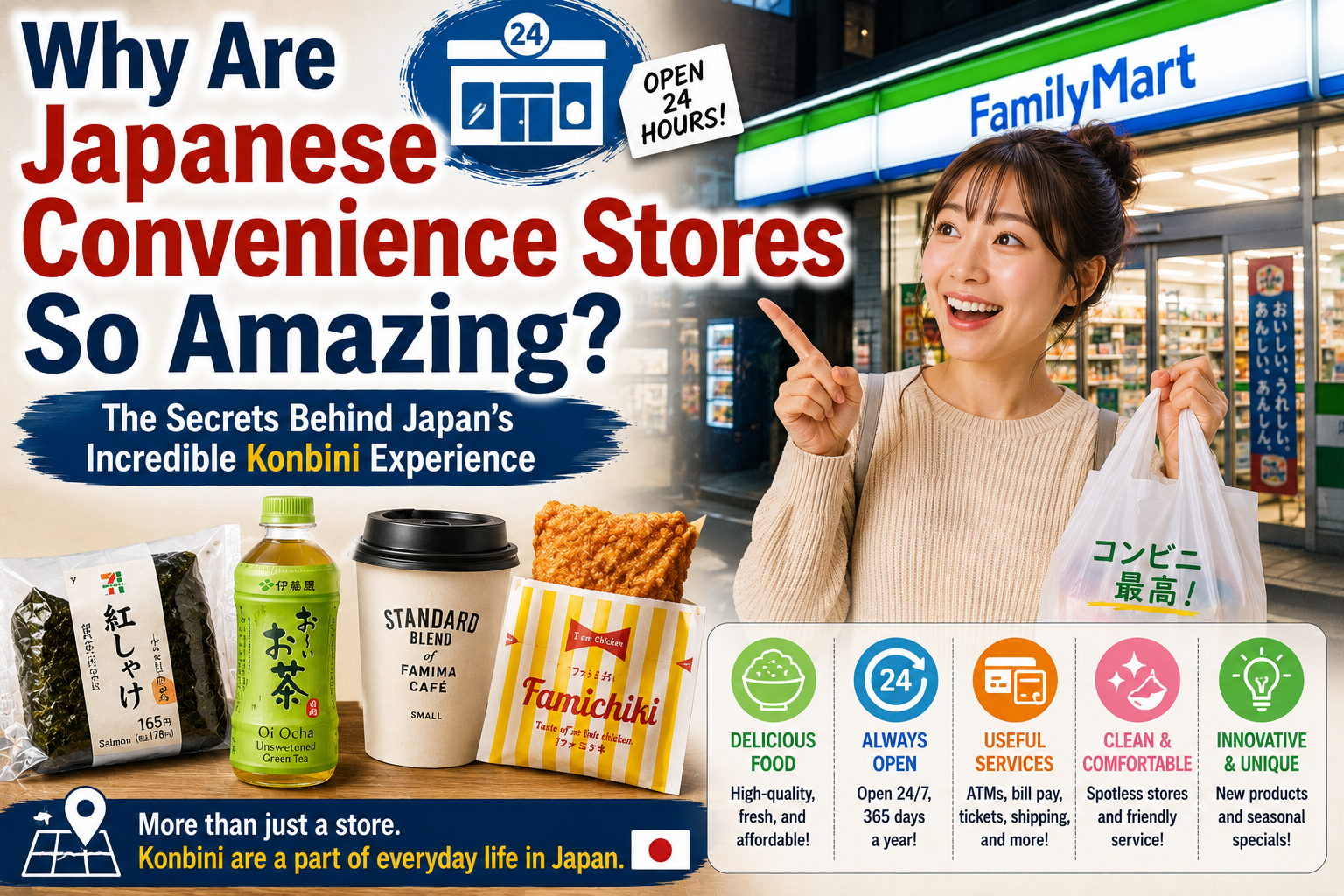
Ask almost any foreign visitor what surprised them most about Japan, and one answer comes up again and again: Japanese convenience stores.
Known locally as konbini (コンビニ), Japan’s convenience stores have earned a near-legendary reputation among travelers.
Many visitors arrive expecting a typical convenience store experience—cheap snacks, drinks, and basic necessities.
Instead, they discover stores that offer:
- High-quality meals
- Fresh coffee
- Bill payment services
- ATM access
- Concert tickets
- Package delivery
- Clean bathrooms
- Excellent customer service
So why are Japanese convenience stores so amazing?
The answer lies in Japan’s unique combination of efficiency, customer service, technology, and cultural values.
What Is a Konbini?
A konbini is Japan’s version of a convenience store.
The three largest chains are:
- 7-Eleven
- FamilyMart
- Lawson
You can find them almost everywhere:
- Major cities
- Small towns
- Train stations
- Residential neighborhoods
- Tourist destinations
Many stores operate:
24 hours a day, 365 days a year.
For many Japanese people, konbini function as an essential part of everyday life.
The Food Is Surprisingly Good
Perhaps the biggest surprise for foreign visitors is the quality of the food.
Unlike convenience stores in many countries, Japanese konbini offer:
- Fresh rice balls (onigiri)
- Bento lunch boxes
- Sandwiches
- Fried chicken
- Noodles
- Salads
- Desserts
- Seasonal specialties
Many products are:
- Freshly delivered multiple times per day
- Carefully developed
- Regionally customized
- Seasonally updated
For budget travelers, konbini food often becomes a daily staple.
Konbini Are Extremely Convenient
The word “convenience” truly means something in Japan.
At many stores, you can:
- Withdraw money
- Pay utility bills
- Purchase event tickets
- Send packages
- Print documents
- Buy train tickets
- Recharge transportation cards
- Receive online purchases
In some cases, a convenience store functions almost like a bank, post office, and restaurant combined.
Japanese Customer Service Is Exceptional
Another reason foreigners love Japanese convenience stores is the customer service.
Employees are typically:
- Polite
- Efficient
- Professional
- Helpful
Customers are greeted when entering the store and often thanked multiple times during checkout.
This reflects the Japanese concept of:
Omotenashi (おもてなし)
or wholehearted hospitality.
Even small purchases are treated with care and respect.
The Stores Are Clean and Organized
Japanese convenience stores are famous for their cleanliness.
Visitors often notice:
- Spotless floors
- Organized shelves
- Clean restrooms
- Fresh products
- Efficient layouts
This reflects broader Japanese cultural values, including:
- Cleanliness
- Respect for shared spaces
- Attention to detail
- Customer consideration
Konbini Are Constantly Innovating
Japanese convenience stores continuously introduce:
- New foods
- Seasonal products
- Regional specialties
- Limited-edition collaborations
- New technologies
Popular seasonal items include:
Spring
- Sakura-themed sweets
Summer
- Cold noodles and refreshing desserts
Autumn
- Sweet potato and chestnut products
Winter
- Hot drinks and comfort foods
This constant innovation keeps customers returning regularly.
The Famous Konbini Fried Chicken
Many foreign visitors become unexpectedly obsessed with Japanese convenience store fried chicken.
Popular examples include:
- FamilyMart’s “Famichiki”
- Lawson’s “Karaage-kun”
- 7-Eleven’s fried chicken products
These items have become cultural icons in Japan.
Some travelers even plan their itineraries around trying different convenience store foods.
Convenience Stores Are Important During Emergencies
Japanese convenience stores also play a vital role during natural disasters.
Because Japan experiences:
- Earthquakes
- Typhoons
- Floods
many convenience stores maintain emergency supplies and distribution systems.
During disasters, konbini often become important centers for:
- Food
- Water
- Information
- Essential goods
This reliability contributes to their importance in Japanese society.
Why Are Japanese Convenience Stores Better Than Others?
Several factors contribute to their success:
Competition
Major chains constantly compete to improve quality and services.
Population Density
Large urban populations support frequent deliveries and innovation.
Customer Expectations
Japanese consumers generally expect:
- High quality
- Cleanliness
- Efficiency
- Excellent service
Cultural Values
Japanese society values:
- Convenience
- Reliability
- Attention to detail
- Hospitality
These expectations push convenience stores to maintain exceptionally high standards.
Do Japanese People Actually Use Konbini Every Day?
Many do.
Japanese people often visit convenience stores for:
- Breakfast
- Lunch
- Snacks
- Bill payments
- ATM services
- Late-night shopping
- Emergency purchases
For busy workers and students, konbini are an essential part of daily life.
What Japanese Convenience Stores Reveal About Japan
The popularity of konbini reflects many important aspects of Japanese culture:
- Efficiency
- Hospitality
- Innovation
- Cleanliness
- Reliability
- Customer service
Japanese convenience stores aren’t amazing because they sell extraordinary products.
They’re amazing because they execute ordinary services extraordinarily well.
For many visitors, the humble konbini becomes one of the most memorable experiences of traveling in Japan.
FAQ
What does “konbini” mean?
Konbini is the Japanese abbreviation of the English phrase “convenience store.”
Which is the best Japanese convenience store?
The biggest chains are 7-Eleven, FamilyMart, and Lawson. Each has loyal fans and unique products.
Is Japanese convenience store food safe?
Yes. Japanese convenience stores maintain very high food safety and quality standards.
Are Japanese convenience stores open 24 hours?
Many are, although some locations have reduced hours.
Why do tourists love Japanese convenience stores?
Because they combine excellent food, convenience, cleanliness, and customer service at affordable prices.