If you’re dating a Japanese partner or considering building a future in Japan, you may have asked yourself: “Is Japan actually a good country for marriage?”
The answer depends on what you’re looking for in a relationship and family life.
Japan is often associated with:
- Safety
- Stability
- Loyalty
- Family values
- Long-term commitment
At the same time, Japan also faces challenges related to:
- Work-life balance
- Communication styles
- Gender expectations
- Declining marriage rates
So, is Japan a good place to get married and build a family?
Let’s explore the reality.
Why Many People Consider Japan a Good Country for Marriage
There are several reasons why both Japanese and international couples choose to build their lives in Japan.
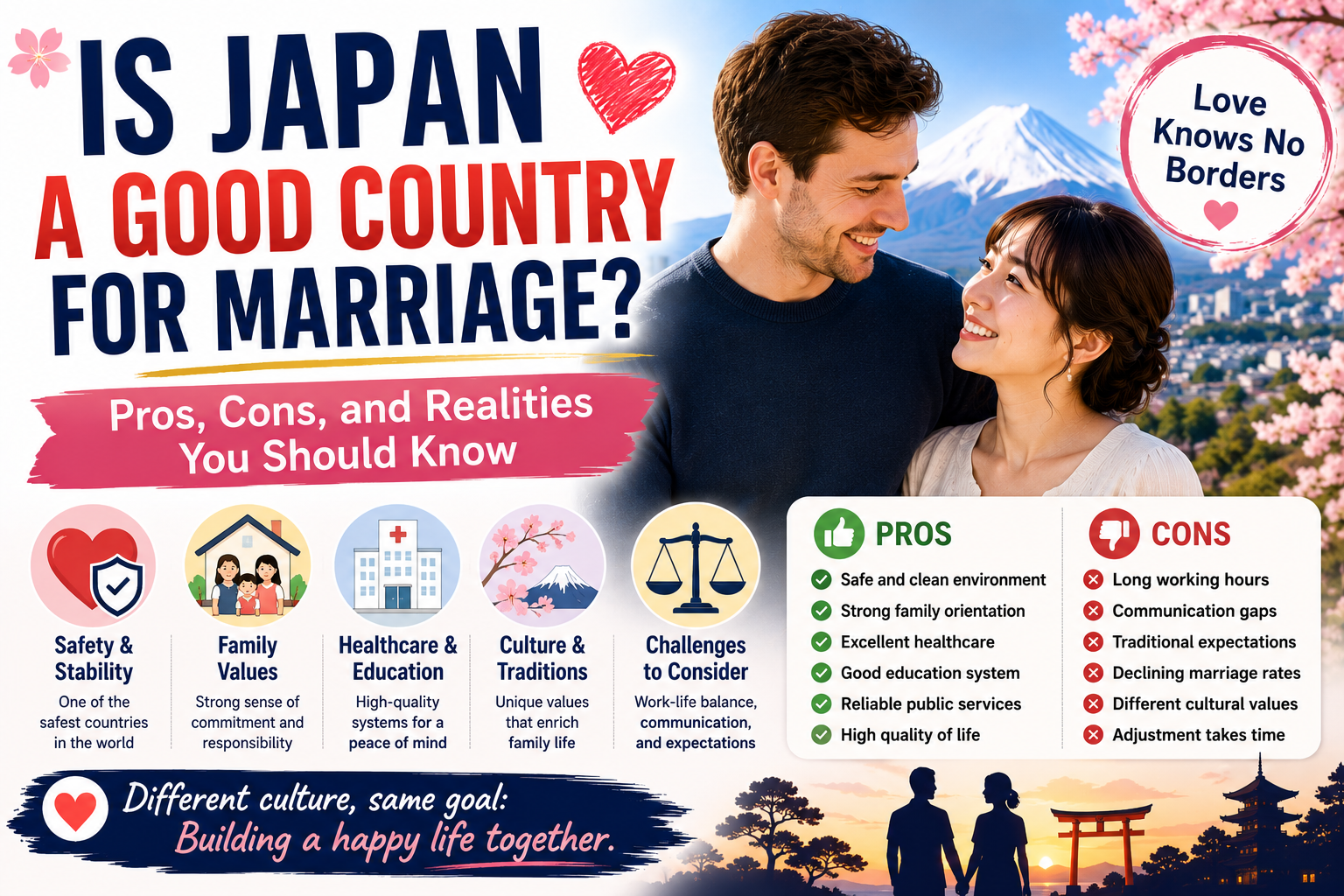
Safety and Stability
Japan is widely regarded as one of the safest countries in the world.
Benefits include:
- Low crime rates
- Stable infrastructure
- Reliable healthcare
- Strong public transportation
- Safe neighborhoods
For couples planning a long-term future, this level of stability can be extremely attractive.
Marriage Is Usually Taken Seriously
In Japan, marriage is often viewed as a major life commitment.
Many Japanese people associate marriage with:
- Responsibility
- Commitment
- Financial stability
- Family obligations
- Long-term partnership
As a result, many couples spend years dating before deciding to marry.
This can create a strong foundation of trust and shared expectations.
Japan Is Family-Oriented
Despite changing social values, family remains important in Japanese society.
Many married couples prioritize:
- Family harmony
- Child-rearing
- Financial security
- Supporting relatives
- Long-term planning
For people seeking a stable family environment, these values can be appealing.
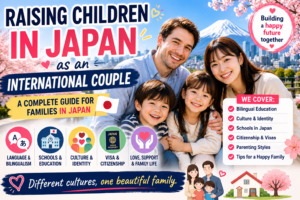
Japan Is One of the Safest Places to Raise Children
Many international couples choose Japan because of its family environment.
Advantages include:
- Excellent healthcare
- Safe schools
- Child-friendly communities
- High educational standards
- Low violent crime rates
Children in Japan often enjoy greater independence and safety than in many other countries.
Healthcare and Public Services Are Strong
Japan’s healthcare system is highly regarded internationally.
Families benefit from:
- Universal health insurance
- Affordable medical care
- High-quality hospitals
- Prenatal care
- Pediatric services
These systems can reduce some of the financial stress associated with marriage and raising children.
Challenges of Marriage in Japan
While Japan offers many advantages, marriage in Japan is not perfect.
Work Culture Can Strain Relationships
One of the biggest challenges facing married couples in Japan is work culture.
Long working hours can lead to:
- Less time together
- Emotional distance
- Increased stress
- Delayed family plans
- Work-life imbalance
Many Japanese couples struggle to balance career and family responsibilities.
Communication Styles Can Be Difficult
Japanese communication often emphasizes:
- Indirect expression
- Emotional restraint
- Avoiding conflict
- Maintaining harmony
Foreign spouses may prefer:
- Direct communication
- Open discussion
- Verbal reassurance
- Immediate problem-solving
These differences can create misunderstandings if not addressed openly.
Traditional Gender Expectations Still Exist
Although Japanese society is changing, some traditional expectations remain.
Examples include:
- Husbands focusing on work
- Wives managing household responsibilities
- Pressure regarding children
- Family role expectations
Many younger couples reject these traditional roles, but cultural expectations can still influence relationships.
Marriage Rates Are Declining
Interestingly, fewer Japanese people are choosing to marry.
Reasons include:
- Financial concerns
- Career priorities
- Changing values
- Desire for independence
- Concerns about work-life balance
This trend suggests that many Japanese people themselves recognize challenges within modern marriage.
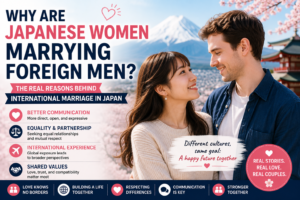
Is Japan a Good Country for International Marriage?
For many couples, yes.
Japan has become increasingly accustomed to international marriages.
Advantages include:
- Established visa systems
- Growing multicultural communities
- Increasing social acceptance
- Access to quality education and healthcare
However, international couples may also face additional challenges.
Common Challenges for International Couples
These may include:
- Language barriers
- Different family expectations
- Cultural misunderstandings
- Immigration procedures
- Parenting differences
- Long-distance family relationships
Most successful couples learn to navigate these differences through communication and mutual respect.
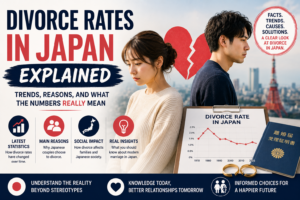
What About Divorce in Japan?
Japan’s divorce rate is neither extremely high nor extremely low compared to many developed countries.
Important facts include:
- Divorce is socially accepted.
- Many people remarry successfully.
- Most divorces occur through mutual agreement.
- Marriage is still generally viewed as a serious commitment.
Divorce exists in Japan just as it does elsewhere, but many couples continue to value long-term stability.
What Foreigners Often Misunderstand About Marriage in Japan
Foreigners sometimes assume several things about Japanese marriage that are not always true.
“Japanese marriages are more traditional.”
Not always.
Modern Japanese marriages vary greatly.
“Japanese couples don’t love each other.”
False.
Many Japanese couples express love differently, often through actions rather than words.
“International marriages are more difficult.”
Not necessarily.
Success depends more on communication and compatibility than nationality.
So, Is Japan a Good Country for Marriage?
The honest answer is:
It can be—if your expectations match reality.
Japan may be an excellent place for people who value:
- Stability
- Safety
- Family commitment
- Long-term planning
- Social order
However, it may feel challenging for those who prioritize:
- Work-life balance
- Direct communication
- Individual freedom
- Emotional expressiveness
Neither approach is inherently better.
They’re simply different.
What Makes Marriage Successful in Japan?
Whether you’re Japanese or foreign, successful marriages in Japan often share several qualities.
Communication
Partners actively discuss cultural and personal differences.
Respect
Both people value each other’s perspectives.
Flexibility
Expectations adapt over time.
Trust
Reliability remains one of the strongest foundations of Japanese marriage.
Shared Goals
Couples build a common vision of their future.
Final Thoughts
So, is Japan a good country for marriage?
For many couples, absolutely.
Japan offers:
- Safety
- Stability
- Strong family values
- Excellent public services
- High quality of life
At the same time, marriage in Japan requires understanding cultural expectations, communication styles, and work-life realities.
Ultimately, a successful marriage depends less on the country and more on the people involved.
Because no country guarantees a happy marriage.
But with communication, respect, and shared values, many couples find that Japan can be a wonderful place to build a life together.
FAQ
Is Japan a good place to get married?
For many couples, yes. Japan offers safety, stability, strong healthcare, and family-oriented communities.
Are marriages in Japan stable?
Many Japanese people view marriage as a serious long-term commitment, although divorce is also common and socially accepted.
Is Japan good for raising children?
Many families consider Japan one of the safest and most family-friendly countries in the world.
Is international marriage difficult in Japan?
International marriages can involve additional cultural and legal challenges, but many couples build successful relationships.
What is the biggest challenge of marriage in Japan?
Work-life balance and communication differences are often the biggest challenges.