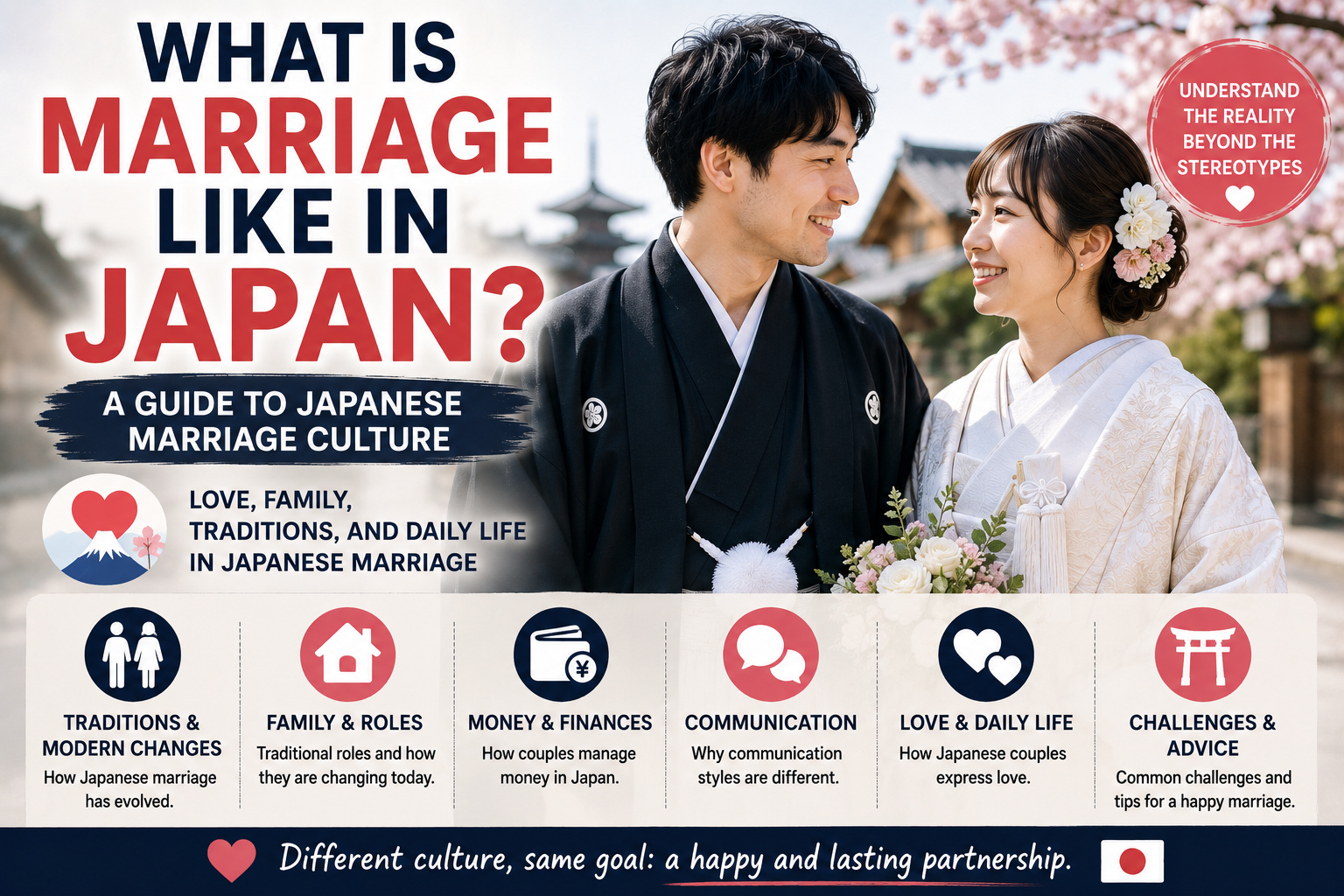
If you’re dating a Japanese partner or considering marriage in Japan, you may wonder:
What is marriage actually like in Japan?
Many foreigners imagine Japanese marriage as either extremely traditional or completely modern. The reality is somewhere in between.
Japanese marriage culture has changed significantly over the past few decades, but many traditional values still influence relationships, family life, and expectations between husbands and wives.
Whether you’re planning to marry a Japanese woman or simply curious about Japanese culture, here’s what you need to know about marriage in Japan.
Is Marriage in Japan Based on Love?
Today, the vast majority of marriages in Japan are based on romantic love.
Historically, arranged marriages known as omiai were common. Families often played a major role in selecting marriage partners.
Today, however:
- Most couples meet through school, work, friends, or dating apps.
- Love marriages account for the overwhelming majority of marriages.
- Couples usually date for several years before marrying.
- Personal compatibility is considered extremely important.
That said, family approval and long-term stability still matter more in Japan than they do in some Western countries.
Japanese Marriage Is Often Viewed as a Long-Term Commitment
Many Japanese people view marriage as a serious, lifelong commitment.
Marriage is often associated with:
- Stability
- Responsibility
- Partnership
- Family obligations
- Financial security
- Mutual support
Because of this, many Japanese people spend a long time considering marriage before making a decision.
It is not unusual for couples to date for several years before getting married.
Love After Marriage Often Looks Different
One of the biggest surprises for foreigners is that Japanese married couples may appear less romantic than couples in some Western countries.
For example, many married Japanese couples:
- Rarely say “I love you”
- Show limited public affection
- Have separate hobbies
- Spend time independently
- Focus heavily on family responsibilities
However, this does not necessarily mean they are unhappy.
In Japan, love is often expressed through:
- Reliability
- Daily routines
- Acts of service
- Emotional support
- Long-term commitment
Many Japanese couples believe that love is something you demonstrate through actions rather than words.
Traditional Gender Roles Still Exist
Although Japan has changed significantly, traditional gender roles continue to influence many marriages.
Historically:
Husbands were expected to:
- Work full-time
- Provide financial support
- Prioritize career
- Ensure family stability
Wives were expected to:
- Manage household finances
- Raise children
- Maintain family relationships
- Manage the home
Modern Japanese couples vary greatly, but some traditional expectations still remain.
As a result, foreigners may sometimes notice more traditional family dynamics than they expected.
Who Controls the Money?
One aspect of Japanese marriage that surprises many foreigners is household finances.
In some Japanese families:
- The husband gives his salary to his wife.
- The wife manages the household budget.
- The husband receives a monthly allowance (“okozukai”).
This arrangement developed historically because wives often managed household expenses while husbands focused on work.
Of course, younger couples increasingly choose:
- Shared finances
- Separate accounts
- Joint financial decision-making
There is no single “Japanese way” to manage money anymore.
Work Often Comes Before Family
Japan’s demanding work culture affects many marriages.
Many Japanese workers:
- Work long hours
- Commute extensively
- Experience significant stress
- Spend limited time at home
As a result, some married couples spend less time together than foreigners might expect.
This can create challenges, especially for international couples who have different expectations about family life.
Communication in Japanese Marriage Is Often Indirect
Communication styles remain one of the biggest challenges for foreigners married to Japanese partners.
Instead of saying:
“I’m unhappy.”
A Japanese spouse may:
- Become quieter
- Withdraw emotionally
- Avoid confrontation
- Expect their partner to notice changes
This indirect communication style is connected to Japanese values such as:
- Harmony
- Respect
- Emotional restraint
- Consideration for others
Understanding these communication differences is often essential for successful international marriages.
Family Relationships Are Important
Marriage in Japan often involves more than just two people.
Family relationships can play an important role, including:
- Visiting parents
- Seasonal family gatherings
- Respecting elders
- Family obligations
- Childcare support
While younger generations are becoming more independent, family expectations still influence many marriages.
Divorce in Japan
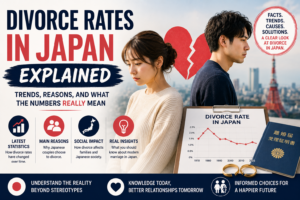
Japan has traditionally had lower divorce rates than many Western countries.
However, divorce has become more common over recent decades.
Common reasons include:
- Financial stress
- Work-life imbalance
- Communication problems
- Different expectations
- Emotional distance
Despite this, many Japanese people still approach marriage as a long-term commitment.
What Foreign Husbands Often Find Surprising
Foreign men married to Japanese women commonly mention:
- Their wives show love through actions rather than words.
- Family responsibilities are taken very seriously.
- Communication can be indirect.
- Small acts of care have deep meaning.
- Trust and reliability matter enormously.
Many foreigners also discover that Japanese marriage often emphasizes partnership and stability more than dramatic romance.
What Makes International Marriages Successful?
Successful international marriages in Japan often share several qualities:
Patience
Cultural differences take time to understand.
Communication
Both partners need to learn how the other expresses emotions.
Flexibility
Neither person should expect the other to abandon their culture completely.
Respect
Mutual respect is often more important than cultural similarity.
Trust
Trust remains one of the strongest foundations of Japanese marriage.
Is Marriage in Japan Changing?
Yes.
Younger Japanese couples increasingly:
- Share household responsibilities
- Express emotions more openly
- Delay marriage
- Prioritize personal happiness
- Seek greater equality
- Balance work and family life differently
Modern Japanese marriage is becoming more diverse than ever before.
Final Thoughts
So, what is marriage like in Japan?
For many couples, Japanese marriage emphasizes:
- Commitment
- Stability
- Trust
- Responsibility
- Partnership
- Everyday acts of love
While Japanese marriages may sometimes appear less romantic on the surface, many couples express deep affection through reliability, support, and shared life experiences.
If you’re considering marrying a Japanese partner, understanding these cultural differences can help build a stronger and happier relationship.
In Japan, marriage is often viewed not as the end of romance, but as the beginning of a lifelong partnership.
FAQ
Is marriage in Japan traditional?
Modern Japanese marriage combines traditional values with contemporary lifestyles. Every couple is different.
Do Japanese couples say “I love you”?
Many Japanese couples say it less frequently than couples in Western countries and often express love through actions instead.
Who manages money in Japanese marriages?
Traditionally, wives often managed household finances, although younger couples increasingly share financial responsibilities.
Are Japanese marriages stable?
Many Japanese people view marriage as a serious long-term commitment, although divorce has become more common.
Is it difficult for foreigners to marry Japanese people?
Cultural differences can create challenges, but many international marriages in Japan are successful when both partners communicate and respect each other’s values.