Many foreigners assume that Japan has an extremely low divorce rate because Japanese culture values family, harmony, and long-term commitment.
Others believe the opposite—that modern Japanese marriages are unhappy and frequently end in divorce.
So, which is true?
The answer is more complicated than many people expect.
Japan’s divorce rate has changed dramatically over the past century, and modern Japanese attitudes toward marriage and divorce continue to evolve.
If you’re considering marriage in Japan or simply interested in Japanese society, here’s what you should know.
Is Divorce Common in Japan?
Yes.
Divorce is a normal part of modern Japanese society.
While Japan historically had lower divorce rates than many Western countries, divorce has become increasingly common since the second half of the 20th century.
Today:
- Millions of Japanese adults have experienced divorce.
- Divorce is no longer considered highly unusual.
- Social attitudes toward divorce have become more accepting.
- Many people view divorce as preferable to remaining in an unhappy marriage.
However, compared to some Western countries, many Japanese people still approach marriage as a serious long-term commitment.
Has Japan’s Divorce Rate Increased?
Yes.
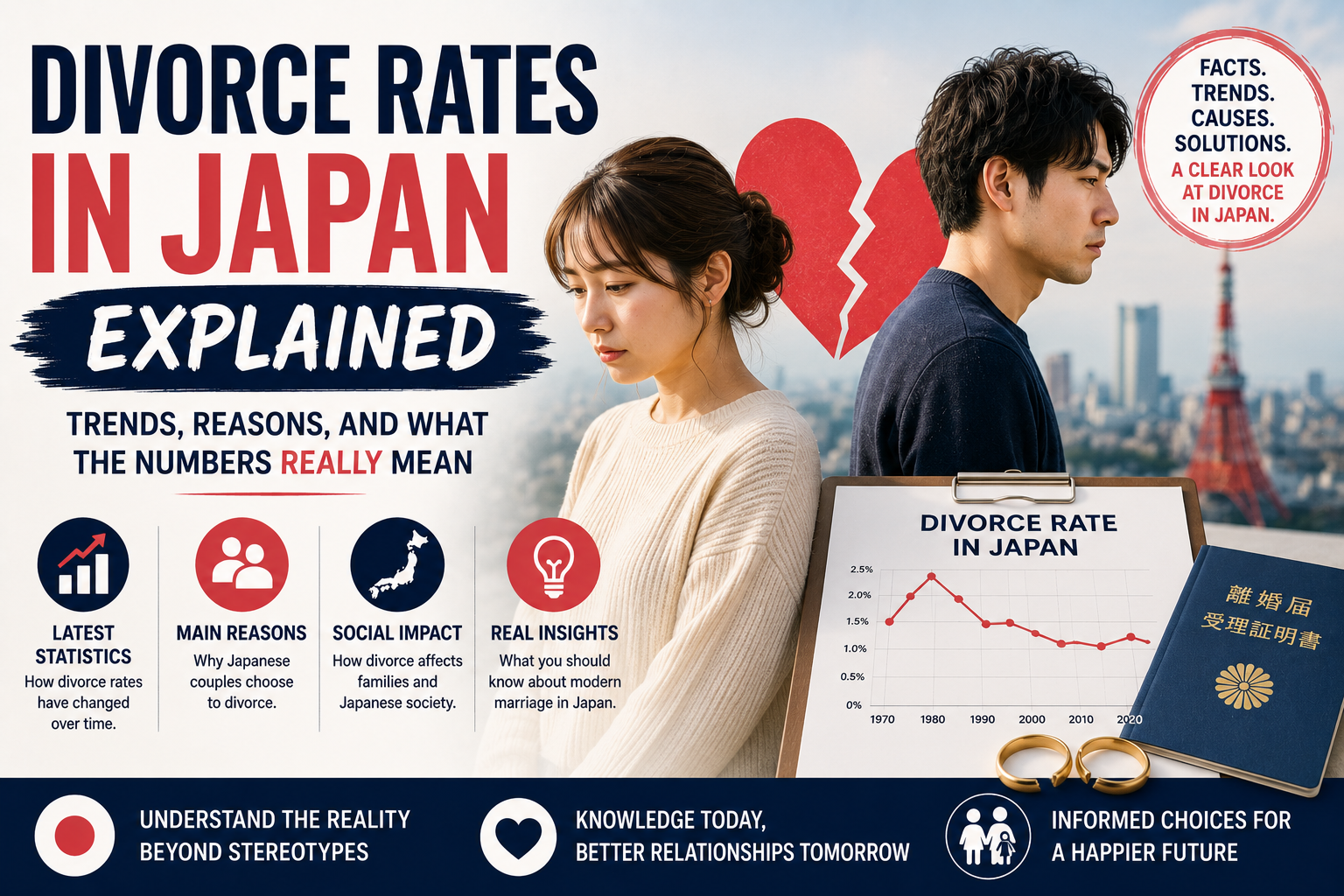
Japan’s divorce rate increased significantly after World War II and peaked in the early 2000s.
Several factors contributed to this trend:
- Greater economic independence for women
- Changing social attitudes
- Reduced social stigma
- Increased personal freedom
- Higher expectations for marriage satisfaction
In recent years, divorce rates have stabilized and, in some years, gradually declined.
Why Do Japanese Couples Get Divorced?
The reasons are often similar to those found in other countries.
Common causes include:
- Communication problems
- Financial difficulties
- Emotional distance
- Infidelity
- Different life goals
- Work-related stress
- Family conflicts
However, some causes are particularly influenced by Japanese culture.
Emotional Distance in Marriage
One issue often discussed in Japan is emotional distance between spouses.
Many married couples:
- Work long hours
- Spend limited time together
- Express affection less verbally
- Focus heavily on family responsibilities
Over time, some couples feel they have become:
- Roommates
- Co-parents
- Financial partners
rather than romantic partners.
This emotional separation can contribute to divorce.
Work Culture Can Affect Marriage
Japan’s demanding work culture has long affected family life.
Many workers experience:
- Long office hours
- Overtime work
- Business travel
- Workplace stress
- Limited family time
As a result, some couples struggle to maintain emotional closeness.
In some cases, spouses may spend only a few waking hours together each week.
Financial Problems Remain a Major Cause
Like everywhere else, financial stress can damage marriages.
Common issues include:
- Income differences
- Debt
- Job insecurity
- Household budgeting conflicts
- Economic uncertainty
Financial pressure can become especially difficult when combined with work stress and communication problems.
Infidelity and Extramarital Relationships
Infidelity exists in Japan just as it does elsewhere.
Although cultural attitudes vary, extramarital affairs remain one of the most common reasons cited in divorce cases.
However, Japanese couples sometimes tolerate emotional distance for years before deciding to end a marriage.
As a result, divorce may occur long after relationship problems first appear.
Why Do Some Couples Stay Married Despite Being Unhappy?
One phenomenon that surprises foreigners is that some Japanese couples remain married despite being emotionally distant.
Possible reasons include:
- Financial security
- Children’s education
- Family expectations
- Social stability
- Housing arrangements
- Fear of change
This does not mean all Japanese marriages are unhappy.
Rather, some people place greater value on stability than romantic fulfillment.
“Retired Husband Divorce” (Jukunen Rikon)
One uniquely discussed phenomenon in Japan is:
Jukunen Rikon (熟年離婚)
This refers to divorces that occur after many years of marriage, often after retirement.
Possible reasons include:
- Years of accumulated dissatisfaction
- Lifestyle differences
- Loss of shared purpose
- Increased time spent together
- Desire for independence
These divorces gained public attention as Japanese society aged.
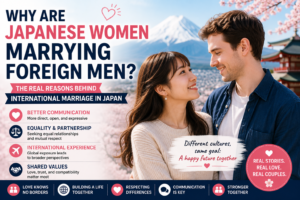
Are International Marriages More Likely to End in Divorce?
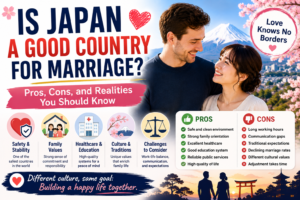
International marriages can face additional challenges, including:
- Language barriers
- Cultural differences
- Immigration issues
- Family expectations
- Different communication styles
However, there is no simple rule that international marriages are destined to fail.
Successful international marriages often depend on:
- Communication
- Mutual respect
- Patience
- Shared values
- Emotional compatibility
These factors matter more than nationality.
Is Divorce Stigmatized in Japan?
Compared to the past, divorce carries much less stigma today.
Many divorced individuals:
- Remarry successfully
- Continue professional careers
- Maintain family relationships
- Raise children independently
Younger generations, in particular, tend to view divorce more pragmatically.
How Does Divorce Work in Japan?
One aspect of Japanese divorce that surprises foreigners is how simple the legal process can be.
The majority of divorces occur through:
Kyogi Rikon (協議離婚)
This is a mutual agreement divorce.
If both spouses agree:
- They complete the required paperwork.
- They submit it to the local government office.
- The divorce becomes legally effective.
Court involvement is often unnecessary.
This makes Japanese divorce procedures relatively straightforward compared to many countries.
Are Japanese People Getting Married Less?
Yes.
Japan has experienced:
- Lower marriage rates
- Later marriages
- Fewer children
- Increased single lifestyles
Some younger Japanese adults delay or avoid marriage because of:
- Financial concerns
- Career priorities
- Personal freedom
- Changing social values
These trends have significantly affected Japanese society.
What Foreigners Often Misunderstand
Foreigners sometimes assume one of two extremes:
Myth 1:
“Japanese people never divorce.”
False.
Myth 2:
“Japanese marriages are unhappy.”
Also false.
The reality is that Japanese marriages, like marriages everywhere, vary greatly.
Some are deeply loving and lifelong.
Others face challenges and end in divorce.
Final Thoughts
So, what do divorce rates in Japan really tell us?
They tell us that Japanese society is changing.
Modern Japanese people increasingly value:
- Personal happiness
- Emotional compatibility
- Equality
- Individual choice
- Relationship satisfaction
At the same time, traditional values such as:
- Responsibility
- Commitment
- Stability
- Family obligation
continue to influence marriage.
Ultimately, divorce in Japan is neither exceptionally rare nor exceptionally common.
It is simply one part of the complex reality of modern Japanese relationships.
FAQ
Is divorce common in Japan?
Yes. Divorce is a normal and accepted part of modern Japanese society.
Why do Japanese couples divorce?
Common reasons include communication problems, financial stress, emotional distance, and infidelity.
Do international marriages in Japan have higher divorce rates?
International marriages may face additional challenges, but successful relationships depend more on communication and compatibility than nationality.
What is Jukunen Rikon?
Jukunen Rikon refers to divorces that occur after many years of marriage, often after retirement.
Is divorce stigmatized in Japan?
Divorce is far less stigmatized today than in previous generations, especially among younger Japanese people.