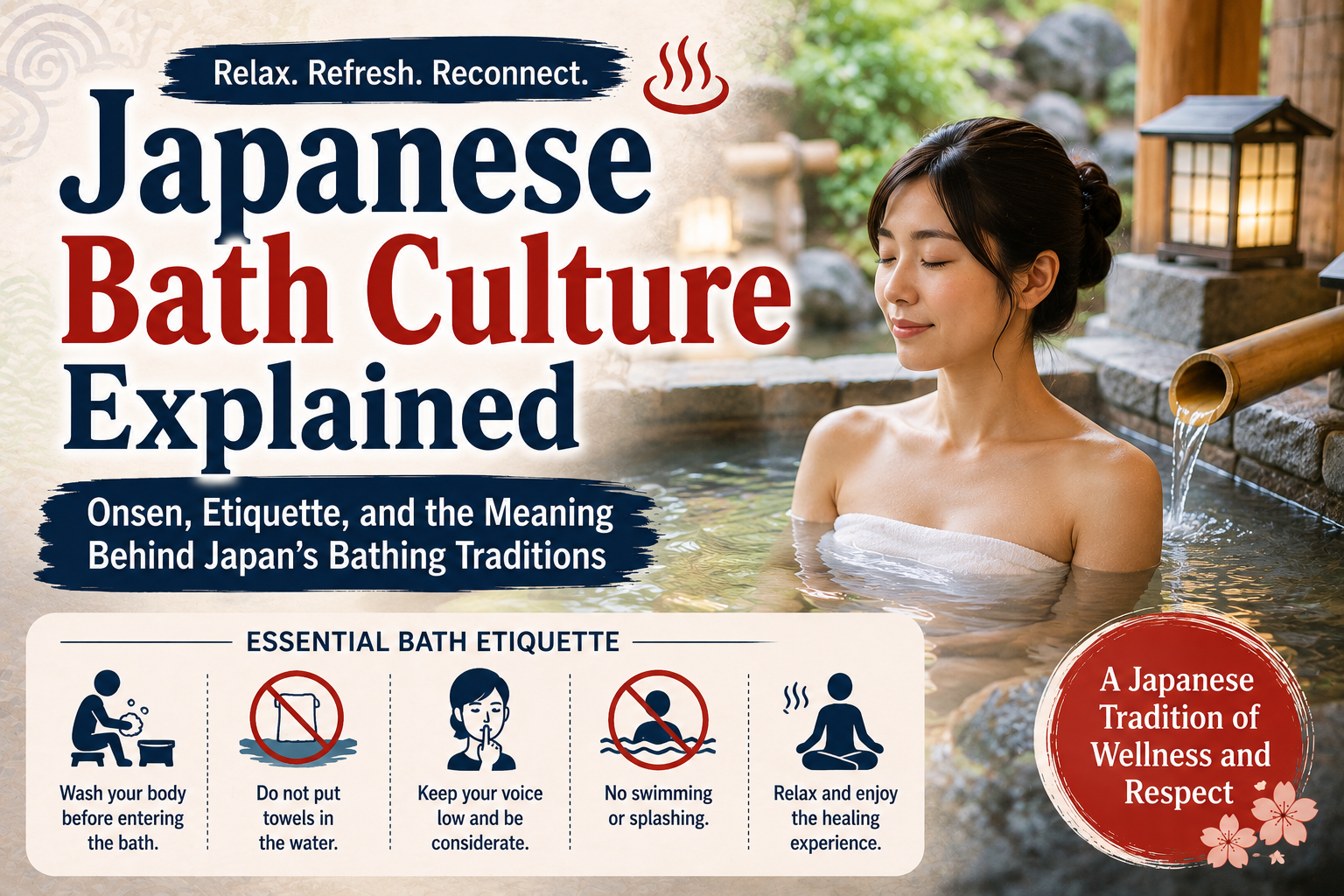
For many visitors, one of the most surprising aspects of Japan is its bath culture.
Why do Japanese people take baths every day? Why do strangers bathe together in public? And why is washing yourself before entering the bath so important?
Japanese bath culture is much more than simply getting clean. It reflects Japanese values of relaxation, cleanliness, health, and social harmony.
In this guide, we’ll explain everything you need to know about Japanese bath culture, including public baths, hot springs, bathing etiquette, and the cultural meaning behind these traditions.
Why Is Bathing So Important in Japan?
In many countries, bathing is primarily about hygiene.
In Japan, however, bathing serves several purposes:
- Relaxation
- Stress relief
- Family bonding
- Health and wellness
- Maintaining cleanliness
- Connecting with nature
For many Japanese people, taking a bath is an essential daily ritual rather than an occasional luxury.
A hot bath at the end of the day is considered an important way to relax both the body and the mind.
The History of Japanese Bath Culture
Japan’s bathing culture dates back more than 1,000 years.
Several factors contributed to its development:
Buddhism
Buddhist temples historically provided public baths because bathing was considered an act of purification.
Natural Hot Springs
Japan sits on a volcanically active region and has thousands of natural hot springs (onsen). These natural resources made communal bathing an important part of everyday life.
Japanese Climate
Japan’s humid summers and cold winters also encouraged regular bathing habits.
Over time, public baths became important social spaces where communities gathered and relaxed together.
What’s the Difference Between an Onsen and a Sento?
Many visitors confuse these two types of baths.
Onsen (温泉)
An onsen is a bath that uses naturally heated mineral-rich hot spring water.
Onsens are often located:
- In mountain areas
- Resort towns
- Traditional inns (ryokan)
- Outdoor scenic locations
People visit onsens not only for relaxation but also for their perceived health benefits.
Sento (銭湯)
A sento is a traditional public bathhouse that uses heated tap water rather than natural hot spring water.
Historically, many Japanese homes did not have private baths, making sento an important part of daily life.
Although fewer exist today, sento remain popular in many cities.
Why Do Japanese People Bathe Together?
For many foreigners, communal bathing is the most surprising aspect of Japanese bath culture.
In Japan, public bathing is generally viewed differently than in many Western countries.
Bathing together traditionally represents:
- Equality
- Relaxation
- Community
- Trust
- Social harmony
When everyone is naked, social status and appearances become less important, creating a sense of shared humanity.
For Japanese people, communal bathing is usually not considered awkward or sexual.
The Most Important Rule: Wash Before Entering the Bath
This is the number one rule of Japanese bathing etiquette.
You do not enter the bath to wash yourself.
Instead, you:
- Undress in the changing room.
- Sit at the washing station.
- Thoroughly wash your body and hair.
- Rinse off all soap.
- Enter the bath completely clean.
The bath itself is for soaking and relaxing, not cleaning.
Because everyone shares the same bathwater, cleanliness is extremely important.
Other Important Japanese Bath Etiquette Rules
Don’t Put Towels in the Water
Small towels are commonly used for washing and modesty.
However, the towel should never touch the bathwater.
Many Japanese people place the towel:
- On their head
- Beside the bath
Keep Noise Levels Low
Japanese baths are places for relaxation.
Speaking quietly is expected, and excessive noise is generally discouraged.
Don’t Swim
Public baths are not swimming pools.
Splashing, diving, or swimming is considered poor etiquette.
Dry Yourself Before Returning to the Locker Room
Before leaving the bathing area, dry your body with your towel to avoid making the changing room floor wet.
Why Do Japanese Families Share Bathwater?
Many foreign visitors are surprised to learn that family members often use the same bathwater at home.
This practice developed because:
- Heating water was historically expensive.
- Bathing is for relaxation, not washing.
- Everyone washes before entering the bathtub.
A typical order may be:
- Father
- Mother
- Children
Modern Japanese bathtubs often include reheating systems that keep water warm for multiple users.
What About Tattoos in Japanese Baths?
This is one of the most common questions among foreign visitors.
Historically, tattoos in Japan became associated with organized crime groups.
As a result, many onsens and public baths traditionally prohibited visible tattoos.
However, attitudes are slowly changing.
Today, some facilities:
- Allow small tattoos if covered.
- Offer private baths.
- Welcome tattooed foreign visitors.
Always check the bath’s policy before visiting.
Why Are Outdoor Baths So Popular?
Outdoor hot spring baths, called rotenburo (露天風呂), are especially popular in Japan.
These baths allow visitors to relax while enjoying:
- Mountains
- Forests
- Rivers
- Snowfall
- Seasonal scenery
For many Japanese people, outdoor bathing represents a connection between relaxation and nature.
Experiencing an outdoor onsen during snowfall is considered one of Japan’s most memorable cultural experiences.
Is Japanese Bath Culture Still Popular Today?
Absolutely.
Despite modern lifestyles, bathing remains deeply embedded in Japanese society.
Many people:
- Take a bath every evening.
- Visit onsens during vacations.
- Enjoy public baths on weekends.
- Use bathing as stress relief.
In recent years, wellness tourism has also increased the popularity of Japanese bath culture among international visitors.
What Japanese Bath Culture Reveals About Japan
Japanese bath culture reflects many core Japanese values:
- Cleanliness
- Respect for others
- Relaxation
- Social harmony
- Appreciation of nature
- Mind-body balance
Understanding Japanese baths is about much more than learning etiquette.
It offers insight into how Japanese people approach wellness, community, and everyday life.
FAQ
Why do Japanese people bathe every day?
Daily bathing is considered important for relaxation, cleanliness, and maintaining physical and mental well-being.
Do you wash before entering a Japanese bath?
Yes. You must thoroughly wash and rinse yourself before entering the communal bath.
Are Japanese onsens mixed-gender?
Most modern onsens separate men and women, although a few mixed-gender baths still exist.
Can foreigners use Japanese public baths?
Yes. Foreign visitors are welcome, provided they follow local etiquette.
Are tattoos allowed in Japanese onsens?
Some onsens allow tattoos, while others prohibit them. Always check the rules beforehand.