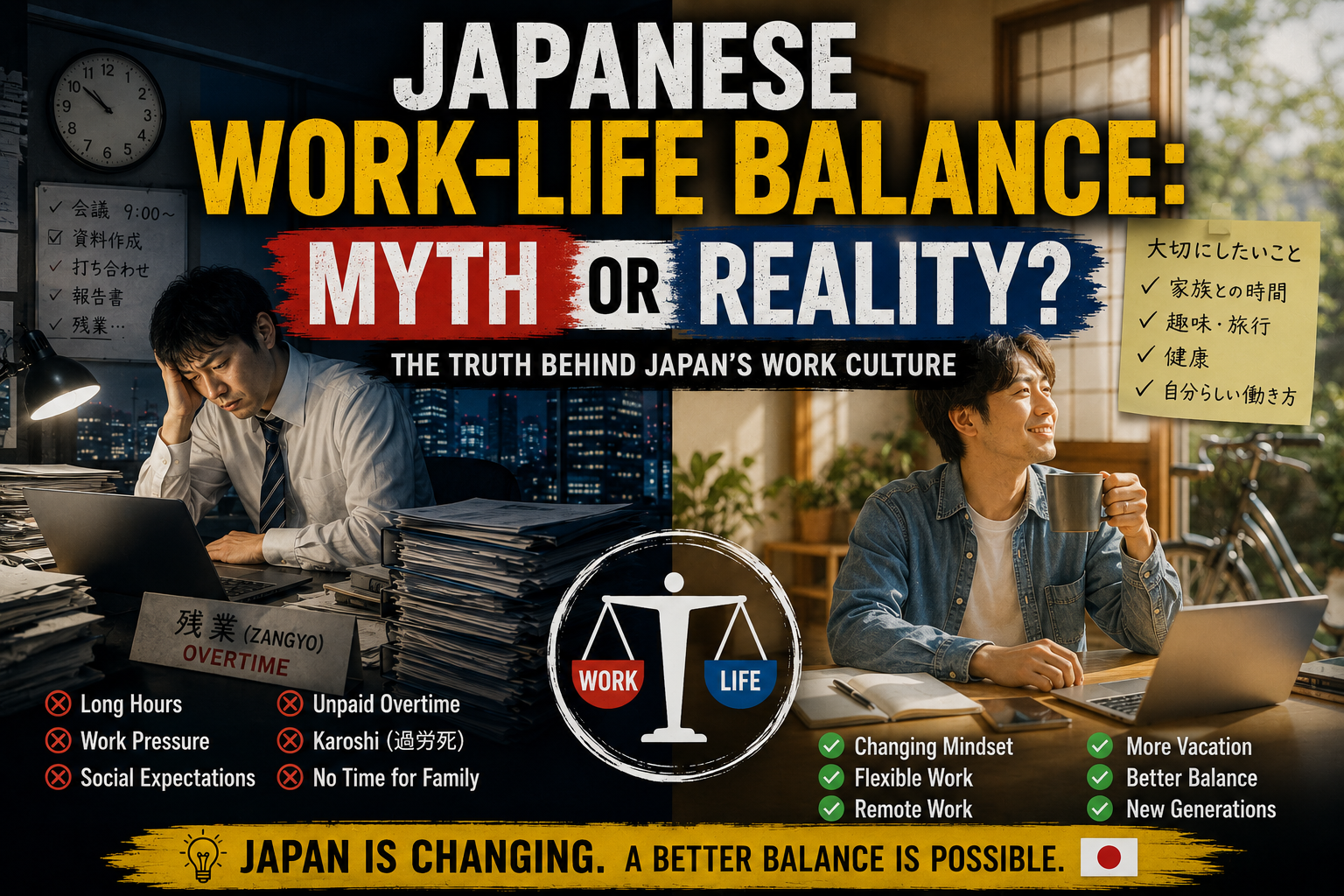
Is Japanese work-life balance finally improving?
When many foreigners think about working in Japan, they often imagine one thing:
People working all day and all night.
Images of exhausted office workers sleeping on trains, staying in the office until midnight, and sacrificing their personal lives for work have become famous around the world.
But is this image still accurate?
Or is Japanese work-life balance finally improving?
The truth is more complicated than many people expect.
While Japan still struggles with long working hours and workplace pressure, many companies and younger workers are actively changing what work means in modern Japanese society.
In this article, we’ll explore whether Japanese work-life balance is a myth, a reality, or something in between.
Why Does Japan Have a Reputation for Poor Work-Life Balance?
Japan’s reputation largely comes from its postwar economic history.
During Japan’s economic boom:
- Lifetime employment was common.
- Company loyalty was highly valued.
- Long hours were seen as a sign of dedication.
- Employees often prioritized work over family life.
This culture produced global concepts such as:
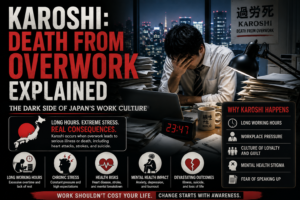
- Karoshi (過労死) — death from overwork
- Zangyo (残業) — overtime work
- Salaryman culture — corporate workers devoted to their companies
For decades, success in Japan often meant sacrificing personal time.
As a result, Japan became internationally known as one of the world’s hardest-working societies.
Do Japanese People Actually Work Longer Hours?
Surprisingly, the answer today is:
Not always.
Compared with previous generations, many Japanese workers now work fewer hours than before.
Government reforms and labor shortages have pushed companies to reduce excessive overtime.
However, the experience varies significantly depending on:
- Industry
- Company size
- Age
- Employment status
- Region
For example:
Industries with longer hours:
- Finance
- Healthcare
- Construction
- Information technology
- Manufacturing
Industries with better work-life balance:
- Some foreign companies
- Technology startups
- Remote work positions
- International businesses
There is no single “Japanese work experience.”
Why Do Some Japanese Workers Still Work Long Hours?
Several factors continue to contribute to poor work-life balance.
Workplace Culture
Many employees still feel pressure to:
- Stay when their coworkers stay
- Avoid appearing lazy
- Demonstrate commitment
- Respect workplace hierarchy
Labor Shortages
Japan’s aging population means that many industries simply do not have enough workers.
As a result, existing employees often handle larger workloads.
Social Expectations
Some workers still believe that:
- Hard work demonstrates character
- Personal sacrifice benefits the group
- Career success requires long hours
These attitudes are changing, but they remain influential.
Younger Japanese People Think Differently
One of the biggest changes in Japan today is generational.
Many younger workers increasingly prioritize:
- Mental health
- Family time
- Hobbies
- Travel
- Flexible schedules
- Remote work
- Personal happiness
Unlike previous generations, many young Japanese no longer believe that work should define their entire identity.
This has led to:
- Increased job changes
- Greater interest in freelancing
- More entrepreneurship
- Less loyalty to traditional corporations
Some experts even describe this as a quiet revolution in Japanese work culture.
Remote Work Changed Expectations
The COVID-19 pandemic accelerated changes that were already beginning.
Many companies adopted:
- Remote work
- Hybrid work schedules
- Flexible working hours
- Digital communication tools
Although some companies have returned to traditional office practices, many workers discovered that:
- Productivity did not decrease.
- Commuting was exhausting.
- Work-life balance improved.
As a result, expectations about work have permanently changed for many employees.
How Much Vacation Do Japanese Workers Take?
Japan actually provides paid vacation days by law.
However, historically, many workers avoided using them.
Common reasons include:
- Fear of burdening coworkers
- Workplace pressure
- Guilt
- Company culture
In recent years, the government has introduced policies requiring employees to take a minimum number of paid vacation days annually.
As a result, vacation usage has gradually increased.
Nevertheless, many Japanese workers still take fewer vacation days than workers in some Western countries.
Is Work-Life Balance Better at Foreign Companies?
For many foreigners living in Japan, the answer is often yes.
Foreign-owned companies in Japan may offer:
- Flexible schedules
- Remote work
- Performance-based evaluation
- Less overtime
- Better vacation policies
- More direct communication
However, this is not universally true.
Some Japanese companies also provide excellent work-life balance, while some foreign companies can be demanding.
The company culture itself often matters more than the nationality of the company.
Is Japan’s Work-Life Balance Really Improving?
Most experts believe the answer is yes.
Several trends are contributing to improvement:
- Government labor reforms
- Labor shortages
- Declining birth rates
- Changing social values
- Remote work adoption
- Increased mental health awareness
- Generational change
At the same time, problems remain in many industries.
Japan is currently experiencing a transition between traditional work culture and modern expectations.
Why Foreigners Often Have Mixed Experiences
Foreign residents often report very different experiences in Japan.
Some describe:
- Excellent work-life balance
- Flexible schedules
- Respectful workplaces
- Generous vacation policies
Others experience:
- Long hours
- Social pressure
- Workplace stress
- Difficulty taking leave
This is because there is no single “Japanese work culture.”
Your experience often depends on:
- Your employer
- Your industry
- Your manager
- Your language ability
- Your personal expectations
Final Thoughts
So, is Japanese work-life balance a myth or reality?
The answer is:
Both.
Japan still struggles with:
- Overtime culture
- Workplace pressure
- Labor shortages
- Traditional expectations
But Japan is also changing faster than many outsiders realize.
Today’s younger workers increasingly value:
- Family
- Mental health
- Personal fulfillment
- Flexibility
- Work-life balance
The image of Japan as a country where everyone works endlessly is no longer completely accurate.
Understanding Japan’s changing work culture provides a more realistic picture of modern Japanese society—and the challenges it faces in balancing tradition with a changing world.
FAQ
Does Japan have poor work-life balance?
Some industries do, but work-life balance varies greatly depending on the company and occupation.
Are Japanese people working less than before?
Yes. Average working hours have generally decreased compared to previous generations.
Do Japanese workers take vacation?
Yes, although many historically took fewer vacation days due to workplace culture.
Is remote work common in Japan?
Remote work increased significantly after COVID-19, although adoption varies by industry.
Is Japan’s work culture changing?
Yes. Younger generations and labor shortages are driving significant changes in attitudes toward work.