Karoshi explained: this Japanese term has become internationally known as one of the most serious symbols of Japan’s demanding work culture.
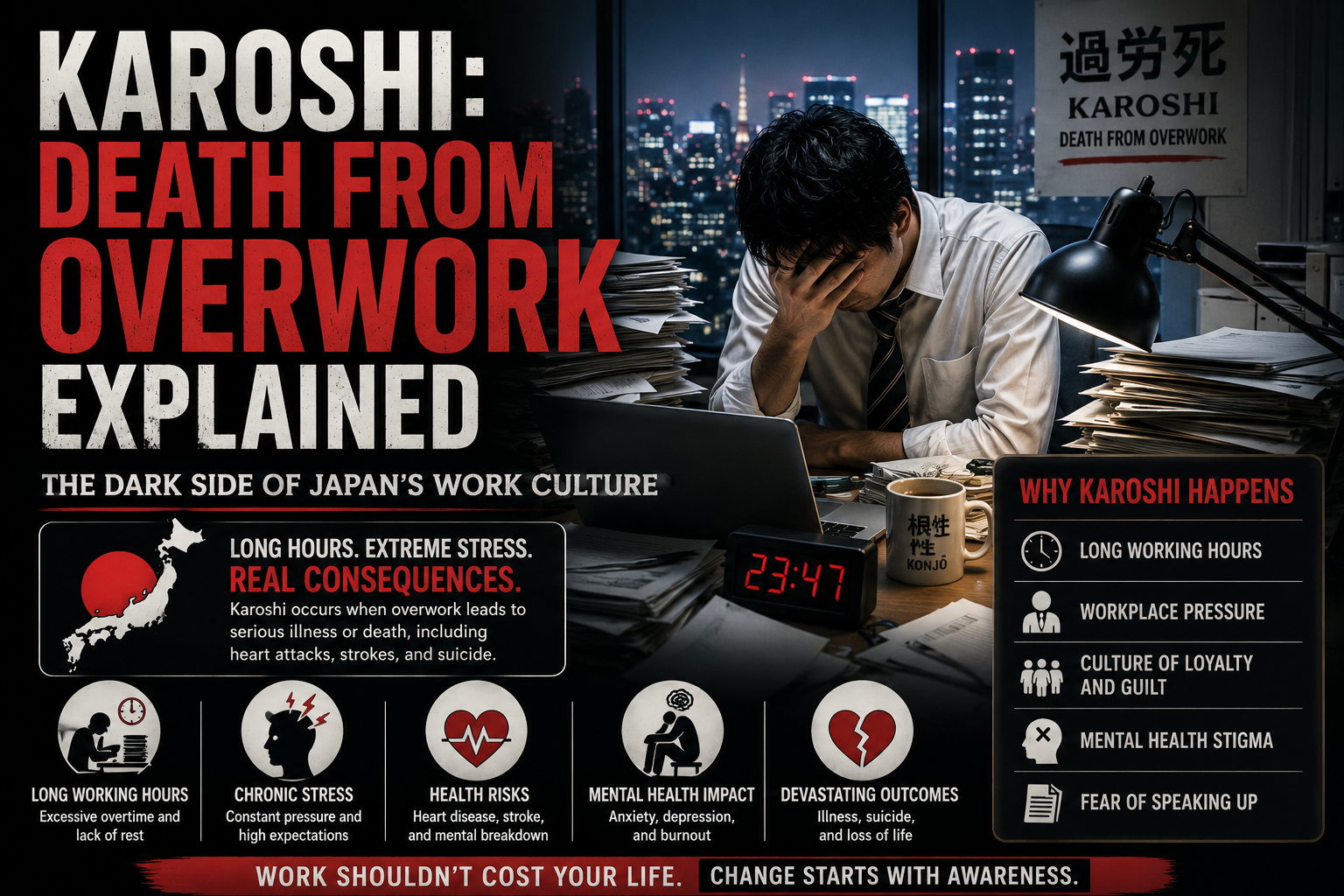
Karoshi literally means “death from overwork.” It refers to cases where extreme work-related stress, long working hours, and exhaustion contribute to fatal health outcomes such as heart attacks, strokes, or suicide.
Although Japan has taken steps to reduce excessive overtime, karoshi remains an important social issue. Understanding karoshi helps explain not only Japan’s work culture, but also the pressure many people feel in modern Japanese society.
What Does Karoshi Mean?
The word karoshi (過労死) combines three Japanese characters:
- ka (過) meaning excessive
- ro (労) meaning labor
- shi (死) meaning death
Together, the term means “death from excessive labor” or “death from overwork.”
Karoshi is usually associated with two main types of cases:
- Death caused by physical overwork, such as heart attack or stroke
- Suicide linked to severe work-related stress or mental exhaustion
In Japan, karoshi is not just a media term. It is also recognized in legal, labor, and public health discussions.
Why Did Karoshi Become Associated with Japan?
Karoshi became widely discussed in Japan during the late 20th century, especially as long working hours and corporate loyalty became major features of the postwar economy.
During Japan’s rapid economic growth, many workers were expected to show dedication by working long hours, staying late, and putting company needs before personal life.
This created a culture where overwork was sometimes seen as proof of responsibility, loyalty, and seriousness.
Why Does Karoshi Happen?
Karoshi usually does not happen because of one bad week at work.
It often develops from long-term exposure to:
- Excessive overtime
- Chronic sleep deprivation
- Intense workplace pressure
- Lack of rest
- Poor work-life balance
- Fear of disappointing coworkers or managers
- Mental health struggles
When stress and exhaustion accumulate over time, the body and mind can reach a dangerous breaking point.
Japan’s Long Working Hours
One of the biggest causes of karoshi is long working hours.
Overtime Culture
In many Japanese workplaces, employees may feel pressure to stay late even after their official working hours end.
This pressure can come from:
- Company expectations
- Team loyalty
- Fear of looking lazy
- Unspoken workplace norms
- Difficulty saying no to superiors
Even when overtime is technically optional, many workers feel that leaving before their coworkers could damage their reputation.
Presenteeism
Presenteeism means being physically present at work even when productivity is low or when a person should be resting.
In Japan, some workers may feel pressure to remain at the office simply because others are still there.
This can make workdays unnecessarily long and increase fatigue.
Mental Stress and Workplace Pressure
Karoshi is not only about physical exhaustion.
Mental stress also plays a major role.
Pressure to Perform Perfectly
Japanese workplaces often value accuracy, responsibility, and avoiding mistakes. These values can create high-quality results, but they can also increase emotional pressure.
Workers may fear:
- Making mistakes
- Causing trouble for the team
- Disappointing managers
- Being judged as irresponsible
- Losing job security
Workplace Harassment
Some karoshi-related cases involve workplace harassment, known in Japan as power harassment or pawahara.
This can include:
- Verbal abuse
- Excessive criticism
- Unrealistic demands
- Public humiliation
- Pressure from managers
Severe harassment can contribute to anxiety, depression, and suicidal thoughts.
Karoshi and Mental Health
Mental health is an important part of the karoshi discussion.
Long working hours and high stress can increase the risk of:
- Depression
- Anxiety
- Burnout
- Sleep disorders
- Social isolation
- Suicidal thoughts
In some cases, workers may feel trapped because quitting seems shameful, financially risky, or socially unacceptable.
This is why karoshi is often connected to Japan’s broader mental health and workplace culture issues.
Why Don’t People Just Quit?
From the outside, some people may wonder why workers do not simply leave stressful jobs.
In reality, quitting can be difficult for several reasons.
Social Expectations
Many Japanese workers feel strong responsibility toward their company, coworkers, and family.
Leaving a job may feel like:
- Failure
- Betrayal
- Giving up
- Causing trouble for others
Economic Pressure
Workers may also worry about:
- Losing income
- Finding another job
- Supporting family members
- Paying rent or loans
- Career damage
These concerns can keep people in harmful work environments longer than outsiders might expect.
What Is Japan Doing to Prevent Karoshi?
Japan has introduced several measures to reduce overwork and improve work-life balance.
These include:
- Overtime limits
- Work-style reform policies
- Stress checks in workplaces
- Public awareness campaigns
- Labor inspections
- Legal recognition of work-related deaths
- Encouragement of paid leave use
However, changing laws is easier than changing workplace culture.
In some companies, unspoken expectations around overtime and loyalty remain strong.
Is Karoshi Still a Problem Today?
Yes, although awareness has increased.
Japan has made progress in reducing some forms of excessive overtime, and younger generations often place more value on work-life balance than previous generations.
However, karoshi remains a serious concern because many workers still face:
- Heavy workloads
- Staffing shortages
- Long commutes
- Pressure from managers
- Fear of speaking up
- Economic uncertainty
Karoshi is no longer only a Japanese issue, either. Work-related burnout and stress have become global concerns.
Is Karoshi Unique to Japan?
The word karoshi is Japanese, but death or serious illness related to overwork can happen in many countries.
Similar problems have been discussed in:
- South Korea
- China
- the United States
- the United Kingdom
- other high-pressure work cultures
What makes Japan important is that it gave the world a clear term for a problem many societies now recognize.
What Karoshi Reveals About Japanese Society
Karoshi reveals several deeper issues in Japanese society:
- Strong pressure to work hard
- Difficulty saying no
- High value placed on group harmony
- Fear of burdening others
- Mental health stigma
- Economic insecurity
- Slow cultural change in some workplaces
It also shows how a society known for discipline, efficiency, and responsibility can sometimes create unhealthy pressure on individuals.
How Can Workers Protect Themselves?
This article is not medical or legal advice, but general steps that may help include:
- Tracking working hours
- Taking regular breaks
- Using paid leave
- Talking to trusted coworkers or family
- Seeking professional mental health support
- Consulting labor support services when necessary
- Leaving dangerous work environments when possible
If someone feels at immediate risk of self-harm or medical crisis, they should contact emergency services or a local crisis hotline immediately.
Conclusion
Karoshi is one of the most serious examples of how work culture can affect human health.
It is not simply about working hard. Karoshi happens when excessive work, chronic stress, lack of rest, and social pressure combine in dangerous ways.
Understanding karoshi helps us understand why work-life balance, mental health, and workplace reform are so important in modern Japan.
FAQ
What does karoshi mean?
Karoshi means death from overwork. It refers to deaths linked to extreme work-related stress, exhaustion, or excessive working hours.
Is karoshi still happening in Japan?
Yes. Awareness has increased and laws have changed, but overwork and work-related stress remain serious issues in Japan.
What causes karoshi?
Common causes include long working hours, chronic stress, sleep deprivation, workplace pressure, and sometimes workplace harassment.
Is karoshi only a Japanese problem?
No. The term is Japanese, but overwork-related illness and burnout can happen in many countries.
What is Japan doing about karoshi?
Japan has introduced overtime limits, workplace stress checks, work-style reforms, and public awareness campaigns to reduce overwork.