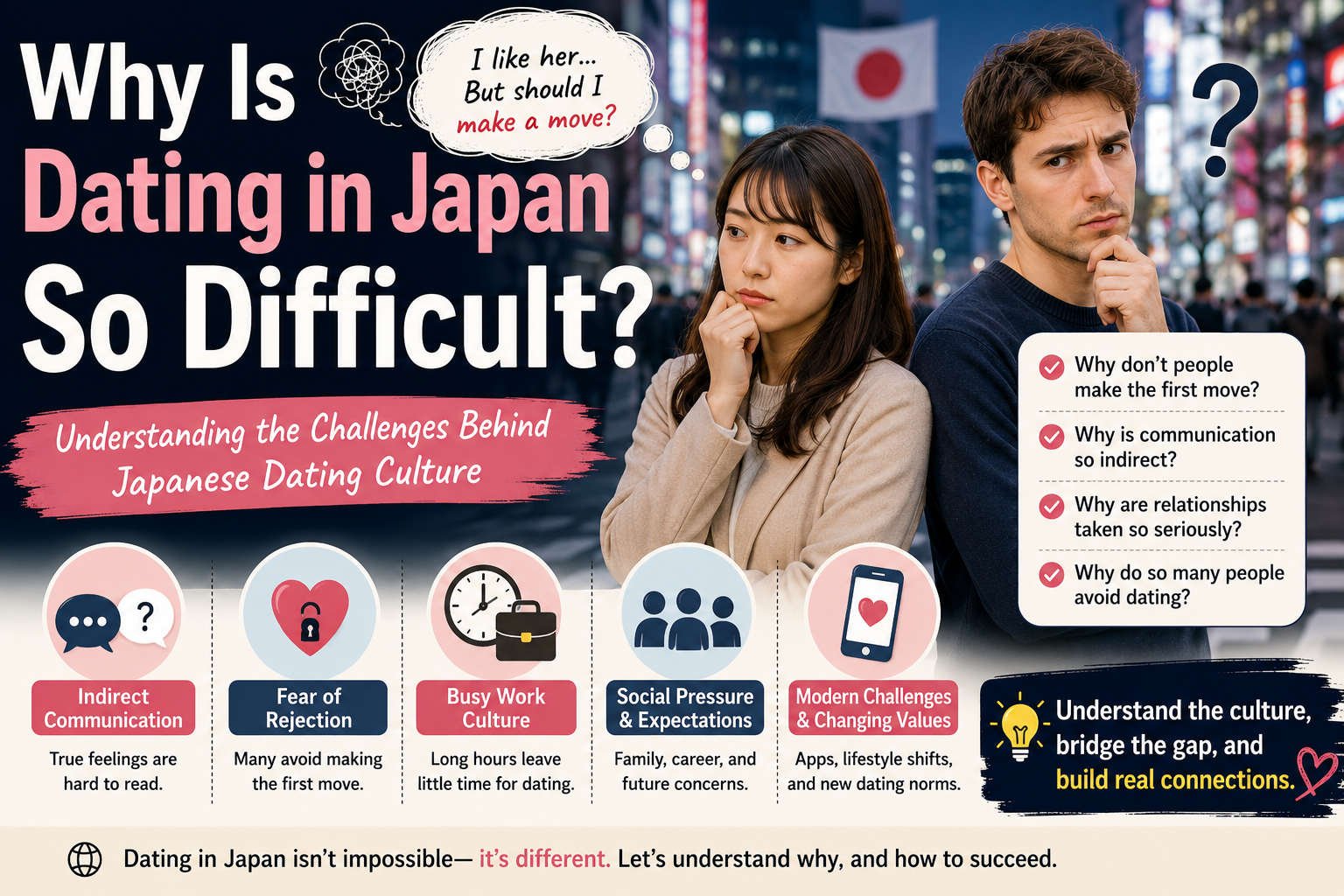
If you’ve spent time in Japan, you’ve probably heard people—both foreigners and Japanese—say “Dating in Japan is difficult.”
Whether you’re trying to date Japanese women, date Japanese men, or simply understand Japanese relationship culture, you may quickly realize that dating in Japan often works very differently from dating in Western countries.
But why is dating in Japan considered so difficult?
The answer isn’t that Japanese people don’t want relationships. Instead, a combination of cultural expectations, communication styles, social norms, and modern lifestyle pressures has created one of the world’s most unique dating environments.
Let’s explore the real reasons why dating in Japan can be so challenging.
Is Dating in Japan Actually Difficult?
The short answer is: yes, for many people.
And this isn’t just a foreigner’s opinion.
Surveys regularly show that many Japanese people themselves feel that:
- Finding a partner is difficult.
- Starting relationships is stressful.
- Expressing romantic feelings is uncomfortable.
- Marriage expectations create pressure.
In fact, Japan’s declining marriage and birth rates have become major social issues partly because romantic relationships have become increasingly difficult to establish and maintain.
Japanese Communication Is Often Indirect
One of the biggest challenges for foreigners is communication.
In many Western cultures, people express romantic interest directly:
- “I like you.”
- “Let’s go on a date.”
- “I want to be in a relationship.”
In Japan, communication is often more subtle.
People may:
- Avoid direct rejection.
- Give indirect answers.
- Hide their true feelings.
- Wait for the other person to make a move.
This can make dating feel confusing and emotionally exhausting.
For example:
“Maybe sometime.”
might actually mean:
“I’m not interested.”
Understanding concepts like tatemae (public feelings) and honne (true feelings) becomes extremely important.
Fear of Rejection Is Strong
Many Japanese people avoid making the first move because rejection can feel socially embarrassing.
This contributes to several common behaviors:
- Waiting for the other person to confess.
- Avoiding obvious flirting.
- Delaying romantic decisions.
- Remaining friends despite mutual attraction.
The Japanese concept of kokuhaku (romantic confession) also adds pressure because asking someone out often feels more serious than simply going on a casual date.
Dating Is Often Viewed as Serious
In many Western countries, dating can be casual.
People may:
- Date multiple people.
- Explore compatibility.
- Develop feelings gradually.
In Japan, dating is often viewed as preparation for a serious relationship.
Many people ask themselves:
- Is this person trustworthy?
- Could I marry them?
- Are our values compatible?
- Can we build a future together?
This seriousness can make people more cautious and selective.
Long Working Hours Leave Little Time for Dating
Japan is famous for its demanding work culture.
Many people work:
- Long hours
- Overtime
- Weekend shifts
- Extensive commuting schedules
As a result:
- People have less time to meet partners.
- Maintaining relationships becomes difficult.
- Emotional energy for dating decreases.
For some Japanese adults, work effectively becomes their primary relationship.
Social Pressure Creates Anxiety
Japanese society often places strong expectations on relationships.
People may worry about:
- Income level
- Educational background
- Family approval
- Career stability
- Marriage timing
- Gender roles
These pressures can make dating feel less romantic and more like a major life decision.
Japanese People Often Express Feelings Indirectly
Foreigners sometimes interpret Japanese emotional restraint as a lack of interest.
However, many Japanese people simply express affection differently.
Instead of saying:
“I love you.”
they may show affection by:
- Remembering small details
- Helping solve problems
- Making time for you
- Giving thoughtful gifts
- Supporting your goals
This difference in emotional expression can create misunderstandings in international relationships.
Dating Apps Have Changed the Situation—But Not Completely
Apps like:
- Tinder
- Bumble
- Pairs
- Omiai
- with
have made meeting people easier.
However, many traditional expectations remain.
People still often expect:
- Polite communication
- Serious intentions
- Clear relationship goals
- Emotional patience
Dating apps have changed how people meet, but not necessarily how they date.
Foreigners Face Additional Challenges
If you’re a foreigner dating in Japan, you may encounter extra difficulties.
Language Barriers
Even when both people speak English, subtle emotional communication can be difficult.
Cultural Misunderstandings
Different expectations about:
- Physical affection
- Exclusivity
- Communication
- Family involvement
can create confusion.
Stereotypes
Some Japanese people may:
- Romanticize foreigners.
- Avoid foreigners.
- Assume cultural incompatibility.
- Worry about long-term commitment.
Different Relationship Expectations
Foreigners sometimes expect:
- More direct communication.
- Faster emotional intimacy.
- Greater physical affection.
Japanese partners may prefer a slower pace.
Why Do Some Japanese People Avoid Dating Altogether?
One of the most discussed social trends in Japan is the growing number of people who avoid romantic relationships.
Reasons include:
- Career priorities
- Financial concerns
- Fear of rejection
- Social anxiety
- Desire for personal freedom
- Negative relationship experiences
Some surveys suggest that many young Japanese adults have little interest in actively pursuing romantic relationships.
This doesn’t mean they dislike romance—it often means the perceived costs outweigh the benefits.
Is Dating Harder in Japan Than in Western Countries?
Not necessarily.
The challenges are simply different.
Challenges in Japan
- Indirect communication
- Fear of rejection
- Social expectations
- Work culture
- Emotional restraint
Challenges in Western Countries
- Casual dating culture
- Ambiguous relationships
- Dating app fatigue
- Commitment issues
- Greater competition
Neither system is objectively better.
They simply require different expectations and skills.
How Can Foreigners Successfully Date in Japan?
If you’re interested in dating in Japan, consider these tips:
Be Patient
Relationships often develop more slowly.
Learn Japanese Culture
Understanding concepts like:
- Kokuhaku
- Tatemae and honne
- PDA expectations
- Social harmony
can prevent misunderstandings.
Communicate Clearly
Respectful direct communication is often appreciated.
Don’t Assume Disinterest
Reserved behavior does not always mean rejection.
Focus on Trust
Trust is often the foundation of successful Japanese relationships.
Final Thoughts
Dating in Japan can feel difficult because Japanese society approaches romance differently from many Western cultures.
Indirect communication, social expectations, work pressures, and cultural norms all contribute to a dating environment that requires patience, understanding, and emotional awareness.
However, many foreigners who successfully navigate these differences discover that Japanese relationships can offer:
- Strong commitment
- Deep loyalty
- Mutual respect
- Emotional stability
In the end, dating in Japan isn’t necessarily harder—it’s simply different.
Understanding those differences is often the key to building meaningful relationships.
FAQ
Why do foreigners think dating in Japan is difficult?
Many foreigners struggle with indirect communication, slower relationship development, and different expectations about romance and commitment.
Are Japanese people interested in dating foreigners?
Some are, some aren’t. Individual preferences vary widely.
Is dating culture changing in Japan?
Yes. Younger generations are increasingly influenced by global culture, social media, and dating apps.
Why do Japanese people confess before dating?
The tradition of kokuhaku helps establish clarity and exclusivity in relationships.
Can foreigners have successful relationships in Japan?
Absolutely. Many successful international couples build strong relationships by understanding cultural differences and communicating openly.