Going on a first date in Japan can feel very different from dating in Western countries.
If you’re a foreigner interested in dating Japanese women or men, understanding Japanese dating etiquette can help you avoid awkward situations, cultural misunderstandings, and accidental red flags.
While every person is different, Japanese first dates often involve more formality, subtle communication, and unspoken expectations than many foreigners are used to.
So, what should you expect on a first date in Japan? Here’s everything you need to know.
Are First Dates in Japan Different From Western Countries?
In many Western countries, first dates can be casual and spontaneous.
In Japan, however, first dates often serve a different purpose.
Rather than creating immediate romantic chemistry, many Japanese people see the first date as an opportunity to determine:
- Whether they feel comfortable with you
- Whether they can trust you
- Whether you share similar values
- Whether a long-term relationship is possible
As a result, Japanese first dates tend to be more polite, structured, and somewhat conservative.
Where Do Japanese People Usually Go on a First Date?
Japanese first dates are usually simple and low-pressure.
Popular first-date locations include:
- Cafes
- Restaurants
- Shopping districts
- Aquariums
- Museums
- Parks
- Seasonal festivals
Many Japanese people avoid overly romantic or expensive venues on the first date.
For example, inviting someone directly to:
- Your home
- A luxury hotel
- A late-night bar
- An overnight trip
may make some Japanese people uncomfortable.
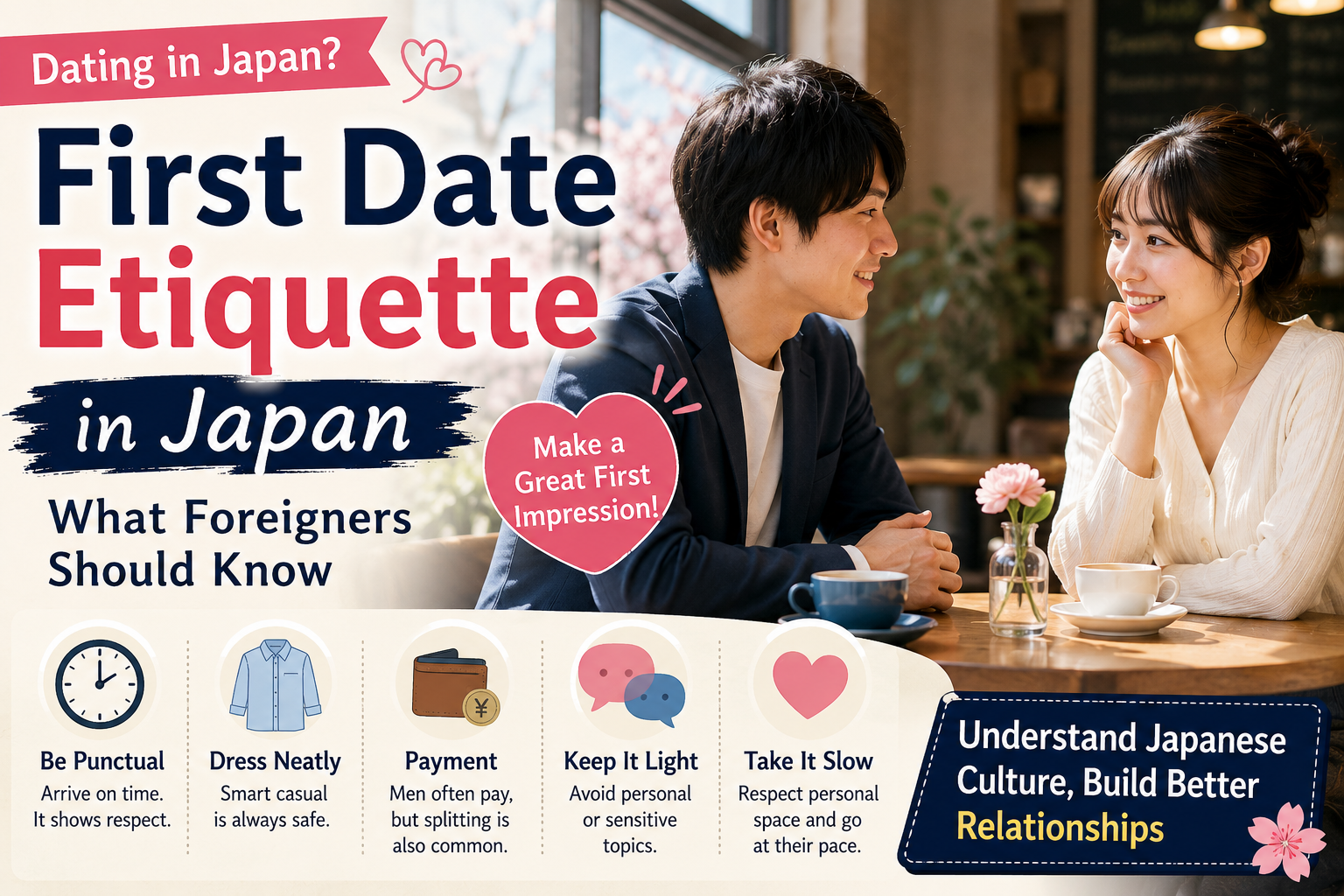
Be Punctual — Really Punctual
Punctuality is extremely important in Japan.
Arriving even five to ten minutes late without notice can create a poor first impression.
Best practice:
- Arrive 5–10 minutes early.
- Send a message if you will be delayed.
- Respect the schedule and your date’s time.
Being punctual demonstrates reliability, responsibility, and respect.
What Should You Wear?
Japanese people often dress more formally for first dates than many Westerners expect.
Good choices include:
For Men
- Clean button-up shirts
- Simple sweaters
- Dark jeans or slacks
- Clean sneakers or leather shoes
Avoid:
- Tank tops
- Gym clothes
- Excessive accessories
- Dirty sneakers
For Women
- Casual but elegant outfits
- Dresses or skirts
- Neutral colors
- Minimal accessories
The goal is to appear clean, mature, and considerate.
Should You Hug or Kiss on the First Date?
This is one of the biggest cultural differences.
In many Western countries, physical affection on a first date is common.
In Japan, however, physical contact often develops more slowly.
Many Japanese people may feel uncomfortable with:
- Hugging immediately
- Holding hands on the first date
- Kissing after the first meeting
- Excessive physical touching
Of course, everyone is different, but moving too quickly physically can sometimes create a negative impression.
Who Pays on a First Date in Japan?
Traditionally, men often paid for first dates in Japan.
Today, the situation is more flexible.
Common scenarios include:
- The man pays everything.
- The bill is split equally.
- One person pays dinner while the other pays for coffee or dessert.
If you’re a foreign man dating a Japanese woman, offering to pay is generally considered polite.
However, don’t be surprised if your date insists on paying her share.
A good approach is:
“I’ll pay this time. You can get the next one.”
This often feels comfortable and respectful.
Conversation Topics to Avoid
Japanese first dates tend to avoid highly personal or controversial topics.
Avoid discussing:
- Politics
- Religion
- Past relationships
- Salary
- Marriage pressure
- Sexual topics
Instead, focus on:
- Hobbies
- Travel
- Food
- Movies
- Anime
- Work experiences
- Japanese culture
- Future goals
The objective is to create a relaxed and comfortable atmosphere.
Don’t Expect Immediate Emotional Openness
Many foreigners worry that their Japanese date isn’t interested because they appear reserved.
However, emotional openness in Japan often develops gradually.
Your date may:
- Speak quietly
- Avoid strong emotional expressions
- Be shy
- Avoid direct compliments
- Take time to open up
This doesn’t necessarily mean they dislike you.
In many cases, they simply need more time to build trust.
What Happens After the First Date?
Unlike some Western dating cultures, Japanese people often do not discuss relationship status immediately.
After the date:
- Send a thank-you message.
- Express that you enjoyed spending time together.
- Suggest another meeting if interested.
For example:
“I had a great time today. Thank you for meeting me. I’d love to see you again.”
This simple message is considered thoughtful and polite.
Common Mistakes Foreigners Make on Japanese First Dates
Here are some of the most common mistakes:
Moving Too Fast Physically
Physical intimacy often develops more slowly in Japan.
Being Too Aggressive
Persistent flirting or strong compliments can sometimes feel overwhelming.
Talking Only About Yourself
Japanese conversations often emphasize balance and mutual interest.
Assuming Silence Means Failure
Japanese people may be comfortable with moments of silence.
Assuming You’re Officially Dating
Several dates do not automatically mean you’re in a relationship.
In Japan, an official confession (kokuhaku) often defines when dating truly begins.
Do Dating Apps Change These Rules?
To some extent, yes.
Younger Japanese people who use apps like:
- Tinder
- Bumble
- Pairs
- Omiai
may adopt more international dating styles.
However, many traditional expectations remain, including:
- Politeness
- Respect
- Emotional patience
- Clear communication
Final Thoughts
Japanese first date etiquette is less about strict rules and more about showing consideration, patience, and respect.
If you’re dating in Japan, remember:
- Be punctual.
- Dress neatly.
- Avoid rushing physical intimacy.
- Communicate politely.
- Be patient with emotional expression.
Most importantly, don’t assume that Japanese dating works exactly like dating in your home country.
Understanding these cultural differences can make your dating experience in Japan far more enjoyable—and may even help you build a stronger and more meaningful relationship.
FAQ
Who usually pays on a first date in Japan?
Traditionally, men often paid, but splitting the bill has become increasingly common.
Is kissing on the first date normal in Japan?
Generally, physical intimacy develops more slowly in Japan than in many Western countries.
How long are Japanese first dates?
Most first dates last between two and five hours.
Should I hug my Japanese date?
Unless you know your date is comfortable with physical affection, it’s usually better to avoid initiating a hug on the first meeting.
How do I know if a Japanese person likes me?
Interest is often shown through consistent communication, making time to meet, and gradually becoming more emotionally open.