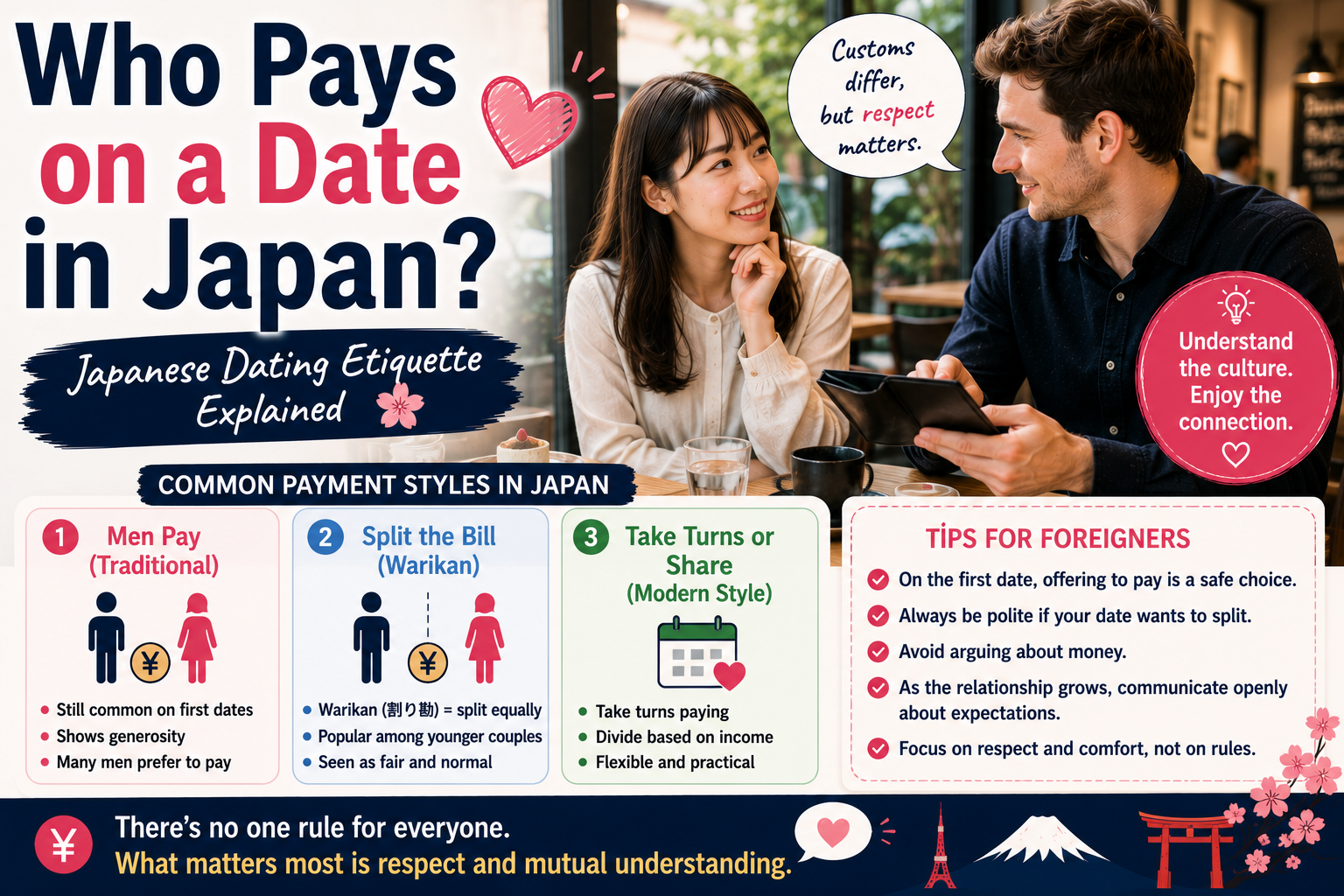
One of the most common questions foreigners ask when dating in Japan is: “Who pays on a date in Japan?”
In some countries, splitting the bill equally is standard. In others, men are expected to pay for everything.
Japan falls somewhere in between.
The truth is that there is no single rule that all Japanese couples follow. However, there are certain cultural expectations and common patterns that may surprise foreigners.
If you’re dating in Japan, understanding who usually pays can help you avoid awkward situations and make a good impression.
So, Who Usually Pays?
Traditionally, Japanese men often paid for dates.
Even today, many Japanese men still choose to:
- Pay the entire bill
- Pay more than their partner
- Refuse to accept money from their date
This is especially common during:
- First dates
- Early stages of dating
- Relationships with traditional gender expectations
However, modern dating culture in Japan has become much more flexible.
Many couples now:
- Split the bill equally
- Alternate paying
- Divide expenses based on income
- Share costs informally
There is no universal rule.
What Happens on the First Date?
On a first date, many Japanese men still prefer to pay.
This may be because they want to:
- Show generosity
- Demonstrate seriousness
- Create a good impression
- Follow traditional expectations
However, many Japanese women will still offer to contribute.
A common interaction looks like this:
Woman: “How much should I pay?”
Man: “No, it’s okay. I’ll pay.”
Woman: “Are you sure?”
Man: “Yes, don’t worry.”
Even if a woman expects the man to pay, she may still offer as a gesture of politeness.
Should Foreign Men Pay?
If you are a foreign man dating in Japan, paying on the first date is usually a safe choice.
This does not mean that Japanese women expect foreigners to pay for everything.
Rather, paying can communicate:
- Generosity
- Confidence
- Consideration
- Serious interest
If your date insists on paying her share, you can simply accept politely.
The goal is not to “win” the payment battle.
The goal is to avoid making the situation uncomfortable.
What Is Warikan?
A common Japanese expression is:
Warikan (割り勘)
Warikan means splitting the bill equally.
Many younger Japanese couples now prefer warikan because they believe relationships should be financially equal.
Warikan is particularly common among:
- University students
- Young professionals
- Couples in large cities
- People with progressive views on relationships
For many young Japanese adults, splitting the bill feels fair and practical.
Do Japanese Women Expect Men to Pay?
Some do.
Some don’t.
Many Japanese women fall somewhere in the middle.
For example, some women may prefer:
- Men paying on the first date
- Splitting later dates
- Alternating payments
- Paying according to income differences
Preferences vary greatly depending on:
- Age
- Personality
- Education
- Income
- Family background
- Personal values
Assuming all Japanese women expect men to pay is a mistake.
How Does Age Affect Dating Expenses?
Age often influences expectations.
Younger Couples
Younger couples often:
- Split bills equally
- Alternate payments
- Prioritize fairness
Older Couples
Older generations may prefer more traditional arrangements, where men pay more frequently.
Married Couples
After marriage, finances are often managed jointly, although practices vary significantly.
What About Foreign Women Dating Japanese Men?
Many foreign women notice that Japanese men often:
- Offer to pay initially
- Prefer organized dating plans
- Avoid discussing money directly
However, some foreign women are surprised when Japanese men suggest splitting the bill.
Neither approach is considered rude in Japan.
Why Is Paying Such a Sensitive Topic?
Money can communicate many things in Japanese dating culture.
Paying may signal:
- Respect
- Seriousness
- Responsibility
- Generosity
- Social expectations
At the same time, insisting too strongly can also create discomfort.
This is why many Japanese people prefer a polite negotiation rather than a strict rule.
What Should Foreigners Actually Do?
If you’re unsure, a good strategy is:
Always Offer
Offer to pay or contribute.
Observe Your Partner’s Reaction
Pay attention to what makes them comfortable.
Avoid Arguing
Do not insist repeatedly.
Discuss Expectations Later
As the relationship develops, communication becomes easier.
Prioritize Comfort Over Rules
The best approach is often the one that makes both people feel respected.
Common Mistakes Foreigners Make
Some mistakes include:
Assuming Japanese Women Expect Free Meals
Many do not.
Refusing to Let Your Date Contribute
This can sometimes feel uncomfortable.
Arguing About the Bill
Japanese people generally prefer avoiding conflict.
Applying Your Home Country’s Rules
Japanese dating culture often follows different social expectations.
Is Splitting the Bill a Bad Sign?
Not at all.
Many foreigners worry:
“She wanted to split the bill. Does that mean she isn’t interested?”
Usually, the answer is no.
In Japan, splitting the bill can simply mean:
- She values equality.
- She wants to avoid burdening you.
- She feels independent.
- She believes splitting is normal.
The payment itself often says less about attraction than foreigners expect.
Final Thoughts
Who pays on a date in Japan?
The honest answer is:
It depends on the couple.
While traditional expectations still influence Japanese dating culture, modern relationships are increasingly flexible.
The most important thing is not who pays.
What matters most is:
- Respect
- Communication
- Consideration
- Mutual comfort
If both people feel respected, then the date was successful—regardless of who picked up the bill.
FAQ
Do Japanese men usually pay for dates?
Many do, especially on first dates, although splitting the bill has become increasingly common.
What does warikan mean?
Warikan (割り勘) means splitting the bill equally.
Should foreign men pay on the first date?
Paying is generally a safe and polite option, but every person is different.
Do Japanese women expect men to pay?
Some do, some don’t. Individual preferences vary significantly.
Is splitting the bill a sign of rejection?
No. Many Japanese people simply view splitting expenses as fair and normal.