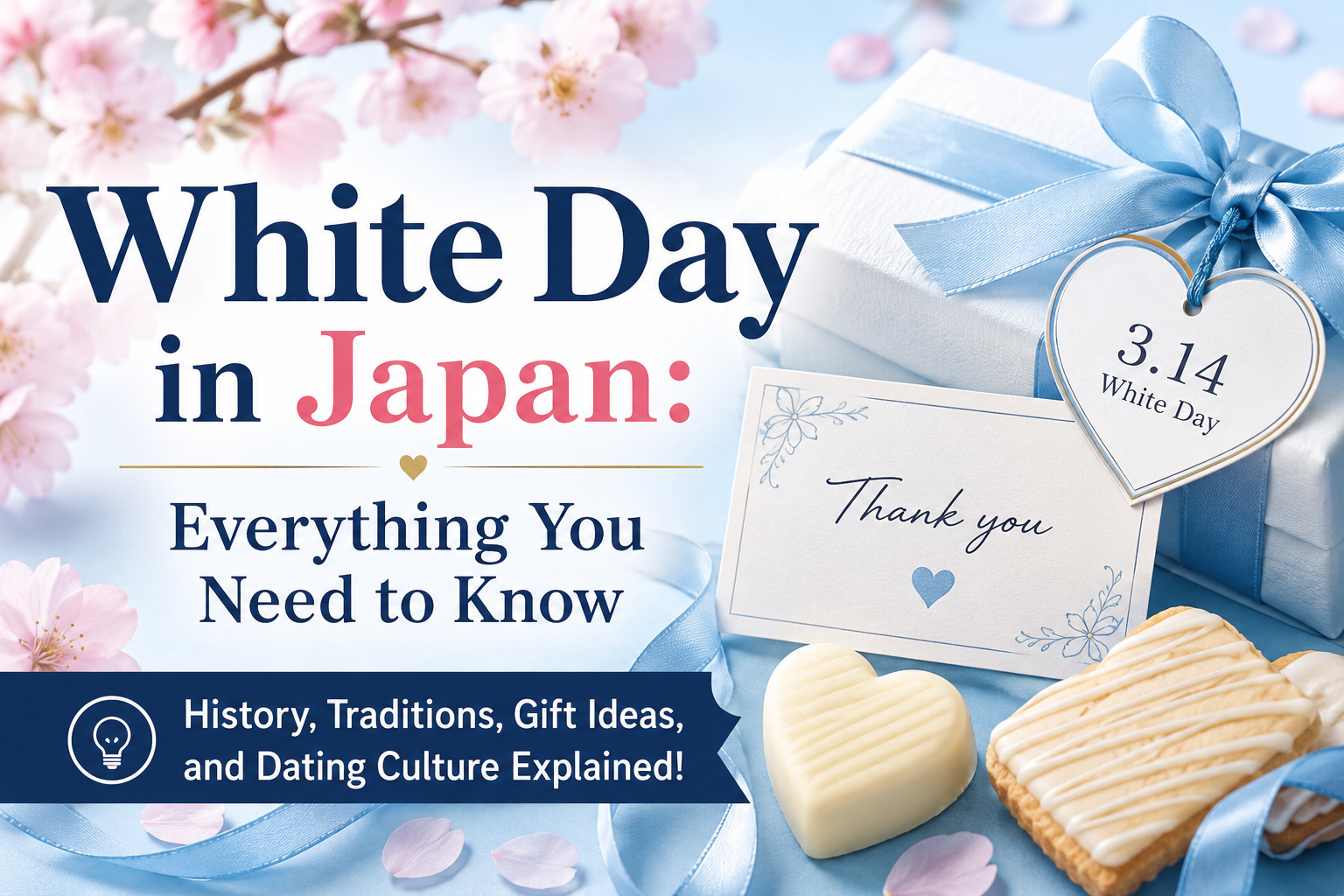
If you’ve ever heard of Valentine’s Day in Japan, you may have also come across another unique romantic holiday: White Day. Celebrated exactly one month after Valentine’s Day, White Day is a fascinating Japanese tradition that surprises many foreigners.
Unlike Western countries, where both partners usually exchange gifts on Valentine’s Day, Japan follows a different system. Women typically give chocolates to men on February 14, and men return the favor on March 14 during White Day.
Whether you’re dating a Japanese woman, planning a trip to Japan in March, or simply curious about Japanese culture, here’s everything you need to know about White Day in Japan.
What Is White Day in Japan?
White Day is celebrated every year on March 14, exactly one month after Valentine’s Day.
On this day, men give gifts to women who gave them chocolates or presents on Valentine’s Day. The holiday originated in Japan and later spread to other East Asian countries such as South Korea and Taiwan.
White Day is not an official public holiday, but it remains an important cultural event, especially among couples, students, and coworkers.
The History of White Day
White Day began in Japan in the late 1970s.
According to popular accounts, Japanese confectionery companies wanted to create a special day for men to return Valentine’s gifts. The holiday was officially promoted by the National Confectionery Industry Association in 1980.
Originally, marshmallows were the primary gift, leading some people to call it “Marshmallow Day.” Eventually, the tradition expanded to include chocolates, cookies, jewelry, flowers, and luxury gifts.
Today, White Day has become deeply embedded in Japanese dating culture.
How Does Valentine’s Day Work in Japan?
To understand White Day, you first need to understand Japanese Valentine’s Day traditions.
In Japan, women typically give chocolates to men. There are several categories:
Honmei Choco (Romantic Chocolate)
These chocolates are given to a boyfriend, husband, or someone the woman has romantic feelings for.
They are often handmade or more expensive than regular chocolates.
Giri Choco (Obligation Chocolate)
These chocolates are given to male coworkers, bosses, classmates, or friends without romantic intentions.
Although less common than in the past, giri choco remains part of Japanese workplace culture.
Tomo Choco (Friendship Chocolate)
These chocolates are exchanged among friends, especially between female friends.
Jibun Choco (Self-Gift Chocolate)
Many Japanese women now buy luxury chocolates for themselves as a personal treat.
What Do Men Give on White Day?
Traditionally, men are expected to return a gift that is worth more than the original Valentine’s gift.
This custom is sometimes called sanbai gaeshi, meaning “returning three times the value.”
Popular White Day gifts include:
- White chocolate
- Cookies
- Macarons
- Candy
- Flowers
- Perfume
- Jewelry
- Accessories
- Luxury desserts
- Romantic dinners
The type of gift often reflects the seriousness of the relationship.
Does Gift Meaning Matter?
Interestingly, some Japanese people believe that certain White Day gifts carry hidden meanings.
Cookies
Cookies generally symbolize friendship and casual affection.
Candy
Candy can symbolize romantic interest or attraction.
Marshmallows
Traditionally, marshmallows were sometimes interpreted as a polite rejection, although many Japanese people no longer take this symbolism seriously.
Macarons
Macarons are often considered a sign of special affection and appreciation.
However, modern Japanese people generally focus more on the thoughtfulness of the gift rather than these traditional interpretations.
Is White Day Important for Dating in Japan?
Yes, White Day can play an important role in Japanese dating culture.
For couples, White Day serves as an opportunity to:
- Express gratitude
- Confirm romantic feelings
- Strengthen relationships
- Exchange meaningful gifts
- Plan romantic dates
For someone interested in dating Japanese women, understanding White Day etiquette demonstrates cultural awareness and consideration.
Failing to reciprocate after receiving a Valentine’s gift may be viewed as rude or inconsiderate.
Do Young Japanese People Still Celebrate White Day?
White Day remains popular, but its significance has changed.
Several recent trends have emerged:
- Fewer people participate in workplace obligation gift exchanges.
- Younger generations prefer more casual celebrations.
- Couples increasingly focus on experiences rather than expensive gifts.
- Self-gifting culture continues to grow.
- Handmade gifts are becoming less common due to busy lifestyles.
Despite these changes, White Day remains an important seasonal event in Japan.
White Day Gift Ideas for Your Japanese Girlfriend
If you’re dating a Japanese woman, here are some safe and popular White Day gift options:
Budget-Friendly Gifts
- Premium chocolates
- Macarons
- Flowers
- Cute accessories
Mid-Range Gifts
- Perfume
- Jewelry
- Luxury cosmetics
- Designer accessories
Romantic Experiences
- Fine dining
- Hotel staycation
- Weekend trip
- Theme park date
- Couple spa experience
The most important factor is demonstrating sincerity and appreciation.
White Day vs Valentine’s Day: What’s the Difference?
| Valentine’s Day | White Day |
|---|---|
| February 14 | March 14 |
| Women give gifts | Men return gifts |
| Chocolates are common | Various gifts are common |
| Confession opportunities | Relationship confirmation |
| Romantic and social | Primarily reciprocal |
This unique two-step celebration makes Japanese romance culture quite different from Western traditions.
Is White Day Only Celebrated in Japan?
No.
Several East Asian countries celebrate White Day, including:
- Japan
- South Korea
- Taiwan
- China (to a lesser extent)
However, Japan remains the country most strongly associated with the tradition.
Final Thoughts
White Day is one of the most fascinating aspects of Japanese dating culture. It reflects important Japanese values such as reciprocity, gratitude, and social harmony.
Whether you’re dating a Japanese partner or simply exploring Japanese culture, understanding White Day can help you better appreciate how romance and social customs work in Japan.
If you ever receive Valentine’s chocolates in Japan, remember one important thing: don’t forget March 14.
FAQ
When is White Day in Japan?
White Day is celebrated every year on March 14.
Why is it called White Day?
The name originated from white marshmallows and white chocolate that were originally promoted as gifts.
Do all Japanese men celebrate White Day?
Not everyone participates, but many people still exchange gifts, especially couples.
What happens if you don’t give a White Day gift?
If someone gave you a Valentine’s gift, failing to reciprocate may be considered impolite.
Is White Day romantic?
It can be. White Day is often celebrated by couples, but it also includes social and friendship obligations.