If you’re familiar with Valentine’s Day in Western countries, Japanese Valentine’s Day may surprise you.
In many countries, Valentine’s Day is a celebration where couples exchange gifts, flowers, and romantic messages. In Japan, however, the tradition works quite differently.
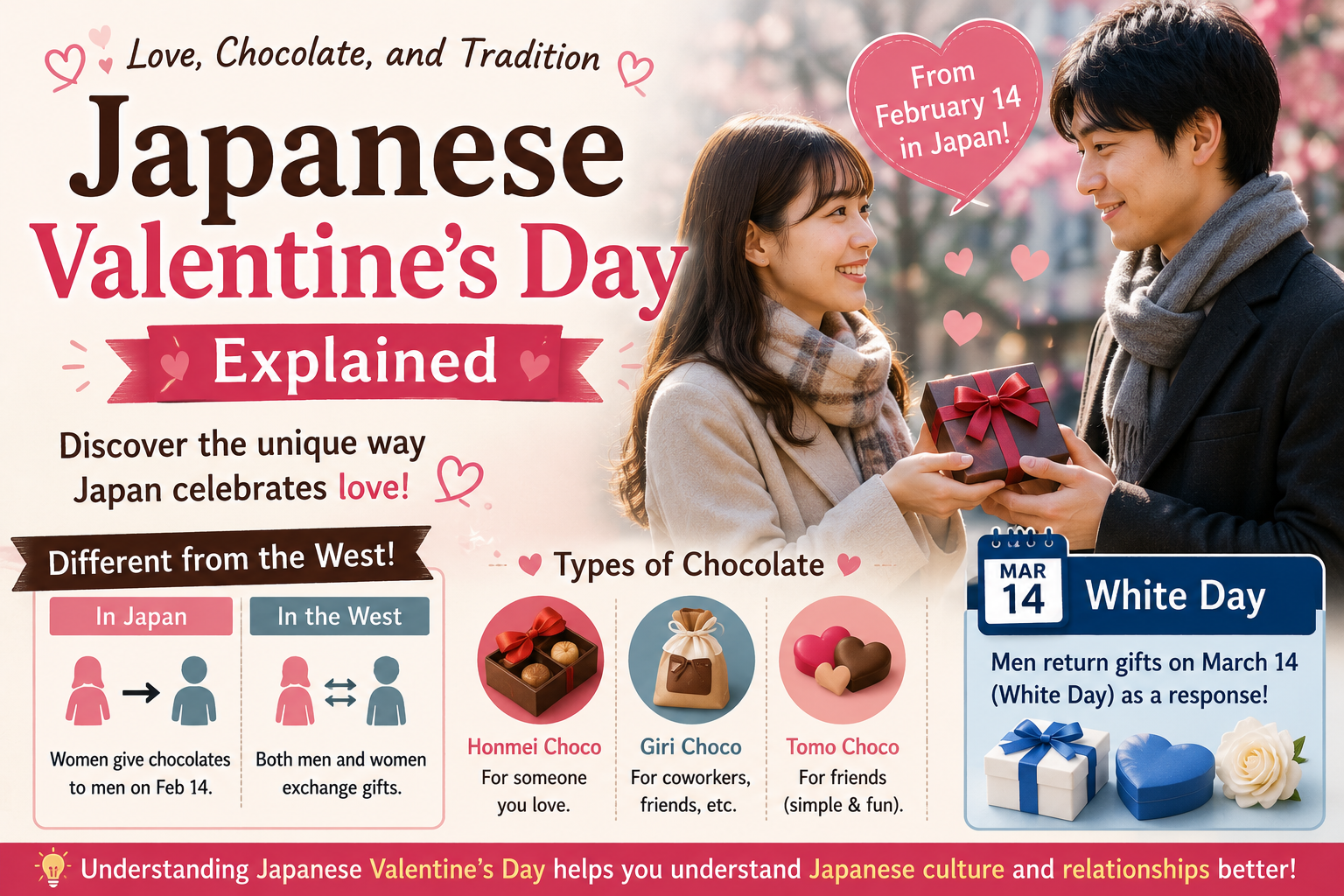
On February 14, women traditionally give chocolates to men, while men respond exactly one month later on March 14, known as White Day.
This unique system has created one of the most fascinating and sometimes confusing dating traditions in the world.
So, how does Japanese Valentine’s Day actually work?
How Did Valentine’s Day Become Popular in Japan?
Valentine’s Day was introduced to Japan after World War II through marketing campaigns by Japanese confectionery companies.
Unlike Western Valentine’s Day traditions, Japanese businesses promoted the idea that women should give chocolates to men as an expression of affection.
Over time, this commercial campaign evolved into a nationwide cultural tradition that remains influential today.
Eventually, another holiday called White Day was created, allowing men to return gifts one month later.
Why Do Women Give Chocolates to Men?
One of the biggest surprises for foreigners is that Valentine’s Day in Japan traditionally focuses on women giving gifts.
Historically, women would give chocolates to:
- Romantic partners
- Crushes
- Husbands
- Male friends
- Coworkers
- Family members
The type of chocolate often carries a specific meaning.
What Is Honmei Chocolate?
Honmei choco (本命チョコ) means “true feelings chocolate.”
This is chocolate given to:
- A boyfriend
- Husband
- Romantic interest
- Someone the giver genuinely loves
Honmei chocolate is often:
- More expensive
- Handmade
- Carefully selected
- Packaged beautifully
For many Japanese people, receiving honmei chocolate can be an important romantic signal.
In some cases, Valentine’s Day even serves as an opportunity for a romantic confession, similar to kokuhaku (告白).
What Is Giri Chocolate?
Perhaps the most famous aspect of Japanese Valentine’s Day is giri choco (義理チョコ), or “obligation chocolate.”
These chocolates are given not because of romantic feelings, but out of politeness or social obligation.
People may give giri chocolate to:
- Male coworkers
- Bosses
- Business associates
- Classmates
- Friends
Giri chocolate is usually:
- Less expensive
- Mass-produced
- Given in larger quantities
In recent years, however, giri chocolate has become less popular because many people feel pressured by the obligation.
What Is Tomo Chocolate?
Another modern trend is tomo choco (友チョコ), which means “friend chocolate.”
These chocolates are exchanged between friends, particularly among female students.
Tomo choco is about friendship rather than romance and has become increasingly popular among younger generations.
What Is Jibun Chocolate?
In recent years, many Japanese women have embraced jibun choco (自分チョコ), meaning “self-love chocolate.”
Instead of buying chocolates for others, people buy luxury chocolates for themselves.
This trend reflects changing attitudes toward Valentine’s Day and personal happiness.
What Is White Day?
If a man receives chocolate on Valentine’s Day, he is traditionally expected to respond on March 14th, known as White Day.
On White Day, men often give:
- Chocolate
- Cookies
- Candy
- Jewelry
- Flowers
- Luxury gifts
Traditionally, there was an expectation called sanbai gaeshi (三倍返し), meaning the return gift should be worth two or three times more than the original gift.
While this expectation has weakened over time, many Japanese people still participate in White Day traditions.
Is Japanese Valentine’s Day Romantic?
Yes and no.
For couples, Valentine’s Day can be very romantic.
However, because Valentine’s Day also involves:
- Coworkers
- Friends
- Family members
- Social obligations
the holiday often feels less exclusively romantic than in Western countries.
Many foreigners are surprised to learn that receiving chocolate doesn’t always mean romantic interest.
Do Men Ever Give Chocolates on Valentine’s Day?
Traditionally, no.
However, younger generations and international couples are increasingly adopting more flexible customs.
Today, some couples simply exchange gifts equally, similar to Western Valentine’s Day traditions.
Is Valentine’s Day Still Popular in Japan?
Yes, but it’s changing.
Several trends have emerged in recent years:
- Declining popularity of giri chocolate
- Increased popularity of self-gifting
- More gender-neutral gift exchanges
- Greater influence from international culture
- More emphasis on romantic partners rather than workplace obligations
Despite these changes, Valentine’s Day remains one of Japan’s largest annual commercial and cultural events.
Valentine’s Day and Dating Culture in Japan
Japanese Valentine’s Day reveals several important aspects of Japanese dating culture:
- Romantic feelings are often expressed indirectly.
- Gifts can communicate emotions that words cannot.
- Social relationships influence romantic behavior.
- Traditional customs continue to shape modern dating.
For foreigners dating Japanese partners, understanding Valentine’s Day customs can help avoid misunderstandings and create meaningful experiences.
Should Foreigners Participate?
Absolutely.
If you’re dating a Japanese person, participating in Valentine’s Day and White Day traditions can demonstrate cultural understanding and thoughtfulness.
You don’t need to follow every traditional rule perfectly.
What matters most is showing sincerity, appreciation, and consideration.
Final Thoughts
Japanese Valentine’s Day is far more than simply giving chocolate.
It reflects Japanese values surrounding romance, social obligation, emotional expression, and interpersonal relationships.
Whether it’s honmei chocolate for true love, giri chocolate for social harmony, or self-gifting for personal happiness, Valentine’s Day in Japan offers a fascinating glimpse into Japanese culture and modern relationships.
For anyone interested in dating, romance, or cultural differences, Japanese Valentine’s Day remains one of Japan’s most unique traditions.
FAQ
Why do women give chocolates on Valentine’s Day in Japan?
This custom originated from post-war marketing campaigns and eventually became a nationwide cultural tradition.
What is honmei chocolate?
Honmei chocolate is given to someone for whom the giver has genuine romantic feelings.
What is giri chocolate?
Giri chocolate is given out of politeness or social obligation rather than romantic interest.
What is White Day?
White Day takes place on March 14, when men traditionally give return gifts to women who gave them chocolates on Valentine’s Day.
Is Valentine’s Day still popular among young Japanese people?
Yes, although traditions have evolved to include self-gifting, friendship chocolates, and more flexible gender roles.