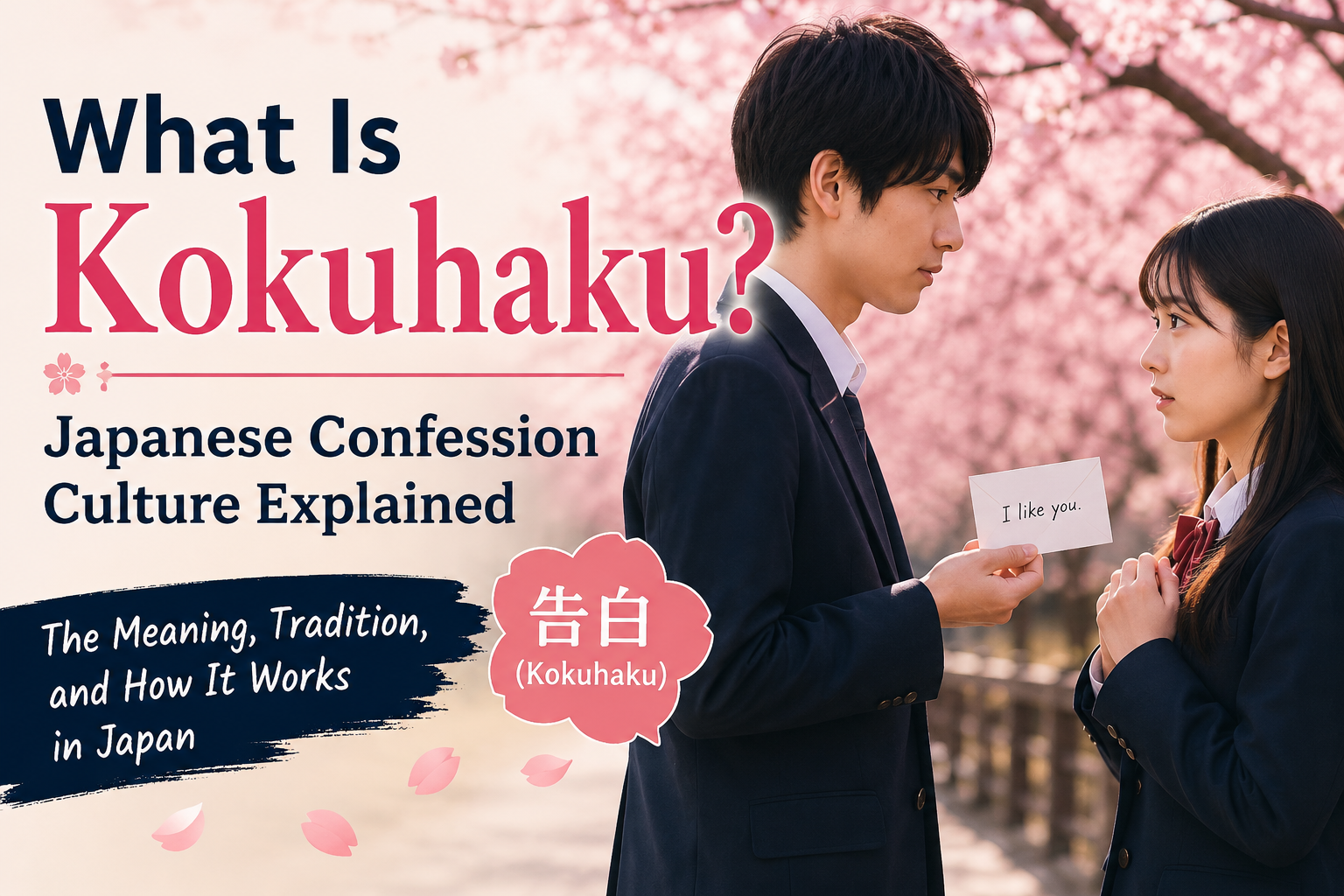
If you’ve watched Japanese anime, dramas, or movies, you’ve probably seen a scene where someone nervously says, “Please go out with me” or “I like you. Will you be my boyfriend/girlfriend?” This moment is called kokuhaku (告白) — one of the most unique and important aspects of Japanese dating culture.
Unlike many Western countries, where relationships often develop gradually through casual dating, Japan traditionally places significant importance on an official confession of romantic feelings before a couple becomes exclusive.
So, what exactly is kokuhaku, why is it so important in Japan, and does it still exist today? Let’s explore Japanese confession culture in depth.
What Does Kokuhaku Mean?
“Kokuhaku” (告白) literally means “confession” or “to confess.”
In the context of dating, it refers to the moment when someone clearly expresses their romantic feelings and asks the other person to enter an exclusive relationship.
Typical examples include:
- “Suki desu. Tsukiatte kudasai.” (I like you. Please go out with me.)
- “Zutto suki deshita.” (I’ve liked you for a long time.)
- “Boku to tsukiatte kuremasen ka?” (Would you be my girlfriend?)
For many Japanese people, this confession marks the official beginning of a romantic relationship.
Why Is Kokuhaku Important in Japan?
One of the biggest cultural differences between Japan and many Western countries is how romantic relationships begin.
In countries like the United States, Canada, or the UK, people often:
- Go on several dates casually
- Develop feelings gradually
- Decide later whether to become exclusive
In Japan, however, many people prefer clarity from the beginning.
Kokuhaku serves several purposes:
It Establishes Exclusivity
A successful confession means both people agree to become an official couple. Without a confession, many Japanese people may consider the relationship ambiguous or unofficial.
It Reduces Misunderstandings
Japanese communication culture often values indirectness. Ironically, romantic relationships are one area where direct communication is encouraged to avoid confusion.
It Demonstrates Serious Intentions
Confessing requires courage and emotional vulnerability. Because of this, kokuhaku often signals genuine romantic interest rather than casual attraction.
How Does Kokuhaku Usually Happen?
Traditionally, a confession occurs after several dates or after spending considerable time together.
Common settings include:
- Walking home after a date
- A quiet park at night
- During a festival
- After graduation ceremonies
- Through a phone call or message
Popular culture often portrays dramatic confessions under cherry blossom trees or during fireworks festivals, although real-life confessions are usually much simpler.
Typical steps include:
- Meeting someone through school, work, or friends
- Going on several dates
- Developing mutual attraction
- One person making a confession
- Becoming an official couple
What Happens If There Is No Kokuhaku?
Without an explicit confession, many Japanese people may hesitate to assume they’re in a relationship.
This can create confusion for foreigners dating Japanese partners.
For example:
- You may think you’re already dating after multiple dates.
- Your Japanese partner may believe you’re still getting to know each other.
This cultural difference sometimes leads to misunderstandings in international relationships.
Is Kokuhaku Still Common Among Young Japanese People?
Yes, but it’s changing.
Younger generations increasingly adopt dating styles influenced by social media, global culture, and dating apps. Some couples now become exclusive naturally without a formal confession.
However, surveys and social observations suggest that many Japanese people still appreciate the clarity and sincerity that kokuhaku provides.
Even among younger adults, asking:
“Are we officially dating?”
remains an important conversation.
Kokuhaku in Japanese Anime and Dramas
If you’re interested in Japanese pop culture, you’ve likely seen countless confession scenes.
Common examples include:
- Confessing under cherry blossoms
- Calling someone to the school rooftop
- Confessing during a fireworks festival
- Revealing feelings on graduation day
These dramatic moments reflect the emotional significance of kokuhaku in Japanese society, even if real-life confessions tend to be less theatrical.
How Should Foreigners Handle Kokuhaku in Japan?
If you’re dating a Japanese person, understanding kokuhaku can help avoid confusion.
Here are some tips:
Don’t Assume You’re Officially Dating
Several dates don’t always mean you’re already a couple.
Communicate Clearly
If you’re unsure about the relationship status, ask directly but respectfully.
Understand That Confession Shows Seriousness
If your Japanese partner confesses their feelings, they’re often expressing genuine romantic commitment.
Don’t Be Afraid to Confess Yourself
Foreigners can absolutely initiate kokuhaku. In fact, many Japanese people appreciate direct and sincere communication.
Is Kokuhaku Better Than Western Dating?
Neither system is inherently better.
Japanese confession culture offers:
Advantages:
- Clear relationship boundaries
- Less ambiguity
- Stronger sense of commitment
Disadvantages:
- More pressure
- Fear of rejection
- Less flexibility during the early stages
Western dating culture offers:
Advantages:
- Greater flexibility
- Less pressure
- More opportunities to explore compatibility
Disadvantages:
- Potential misunderstandings
- Ambiguous relationship status
- Different expectations between partners
Ultimately, successful relationships depend more on communication than cultural traditions.
Final Thoughts
Kokuhaku is one of the most distinctive aspects of Japanese dating culture. While modern dating habits continue to evolve, the idea of clearly expressing romantic intentions remains deeply rooted in Japanese society.
For foreigners interested in dating in Japan, understanding kokuhaku can help you avoid misunderstandings and better appreciate how Japanese people approach romance and commitment.
Whether you’re watching anime, dating a Japanese partner, or simply curious about Japanese culture, kokuhaku offers fascinating insight into how love and relationships work in Japan.
FAQ
What does kokuhaku mean in Japanese?
Kokuhaku literally means “confession” and refers to confessing romantic feelings to someone and asking them to enter an exclusive relationship.
Do all Japanese couples use kokuhaku?
No. While many Japanese people still practice kokuhaku, some modern couples begin dating without a formal confession.
Can foreigners do kokuhaku in Japan?
Yes. Many Japanese people appreciate foreigners who communicate their romantic intentions clearly and sincerely.
Is kokuhaku only for serious relationships?
Generally, yes. A confession usually indicates genuine romantic interest and a desire for an exclusive relationship.
Is kokuhaku common on dating apps?
It can be. Even couples who meet through dating apps often have a conversation similar to kokuhaku before becoming official.