If you’ve visited Japan, you may have noticed something interesting: couples often walk together, go on dates, and spend time in public, but they rarely show PDA in front of others.
Compared to many Western countries, public displays of affection, often called PDA, are much less common in Japan.
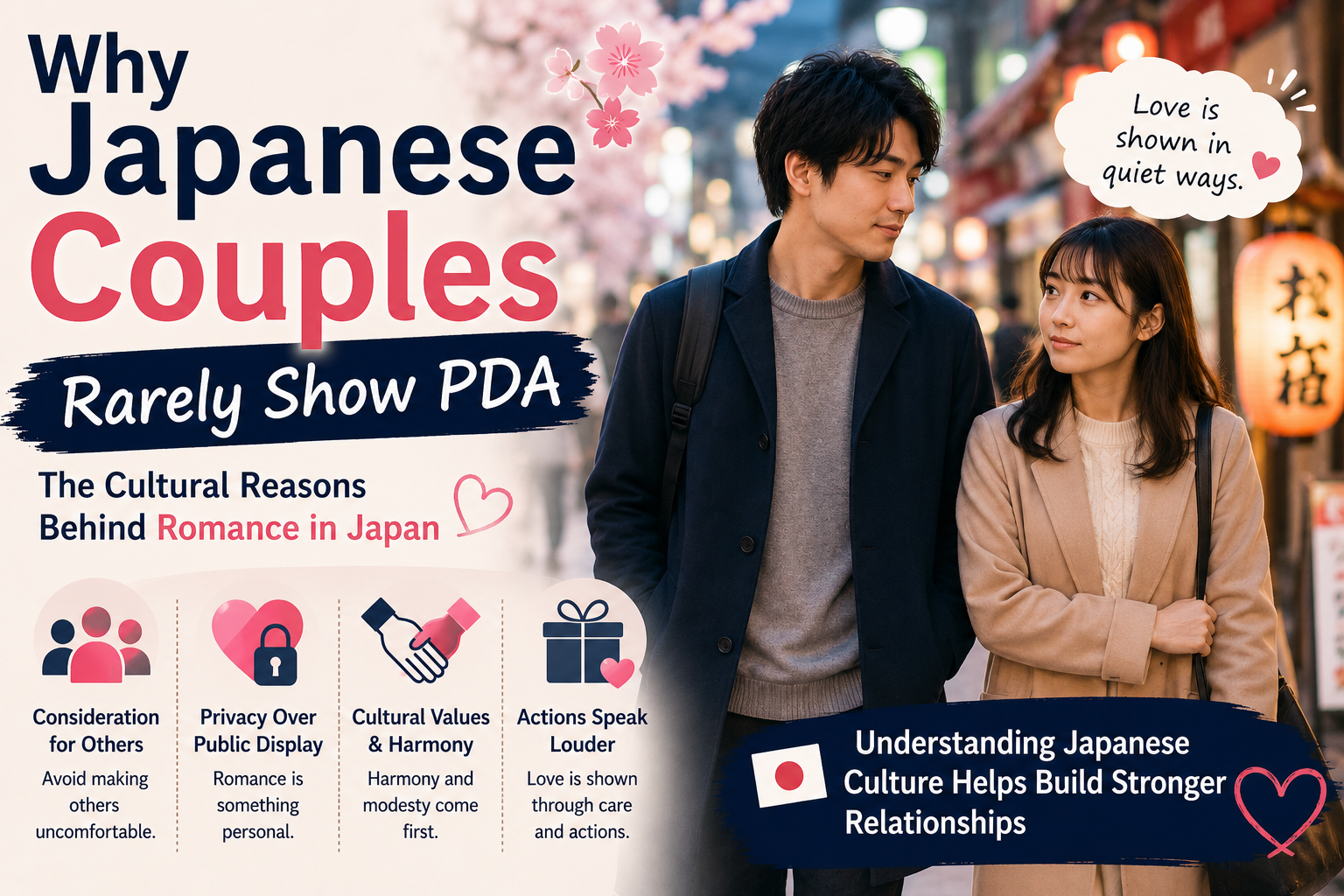
This doesn’t mean Japanese couples are cold, distant, or less romantic. Instead, it reflects cultural values around privacy, modesty, social awareness, and respect for others in shared spaces.
So, why do Japanese couples rarely show PDA? Let’s explore the cultural background behind romance in Japan.
What Does PDA Mean?
PDA stands for public display of affection.
It usually refers to romantic or physical gestures shown in public, such as:
- Kissing
- Hugging
- Holding hands
- Cuddling
- Touching a partner affectionately
- Sitting very close together
In Japan, some mild forms of PDA, such as holding hands, are common among younger couples. However, kissing, hugging, or being physically intimate in public is still considered uncomfortable or inappropriate by many people.
Is PDA Really Rare in Japan?
Yes, especially compared to many Western cultures.
You may see couples holding hands in places like Tokyo, Osaka, Kyoto, or Yokohama. However, passionate kissing or obvious physical intimacy is much less common.
This is especially true in:
- Trains
- Restaurants
- Schools
- Shopping malls
- Family-friendly spaces
- Traditional neighborhoods
- Work-related environments
Japanese couples are often more physically affectionate in private than in public.
Why Japanese Couples Rarely Show PDA
There isn’t just one reason. Several cultural factors shape how Japanese people express affection in public.
Japan Values Public Modesty
Japanese society often places importance on modest behavior in shared spaces.
Being too loud, emotional, or physically expressive in public can make others uncomfortable.
Because of this, many couples avoid drawing attention to themselves.
Romance Is Often Considered Private
In Japan, romantic intimacy is generally seen as something personal.
Couples may care deeply for each other, but they often prefer to express affection privately rather than publicly.
This is why a Japanese partner may be loving in private but reserved around friends, family, or strangers.
People Avoid Meiwaku
A key concept in Japanese social behavior is meiwaku, which means causing trouble, inconvenience, or discomfort to others.
Strong PDA may be seen as making nearby people feel awkward.
Even if no one says anything directly, people may silently judge behavior that feels too intimate for a public setting.
Harmony Matters More Than Self-Expression
Many Western cultures encourage people to express love openly.
In Japan, maintaining social harmony often matters more than expressing personal feelings in public.
This can influence not only romance, but also communication, workplace behavior, and friendships.
Traditional Gender and Social Norms Still Influence Dating
Although Japan is changing, many people still grew up with the idea that strong romantic expression in public is embarrassing.
Some couples may worry about appearing childish, dramatic, or inappropriate.
Does Holding Hands Count as PDA in Japan?
Holding hands is generally acceptable in modern Japan, especially among young couples.
You may see couples holding hands in:
- Parks
- Shopping streets
- Train stations
- Tourist areas
- Amusement parks
- Nighttime date spots
However, some people may still avoid holding hands in very public or formal settings, especially around coworkers, classmates, or family members.
What About Kissing in Public?
Kissing in public is much less common.
A quick kiss may be accepted in some urban areas or among more international couples, but long or passionate kissing can attract uncomfortable attention.
In Japan, many people feel that kissing is something that belongs in private.
Do Japanese Couples Show Affection Differently?
Yes. Affection in Japan is often expressed through actions rather than dramatic physical gestures.
A Japanese partner may show love by:
- Remembering small details
- Walking you to the station
- Buying your favorite snack
- Sending thoughtful messages
- Helping you when you’re busy
- Making future plans
- Spending consistent time with you
For many Japanese people, these quiet actions can feel more meaningful than public kissing or constant verbal affection.
Why Foreigners Sometimes Misunderstand Japanese PDA Culture
Foreigners dating Japanese partners sometimes worry that a lack of PDA means a lack of interest.
For example, a foreigner may think:
“They don’t hold my hand in public. Are they embarrassed by me?”
But the Japanese partner may simply feel:
“I care about you, but I don’t want to make others uncomfortable.”
This difference can create misunderstandings in international relationships.
How to Handle PDA When Dating a Japanese Person
If you’re dating a Japanese person, it’s best to pay attention to their comfort level.
Start Slowly
Don’t assume hugging, kissing, or touching is welcome in public.
Watch Their Body Language
If your partner pulls away, becomes quiet, or looks embarrassed, give them space.
Ask Privately
Instead of asking in front of others, talk about physical affection in a private and relaxed setting.
Respect the Situation
Holding hands at a park may be fine. Kissing on a crowded train probably isn’t.
Don’t Take It Personally
A reserved attitude in public doesn’t always mean emotional distance.
Are Younger Japanese Couples More Open to PDA?
Yes, younger generations are generally more relaxed about holding hands, hugging, and casual affection.
Social media, global culture, travel, and international dating have made some Japanese people more comfortable with visible romance.
However, even among younger couples, strong PDA is still less common than in many Western countries.
Is PDA Different in Big Cities?
Yes. PDA is more visible in large cities such as Tokyo and Osaka, especially in areas with younger crowds or many foreign residents.
You may see more relaxed behavior in:
- Shibuya
- Harajuku
- Roppongi
- Shinjuku
- Osaka’s nightlife areas
- International communities
In rural areas or more traditional settings, couples may behave more conservatively.
Final Thoughts
Japanese couples rarely show PDA because romance is often treated as private, and public behavior is shaped by modesty, social harmony, and awareness of others.
This doesn’t mean Japanese couples are less loving. In many cases, affection is simply expressed in quieter and more practical ways.
For foreigners dating in Japan, understanding this difference can prevent unnecessary insecurity and help build stronger cross-cultural relationships.
When in doubt, respect your partner’s pace, read the situation, and remember that love does not always look the same in every culture.
FAQ
Do Japanese couples hold hands in public?
Yes, holding hands is common among many young couples, especially in cities and date spots.
Is kissing in public rude in Japan?
A quick kiss may be tolerated in some places, but passionate kissing in public is often considered uncomfortable or inappropriate.
Why don’t Japanese couples hug in public?
Many Japanese people see hugging as a private gesture and may feel embarrassed doing it in front of others.
Does no PDA mean a Japanese person doesn’t like me?
Not necessarily. Many Japanese people express affection through actions, consistency, and private moments rather than public physical touch.
Are Japanese people becoming more comfortable with PDA?
Yes, younger generations and international couples may be more open to PDA, but strong public affection is still relatively uncommon.