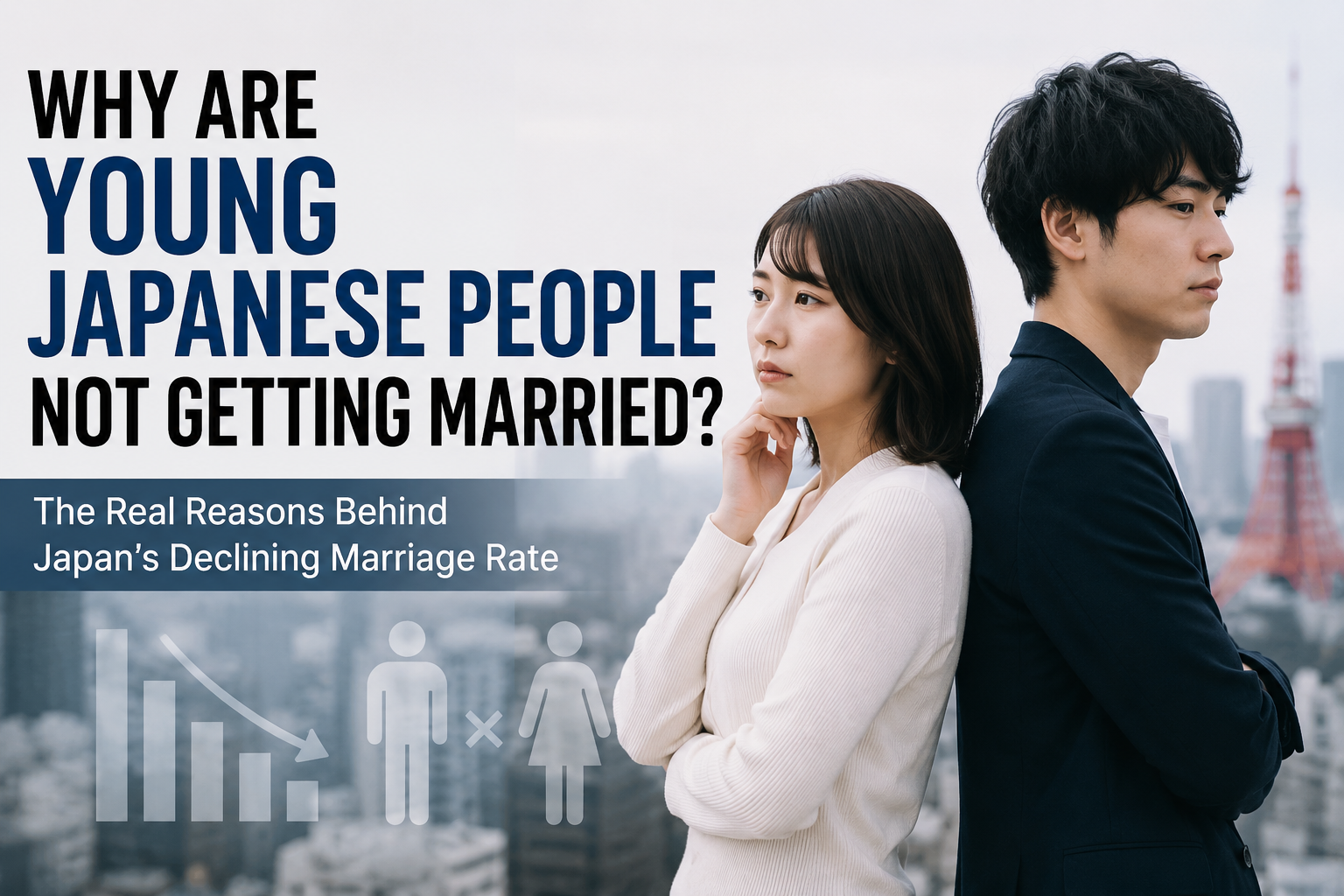
Why are young Japanese people not getting married? Japan has one of the lowest marriage rates among developed countries, and the number of young Japanese people choosing not to marry continues to attract international attention.
The answer is complex. It’s not simply because Japanese people dislike marriage or romance. Economic challenges, changing social values, work culture, and evolving expectations about relationships all play significant roles.
In this article, we’ll explore the real reasons why marriage rates are declining in Japan and what this trend means for Japanese society.
Japan’s Marriage Rate Has Been Falling for Decades
Japan’s marriage rate has steadily declined since the 1970s. According to government statistics, people are marrying later than ever before, and an increasing number of Japanese adults remain unmarried throughout their lives.
Today, it is common for people in their late 20s and even 30s to remain single. This represents a major shift from previous generations, where marriage in one’s early to mid-20s was considered the norm.
Several factors have contributed to this social transformation.
Economic Insecurity Makes Marriage Difficult
One of the biggest reasons young Japanese people avoid marriage is economic uncertainty.
Low Salaries and Rising Living Costs
Many young adults face stagnant wages while housing, childcare, and daily expenses continue to rise. Starting a family requires significant financial stability, which many people feel they lack.
For example, many young workers are employed in:
- Temporary jobs
- Contract positions
- Part-time employment
- Low-paying service industries
Without stable income, marriage often feels financially risky.
The High Cost of Raising Children
In Japan, raising children is expensive. Parents often invest heavily in education, extracurricular activities, and childcare. Many couples worry that they cannot afford to provide the lifestyle expected for their future children.
As a result, some people delay marriage indefinitely.
Japan’s Work Culture Leaves Little Time for Relationships
Japan’s demanding work culture remains another major obstacle.
Long Working Hours
Many employees work overtime regularly, leaving limited opportunities to socialize or date. Building and maintaining romantic relationships becomes difficult when work consumes most of one’s time and energy.
Career Pressure
Young professionals, especially women, increasingly prioritize career development. Marriage and family life can sometimes be viewed as obstacles to professional advancement.
This creates tension between traditional expectations and modern ambitions.
Young Japanese People Have Different Values Than Previous Generations
The younger generation in Japan often has a different view of marriage compared to their parents and grandparents.
Marriage Is No Longer Seen as Mandatory
In the past, marriage was considered an essential life milestone. Today, many Japanese people believe happiness can be achieved without marriage.
Common priorities now include:
- Personal freedom
- Career success
- Hobbies and interests
- Financial independence
- Friendships and social life
Marriage has become a personal choice rather than a social obligation.
Individualism Is Increasing
Japanese society has gradually become more individualistic. Younger generations place greater emphasis on self-fulfillment and personal happiness than previous generations did.
As a result, many people ask themselves:
“Will marriage improve my life?”
If the answer is uncertain, they may choose to remain single.
Japanese Dating Culture Creates Additional Challenges
Dating itself can be difficult in modern Japan.
Fewer Opportunities to Meet People
Traditional methods of meeting potential partners, such as introductions through family, coworkers, or local communities, have become less common.
Meanwhile, many young adults report:
- Smaller social circles
- Limited free time
- Social anxiety
- Difficulty expressing romantic interest
High Expectations for Marriage
Many Japanese people still view marriage as a lifelong commitment that requires complete compatibility and financial stability.
Because expectations are so high, some people delay marriage while waiting for the “perfect” partner or the “right” circumstances.
Women Are Becoming More Financially Independent
Another important factor is the increasing economic independence of Japanese women.
In previous generations, marriage often provided financial security. Today, many women can support themselves and pursue successful careers without relying on marriage.
As a result, women may delay marriage if they feel a relationship would:
- Reduce their career opportunities
- Increase domestic responsibilities
- Create unequal expectations within the household
This reflects broader changes in gender roles throughout Japanese society.
Some Young Japanese People Simply Prefer Being Single
For some individuals, remaining single is not a problem to solve.
Many young Japanese adults enjoy:
- Living alone
- Traveling independently
- Pursuing hobbies
- Spending time with friends
- Having complete control over their lifestyle
Rather than seeing marriage as necessary for happiness, they see it as one option among many.
Is Japan Facing a Marriage Crisis?
The declining marriage rate has created serious social challenges for Japan.
These include:
- A declining birth rate
- Population aging
- Labor shortages
- Increased pressure on social welfare systems
- Economic concerns about long-term growth
The Japanese government has introduced policies aimed at encouraging marriage and childbearing, but reversing these trends has proven difficult.
Will Young Japanese People Start Marrying Again?
There is no simple solution.
Experts believe that increasing marriage rates would require major social changes, including:
- Higher wages
- Better work-life balance
- Affordable childcare
- Greater gender equality
- More support for young families
Until these structural issues improve, many young Japanese people will likely continue delaying marriage or choosing not to marry at all.
Conclusion
The reason young Japanese people are not getting married is not because they dislike love or relationships.
Instead, a combination of economic uncertainty, demanding work culture, changing values, evolving gender roles, and shifting ideas about happiness has transformed how younger generations view marriage.
Understanding these factors provides valuable insight not only into modern Japan but also into broader social changes occurring across many developed countries.
FAQ
Why are fewer Japanese people getting married?
Economic insecurity, long working hours, changing social values, and increasing individualism are among the primary reasons.
At what age do Japanese people typically marry?
The average age of first marriage in Japan is now around the early 30s for both men and women.
Do Japanese people still want to get married?
Many do, but they often delay marriage due to financial concerns, career priorities, or difficulty finding suitable partners.
Is Japan’s low birth rate related to marriage?
Yes. Since most children in Japan are born within marriage, declining marriage rates contribute directly to the country’s low birth rate.