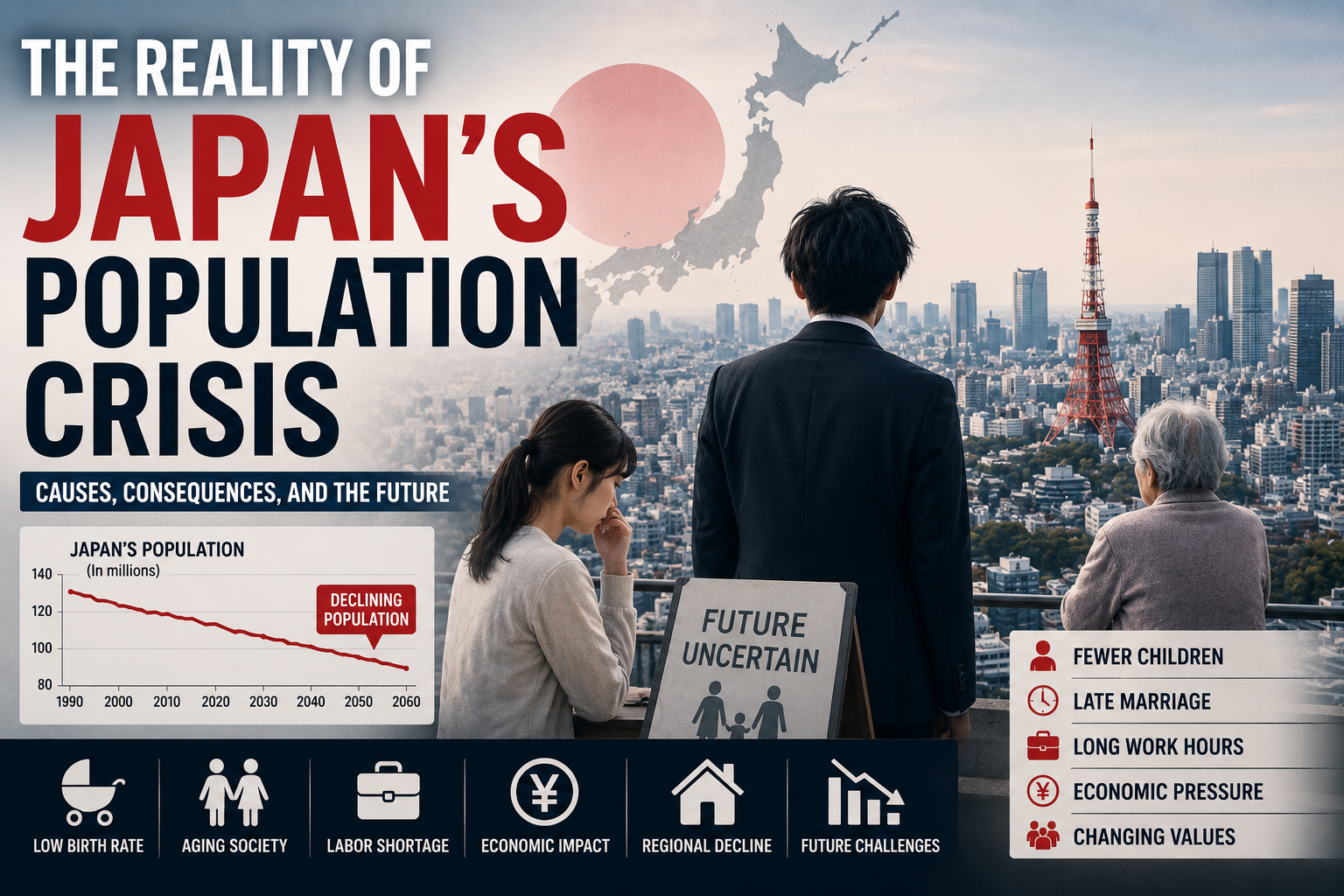
The reality of Japan’s population crisis has become one of the most important social and economic issues facing the country today. Japan’s population has been shrinking for more than a decade, while its society continues to age at an unprecedented rate.
The reality of Japan’s population crisis extends far beyond simple population decline. It affects the economy, labor force, healthcare system, family structure, and even daily life throughout the country.
In this article, we’ll examine the reality of Japan’s population crisis, explore its causes, and discuss what Japan’s future may look like.
What Is Japan’s Population Crisis?
Japan is experiencing two demographic trends simultaneously:
- A declining birth rate
- A rapidly aging population
This combination creates what experts call a “demographic crisis.”
Japan’s population peaked at approximately 128 million people in 2008 and has been declining ever since. At the same time, the proportion of elderly citizens continues to grow.
As a result, Japan faces a future with:
- Fewer workers
- More retirees
- Higher social welfare costs
- Slower economic growth
- Labor shortages across many industries
Why Is Japan’s Population Declining?
There is no single cause of Japan’s population crisis.
Instead, several social and economic factors have combined over decades.
Low Birth Rates
Japan has one of the world’s lowest fertility rates. The average number of children born per woman remains well below the replacement level needed to maintain population stability.
Major reasons include:
- Economic uncertainty
- Expensive childcare
- High education costs
- Long working hours
- Delayed marriage
- Changing lifestyles
Fewer People Are Getting Married
Marriage rates in Japan have steadily declined.
Since most children in Japan are still born within marriage, fewer marriages naturally lead to fewer births.
Many young Japanese adults delay marriage because of:
- Financial concerns
- Career priorities
- Difficulty finding partners
- Desire for personal freedom
An Aging Society
Japan also has one of the highest life expectancies in the world.
While longer life expectancy is a success story, it creates challenges when fewer young people are entering the workforce to support an increasing elderly population.
How Serious Is Japan’s Aging Population?
Japan is often described as the world’s oldest society.
More Elderly Than Ever Before
Today, a significant portion of Japan’s population is over 65 years old.
This affects:
- Healthcare spending
- Pension systems
- Government budgets
- Labor markets
- Local communities
As the population ages, the number of working-age adults continues to shrink.
Rural Areas Are Disappearing
Japan’s population crisis is particularly visible in rural areas.
Many villages and small towns face:
- School closures
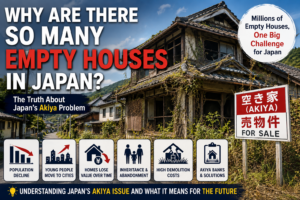
- Empty homes
- Labor shortages
- Declining local businesses
- Population extinction risks
Some communities now have more elderly residents than young families.
Labor Shortages Are Affecting the Economy
One of the most immediate consequences of Japan’s population crisis is labor shortage.
Fewer Workers Available
Many industries struggle to recruit workers, including:
- Healthcare
- Construction
- Transportation
- Agriculture
- Hospitality
- Manufacturing
Companies increasingly compete for a shrinking workforce.
Economic Growth Becomes More Difficult
A declining population means:
- Fewer consumers
- Reduced tax revenue
- Lower domestic demand
- Greater pressure on public finances
This creates long-term challenges for economic growth.
Why Aren’t Government Policies Working?
The Japanese government has introduced numerous policies designed to increase birth rates.
These include:
- Child allowances
- Free education programs
- Expanded childcare services
- Parental leave policies
- Financial support for families
However, experts argue that these measures have not addressed deeper structural problems.
Many young adults continue to face:
- Economic insecurity
- Poor work-life balance
- Expensive housing
- Gender inequality
- Uncertainty about the future
Could Immigration Solve Japan’s Population Crisis?
Some experts argue that immigration could help offset population decline.
However, Japan has traditionally maintained relatively strict immigration policies compared to other developed countries.
While foreign workers have become increasingly important in sectors experiencing labor shortages, immigration alone is unlikely to completely solve Japan’s demographic challenges.
What Will Japan Look Like in the Future?
If current trends continue, Japan will likely experience:
- Continued population decline
- Increased aging
- More automation and AI adoption
- Greater reliance on foreign workers
- Changes in family structures
- Consolidation of rural communities
Some experts believe Japan may become a model for how developed countries respond to aging populations.
Others worry that economic and social challenges may become increasingly severe.
Is Japan’s Population Crisis Unique?
Japan is not alone.
Many countries now face similar demographic challenges, including:
- South Korea
- China
- Italy
- Spain
- Germany
However, Japan entered this demographic transition earlier than most countries, making it a global case study for population decline.
Can Japan Reverse Its Population Crisis?
There is no easy solution.
Experts generally agree that meaningful change would require:
- Higher wages
- Affordable housing
- Better childcare support
- Improved work-life balance
- Greater gender equality
- Increased economic security
- More support for young families
Without major structural reforms, Japan’s population decline is expected to continue throughout the 21st century.
Conclusion
The reality of Japan’s population crisis is not simply that fewer babies are being born.
It is the result of decades of economic, social, and cultural changes that have transformed how Japanese people live, work, marry, and build families.
Japan’s demographic challenges offer important lessons not only for Japan itself but also for many other developed countries that may soon face similar problems.
Frequently Asked Questions
Why is Japan’s population declining?
Japan’s population is declining because of low birth rates, delayed marriage, an aging population, and changing social values.
Is Japan’s population crisis getting worse?
Yes. Experts predict that Japan’s population will continue to decline for decades unless major structural changes occur.
Why doesn’t Japan accept more immigrants?
Japan has historically maintained relatively restrictive immigration policies, although foreign workers have increased in recent years.
How does Japan’s aging population affect society?
It affects healthcare, pensions, labor markets, government spending, and economic growth.
Can Japan recover from its population crisis?
While recovery is possible, experts believe it would require major economic and social reforms.