If you’ve ever dated a Japanese person, watched Japanese dramas, or lived in Japan, you’ve probably encountered one of the most fascinating aspects of Japanese culture: Tatemae and Honne.
Many foreigners describe Japanese people as “hard to read” or “indirect.” However, what often appears confusing from a Western perspective is actually rooted in a deeply embedded cultural framework that values harmony, social awareness, and emotional consideration.
Understanding the difference between Tatemae and Honne in relationships can help you avoid misunderstandings and better navigate dating, romance, and even marriage in Japan.
What Do Tatemae and Honne Mean?
In Japanese culture:
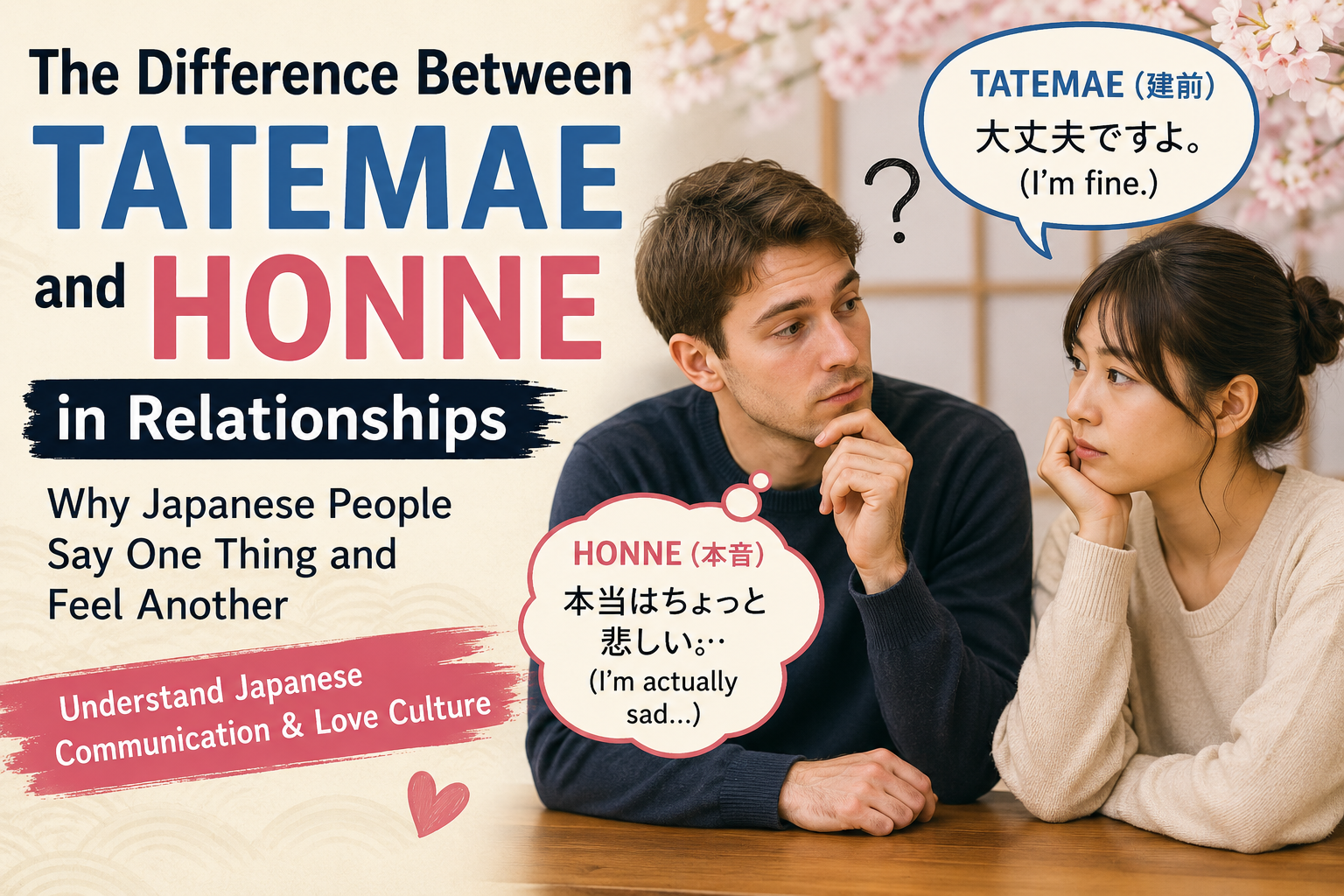
- Tatemae (建前) refers to the public face or socially appropriate response someone gives.
- Honne (本音) refers to a person’s true feelings, opinions, or desires.
This doesn’t necessarily mean someone is being dishonest.
Instead, Japanese communication often prioritizes maintaining harmony and avoiding unnecessary conflict or discomfort.
For example:
Tatemae:
“Let’s meet again sometime.”
Honne:
“I’m not actually interested in pursuing this relationship.”
To many Westerners, this may feel misleading. To many Japanese people, however, it can be considered polite and considerate.
Why Are Tatemae and Honne Important in Japan?
Japan has historically been a collectivist society where group harmony is highly valued.
As a result, openly expressing negative emotions or directly rejecting someone can sometimes be viewed as socially uncomfortable.
This cultural mindset influences:
- Friendships
- Workplace relationships
- Family interactions
- Romantic relationships
- Marriage
In relationships, this often means that Japanese people may avoid saying exactly what they feel until they trust their partner deeply.
How Tatemae and Honne Affect Dating in Japan
For foreigners dating Japanese partners, this is often one of the biggest cultural challenges.
Indirect Communication
A Japanese partner may say:
- “Maybe.”
- “I’ll think about it.”
- “Let’s see.”
- “I’m busy these days.”
While these statements may sound neutral, they can sometimes indicate reluctance or rejection.
Avoiding Conflict
Many Japanese people prefer avoiding arguments whenever possible.
Instead of saying:
“I’m upset with you.”
They may say:
“It’s okay.”
Even when they are actually hurt or disappointed.
Difficulty Expressing Romantic Feelings
Some Japanese people may genuinely love their partner but rarely say:
- “I love you.”
- “I miss you.”
- “I’m unhappy.”
This doesn’t necessarily mean they don’t care. Emotional expression in Japan often occurs through actions rather than words.
Examples of Tatemae and Honne in Relationships
Here are some common examples that foreigners encounter.
Example 1: The Polite Rejection
Tatemae:
“I’m very busy recently.”
Possible Honne:
“I don’t want to continue dating.”
Example 2: Avoiding Arguments
Tatemae:
“It’s fine.”
Possible Honne:
“I’m actually hurt and want you to notice.”
Example 3: Family Approval
Tatemae:
“My parents have concerns.”
Possible Honne:
“I personally don’t want to move forward.”
Example 4: Relationship Status
Tatemae:
“Let’s take things slowly.”
Possible Honne:
“I’m unsure about this relationship.”
Of course, every person is different, and these examples should never be treated as universal rules.
Are Japanese People Being Fake?
This is one of the most common misunderstandings among foreigners.
The answer is generally no.
In many Western cultures, honesty often means expressing exactly what you think.
In Japanese culture, honesty is balanced with empathy, politeness, and maintaining social harmony.
Many Japanese people believe that saying every thought directly can hurt others unnecessarily.
As a result, tatemae is often seen not as deception, but as consideration.
When Does Honne Appear?
Honne usually emerges when trust becomes stronger.
Japanese people are often more likely to express their true feelings:
- After becoming official partners
- In long-term relationships
- During private conversations
- After marriage
- When emotional trust has been established
This is why some foreigners feel that their Japanese partner becomes much more open after months or years together.
How Foreigners Can Navigate Tatemae and Honne
If you’re dating a Japanese person, these tips can help.
Don’t Assume Every Statement Is Literal
Pay attention to context, body language, and consistency.
Build Emotional Trust
The more trust you establish, the more likely your partner is to express their true feelings.
Avoid Aggressive Confrontation
Direct confrontation may cause your partner to withdraw rather than open up.
Communicate Your Own Expectations Clearly
Explain that you value honest communication and encourage your partner to express their feelings openly.
Are Younger Japanese People Different?
Yes, to some extent.
Younger generations influenced by globalization, social media, and international culture are often more comfortable expressing their emotions directly.
However, the concepts of tatemae and honne remain deeply embedded in Japanese society and continue to influence modern relationships.
Even today, many Japanese people naturally switch between their public and private selves depending on the situation.
Final Thoughts
Understanding tatemae and honne is essential for anyone interested in Japanese dating culture.
What may initially seem like mixed signals, emotional distance, or indirect communication often reflects a cultural preference for harmony and consideration rather than dishonesty.
If you’re dating a Japanese partner, patience, trust, and open communication are often the keys to moving beyond tatemae and discovering your partner’s true honne.
Once that trust develops, many foreigners discover a level of emotional depth and loyalty that they hadn’t expected.
FAQ
What is the difference between tatemae and honne?
Tatemae refers to a person’s public or socially appropriate expression, while honne refers to their true feelings and opinions.
Do Japanese people hide their feelings?
Not necessarily. Many Japanese people express emotions differently and may reveal their true feelings only after building trust.
Is tatemae considered lying?
Generally, no. In Japanese culture, tatemae is often viewed as politeness and consideration rather than deception.
How can foreigners understand honne?
Building trust, observing context, and communicating openly can help foreigners better understand a Japanese partner’s true feelings.
Do younger Japanese people still use tatemae?
Yes, although younger generations may communicate more directly than previous generations.