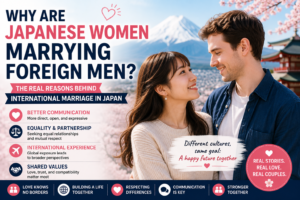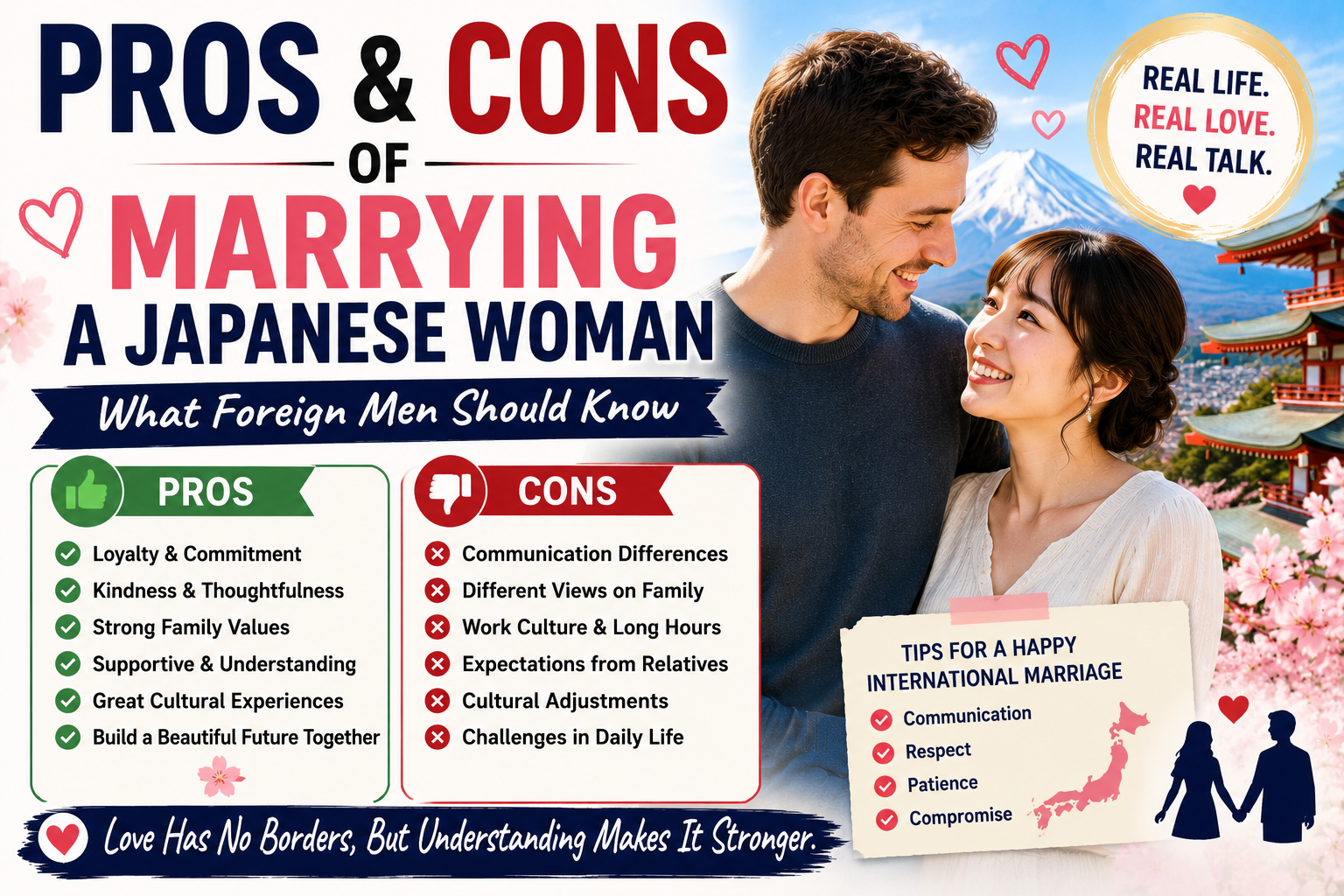
If you’re in a relationship with a Japanese woman —or considering marriage—you’ve probably searched online for answers to questions like:
- What is it really like to marry a Japanese woman?
- Are Japanese wives traditional?
- What cultural differences should I expect?
- Is international marriage in Japan difficult?
The truth is that there is no single “Japanese wife experience.”
Japanese women are individuals with different personalities, values, and expectations. However, cultural influences can shape certain attitudes toward relationships, marriage, communication, and family life.
If you’re considering marriage with a Japanese partner, understanding both the advantages and potential challenges can help you build a stronger relationship.
First: Avoid Stereotypes
Before discussing pros and cons, it’s important to understand one thing:
There is no such thing as a “typical Japanese woman.”
Japanese women can be:
- Traditional or modern
- Career-oriented or family-oriented
- Emotionally expressive or reserved
- Independent or relationship-focused
- Conservative or progressive
Your partner’s personality will always matter more than her nationality.
That said, some cultural patterns may influence married life.
Pros of Marrying a Japanese Woman
1. Strong Commitment to Relationships
Many Japanese people view marriage as a serious, long-term commitment.
Marriage is often associated with:
- Responsibility
- Stability
- Loyalty
- Family commitment
- Mutual support
As a result, many Japanese women carefully consider marriage before making a lifelong commitment.
For many couples, this creates a strong foundation of trust.
2. Thoughtfulness and Consideration
One characteristic that many foreigners appreciate is the Japanese concept of:
Omoiyari (思いやり)
This refers to:
- Empathy
- Consideration
- Thoughtfulness
- Caring for others’ feelings
Many Japanese partners express love through:
- Remembering small details
- Daily acts of kindness
- Emotional support
- Practical help
- Quiet acts of affection
These gestures can create deep emotional bonds.
3. Strong Family Values
Family often plays an important role in Japanese culture.
Many Japanese women place importance on:
- Family relationships
- Responsibility
- Long-term planning
- Stability
- Supporting loved ones
For people seeking a stable family life, these values may be appealing.
4. Loyalty and Commitment
Many foreigners perceive Japanese women as highly loyal partners.
While loyalty depends on the individual rather than nationality, Japanese culture traditionally places significant value on:
- Commitment
- Trust
- Reliability
- Responsibility
Once a relationship becomes serious, many couples approach it with long-term intentions.
5. Mutual Growth Through Cultural Exchange
One of the greatest advantages of international marriage is the opportunity to experience:
- Two cultures
- Two languages
- Different perspectives
- New traditions
- Personal growth
Many international couples feel that cultural differences strengthen their relationship and broaden their worldview.
Cons of Marrying a Japanese Woman
1. Communication Styles May Be Very Different
One of the biggest challenges international couples face is communication.
Many Japanese people prefer:
- Indirect communication
- Emotional subtlety
- Avoiding confrontation
- “Reading the atmosphere”
Foreign partners may prefer:
- Direct discussion
- Open expression
- Immediate problem-solving
This difference can easily create misunderstandings.
2. Emotional Expression May Be Different
Many foreign men expect frequent expressions such as:
- “I love you.”
- “I miss you.”
- “Let’s talk about our feelings.”
However, many Japanese women express affection through:
- Actions
- Reliability
- Everyday care
- Shared experiences
This does not necessarily mean less love.
It simply reflects a different way of expressing emotions.
3. Family Expectations Can Be Complicated
Marriage in Japan often involves family expectations.
Topics may include:
- Meeting parents
- Marriage timing
- Children
- Financial stability
- Living arrangements
- Family responsibilities
These expectations vary widely but can surprise foreigners.
4. Work-Life Balance Can Be Challenging
Japanese work culture can affect marriage significantly.
Long working hours may create:
- Less time together
- Increased stress
- Delayed family plans
- Communication difficulties
This challenge affects many Japanese couples, not only international marriages.
5. Cultural Differences Never Completely Disappear
Even happy international couples occasionally experience differences related to:
- Communication
- Parenting
- Money
- Family relationships
- Social expectations
- Lifestyle choices
Successful couples learn to manage these differences rather than eliminate them.
Common Misconceptions About Marrying a Japanese Woman
Many stereotypes online are misleading.
Myth:
“Japanese women are submissive.”
Reality:
Japanese women have diverse personalities, opinions, and expectations.
Myth:
“Japanese women are more loyal.”
Reality:
Loyalty depends on the individual, not nationality.
Myth:
“Japanese women expect traditional marriages.”
Reality:
Many modern Japanese women seek equal partnerships.
Myth:
“International marriage is easier because of cultural differences.”
Reality:
Cultural differences often require additional effort and communication.
What Makes International Marriages Successful?
Successful international marriages usually share several qualities.
Communication
Partners actively discuss cultural differences.
Respect
Neither partner assumes their culture is superior.
Patience
Misunderstandings happen.
Flexibility
Both partners adapt and compromise.
Shared Values
Long-term goals and expectations align.
Questions You Should Ask Before Marriage
Before marrying anyone—Japanese or otherwise—consider discussing:
- Where will we live?
- Do we want children?
- How will we manage finances?
- Which language will we use at home?
- What role will family play?
- How do we handle conflict?
- What are our long-term goals?
These questions are often more important than nationality.
So, Should You Marry a Japanese Woman?
The better question is:
“Should you marry this particular person?”
A successful marriage depends on:
- Compatibility
- Communication
- Trust
- Respect
- Shared values
Nationality alone cannot guarantee a happy or unhappy marriage.
Final Thoughts
There are certainly advantages and challenges to marrying a Japanese woman.
However, most of these differences stem from:
- Culture
- Communication styles
- Family expectations
- Individual personalities
The strongest international marriages are built not on stereotypes, but on:
- Understanding
- Patience
- Respect
- Love
At the end of the day, the question is not:
“What are Japanese women like?”
The real question is:
“Can we build a happy life together?”
And that answer depends on both of you.
FAQ
Is marrying a Japanese woman a good idea?
Like any marriage, success depends on compatibility, communication, and shared values rather than nationality.
Are Japanese women traditional?
Some are traditional, while others have modern views on marriage and family life.
Is communication difficult in Japanese marriages?
Cultural communication differences can create challenges, but they can be overcome through mutual understanding.
Do Japanese women value family?
Many Japanese people place a strong emphasis on family relationships and long-term commitment.
What is the biggest challenge in international marriage?
Communication styles and cultural expectations are often the biggest challenges.