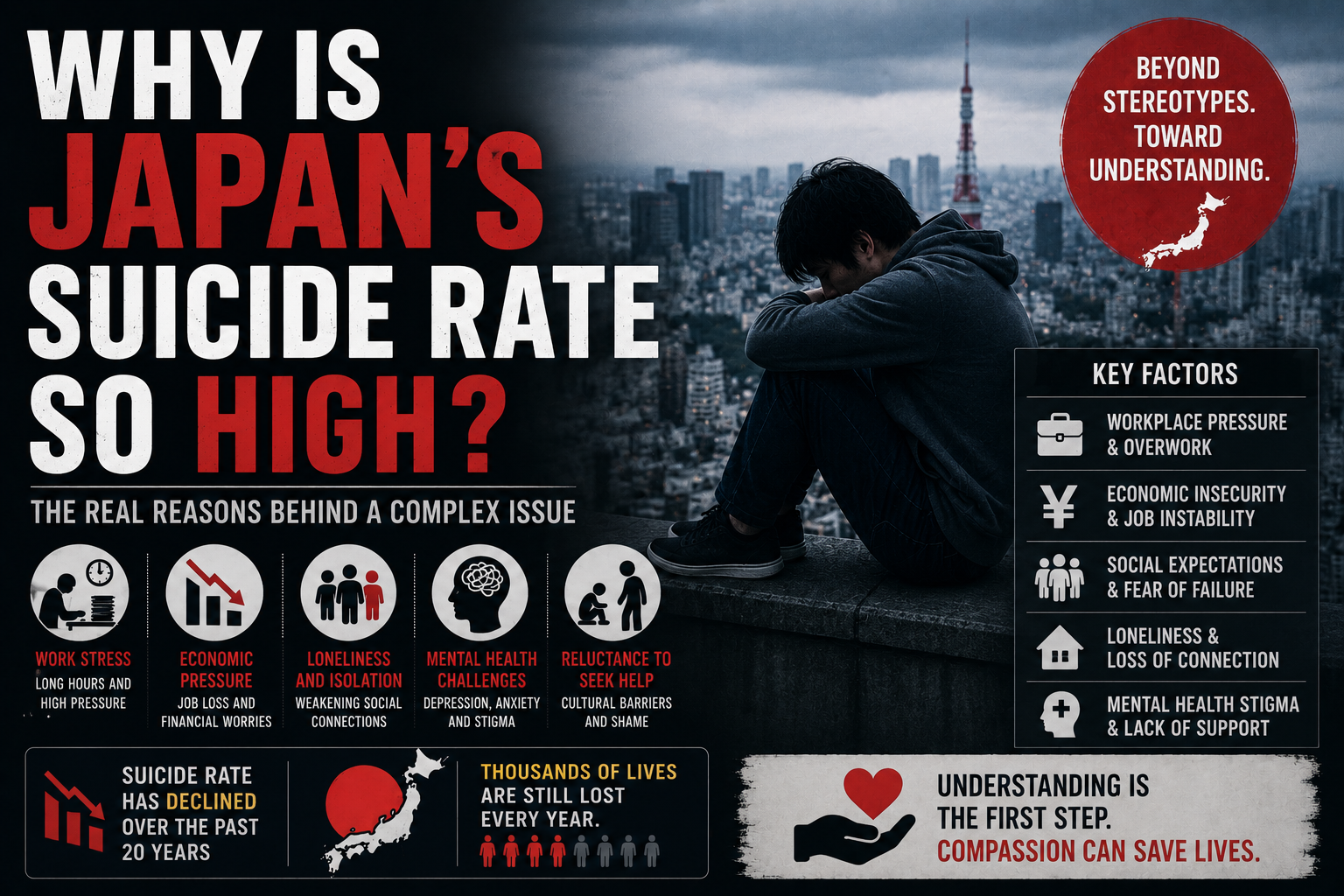
Why is Japan’s suicide rate so high? This question has attracted international attention for decades and is often linked to Japan’s work culture, social pressure, and mental health challenges.
Although Japan’s suicide rate has declined significantly since its peak in the early 2000s, suicide remains a serious public health and social issue. Understanding why Japan’s suicide rate has historically been high requires looking beyond stereotypes and examining the complex social, economic, and cultural factors involved.
In this article, we’ll explore why Japan’s suicide rate has been so high, how the situation has changed, and what this issue reveals about modern Japanese society.
Is Japan’s Suicide Rate Still High?
Japan’s suicide rate has decreased considerably over the past two decades.
Government policies, economic changes, and expanded mental health support have contributed to a substantial decline compared to the early 2000s. However, Japan still records thousands of suicides each year, making suicide an important public health concern.
Compared with some other developed countries, Japan’s suicide rate remains relatively high, particularly among certain age groups and vulnerable populations.
The important point is that the situation is improving, but the problem has not disappeared.
Why Did Japan Historically Have a High Suicide Rate?
There is no single explanation.
Experts generally point to a combination of factors, including:
- Work-related stress
- Economic insecurity
- Social pressure
- Mental health problems
- Loneliness and isolation
- Family and relationship difficulties
- Cultural attitudes toward responsibility and shame
These factors often interact rather than exist independently.
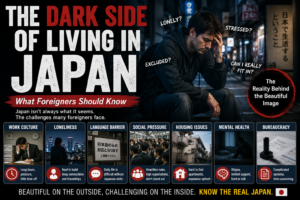
Japan’s Work Culture and Suicide
One of the most internationally recognized factors is Japan’s demanding work culture.
Long Working Hours
Many Japanese workers have historically experienced:
- Long working hours
- Overtime work
- High workplace expectations
- Long commutes
- Difficulty taking vacations
Chronic stress and exhaustion can contribute to depression, anxiety, and other mental health challenges.
Karoshi and Work-Related Suicide
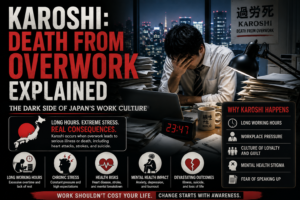
Japan even developed the term karoshi, meaning “death from overwork.”
While karoshi often refers to deaths caused by heart attacks or strokes linked to overwork, it can also include suicides associated with severe workplace stress.
This illustrates how closely mental health and work culture can be connected.
Social Pressure Can Increase Psychological Stress
Japanese society places significant value on:
- Responsibility
- Self-discipline
- Social harmony
- Avoiding burdening others
- Meeting expectations
These values have many positive aspects, but they can also create pressure.
Fear of Failure
Some individuals experience intense fear of:
- Academic failure
- Career failure
- Financial problems
- Social criticism
- Disappointing family members
For vulnerable individuals, these pressures can become overwhelming.
Difficulty Expressing Emotional Problems
Many people may hesitate to openly discuss:
- Depression
- Anxiety
- Loneliness
- Emotional suffering
- Suicidal thoughts
Concerns about stigma or burdening others can prevent people from seeking help.
Economic Problems Have Played a Major Role
Economic conditions have strongly influenced suicide rates in Japan.
The Economic Crisis of the 1990s
Following the collapse of Japan’s economic bubble in the early 1990s, the country experienced:
- Rising unemployment
- Financial instability
- Corporate restructuring
- Increased job insecurity
Suicide rates increased significantly during this period.
Modern Economic Anxiety
Today, many people continue to worry about:
- Job security
- Housing costs
- Retirement
- Marriage expenses
- Supporting family members
Financial stress remains an important factor for many individuals.
Loneliness and Social Isolation
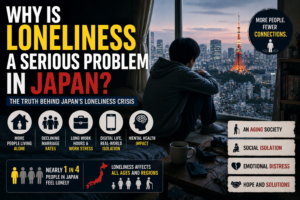
Loneliness has become an increasingly important issue in Japan.
More People Live Alone
Several demographic changes have contributed to greater social isolation:
- Lower marriage rates
- More single-person households
- Population aging
- Declining local communities
- Urban migration
Living alone does not necessarily cause loneliness, but reduced social support networks can increase vulnerability.
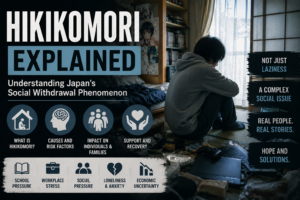
Hikikomori and Social Withdrawal
Japan’s hikikomori phenomenon has also highlighted the relationship between:
- Social isolation
- Mental health challenges
- Loneliness
- Economic pressure
Although most people experiencing loneliness do not become hikikomori, both issues reflect broader social changes.
Is Suicide Viewed Differently in Japan?
Japan has a complex historical relationship with suicide.
Historical Context
Historically, some forms of suicide were sometimes associated with concepts such as:
- Honor
- Responsibility
- Sacrifice
- Personal accountability
Examples often discussed include:
- Samurai traditions
- Wartime sacrifice
- Historical literature
However, modern Japanese society does not generally romanticize suicide. Public health experts and government organizations treat suicide as a preventable social and medical issue.
Mental Health Awareness Has Increased
In recent decades, attitudes toward mental health have gradually changed.
There is now greater public awareness of:
- Depression
- Anxiety disorders
- Workplace stress
- Suicide prevention
- Mental healthcare services
Although stigma still exists, seeking help has become more socially accepted than in previous generations.
Young People and Suicide in Japan
Suicide among younger people remains a serious concern.
Factors affecting younger generations may include:
- Academic pressure
- Social media stress
- Bullying
- Economic uncertainty
- Loneliness
- Career anxiety
Experts emphasize that these problems are not unique to Japan, but Japan’s social and economic environment can intensify some of these pressures.
What Is Japan Doing to Prevent Suicide?
Japan has implemented numerous suicide prevention measures.
These include:
- National suicide prevention strategies
- Mental health services
- Crisis hotlines
- Workplace reforms
- Anti-bullying programs
- Community support initiatives
- Public awareness campaigns
These efforts have contributed to the long-term decline in suicide rates.
Is Japan Unique?
No.
Many countries face serious suicide and mental health challenges.
Countries around the world struggle with:
- Depression
- Social isolation
- Economic stress
- Workplace pressure
- Mental health stigma
What makes Japan particularly visible internationally is the way these issues intersect with work culture, demographic change, and social expectations.
What Does Japan’s Suicide Problem Reveal About Society?
Japan’s suicide problem reflects several broader social challenges:
- Work-related stress
- Economic insecurity
- Population aging
- Loneliness
- Mental health stigma
- Social pressure
- Changing family structures
Understanding suicide in Japan requires understanding these larger social trends.
Conclusion
So, why is Japan’s suicide rate so high?
The answer is complex. Suicide in Japan is influenced by a combination of work stress, economic insecurity, social expectations, loneliness, and mental health challenges. Although Japan’s suicide rate has improved significantly over the past two decades, suicide remains an important social issue.
Understanding this problem helps us better understand not only modern Japan, but also the pressures facing many developed societies around the world.
FAQ
Is Japan’s suicide rate still high?
Japan’s suicide rate has declined significantly since the early 2000s, but suicide remains an important public health issue.
Why is work culture linked to suicide in Japan?
Long working hours, workplace stress, and pressure to succeed can contribute to mental health problems and increase suicide risk.
Is suicide culturally accepted in Japan?
Modern Japanese society does not generally accept or glorify suicide. It is treated as a serious public health and social problem.
What is the connection between loneliness and suicide?
Loneliness and social isolation can increase the risk of depression and suicidal thoughts, particularly when combined with other stressors.
Is Japan doing anything to reduce suicide?
Yes. Japan has implemented national suicide prevention programs, workplace reforms, mental health services, and public awareness campaigns.