If you’re in a serious relationship with a Japanese partner, there may come a moment when they say: “I want you to meet my parents.”
For many foreigners, this can feel exciting, stressful, and even intimidating.
Questions immediately come to mind:
- Is this a serious step?
- Do Japanese parents approve of foreign partners?
- What should I wear?
- Should I bring a gift?
- What if I don’t speak Japanese?
The good news is that meeting your Japanese partner’s parents doesn’t have to be scary.
However, family introductions in Japan often carry more meaning than many foreigners realize.
Here’s what you should expect.
Is Meeting Japanese Parents a Big Deal?
Usually, yes.
In Japan, introducing a romantic partner to parents often indicates that the relationship is serious.
While every family is different, many Japanese people introduce partners to their parents only when:
- The relationship is long-term
- Marriage is being considered
- The couple is emotionally committed
- Family approval is important
This doesn’t necessarily mean a proposal is coming immediately.
However, it usually means your relationship matters.
Don’t Assume the Parents Disapprove Because They’re Quiet
One of the biggest mistakes foreigners make is assuming:
“They don’t like me.”
Japanese parents often appear:
- Quiet
- Reserved
- Formal
- Polite
- Difficult to read
This does not automatically mean disapproval.
Many Japanese people simply avoid showing strong emotions during first meetings.
In fact, a calm and polite meeting is often considered successful.
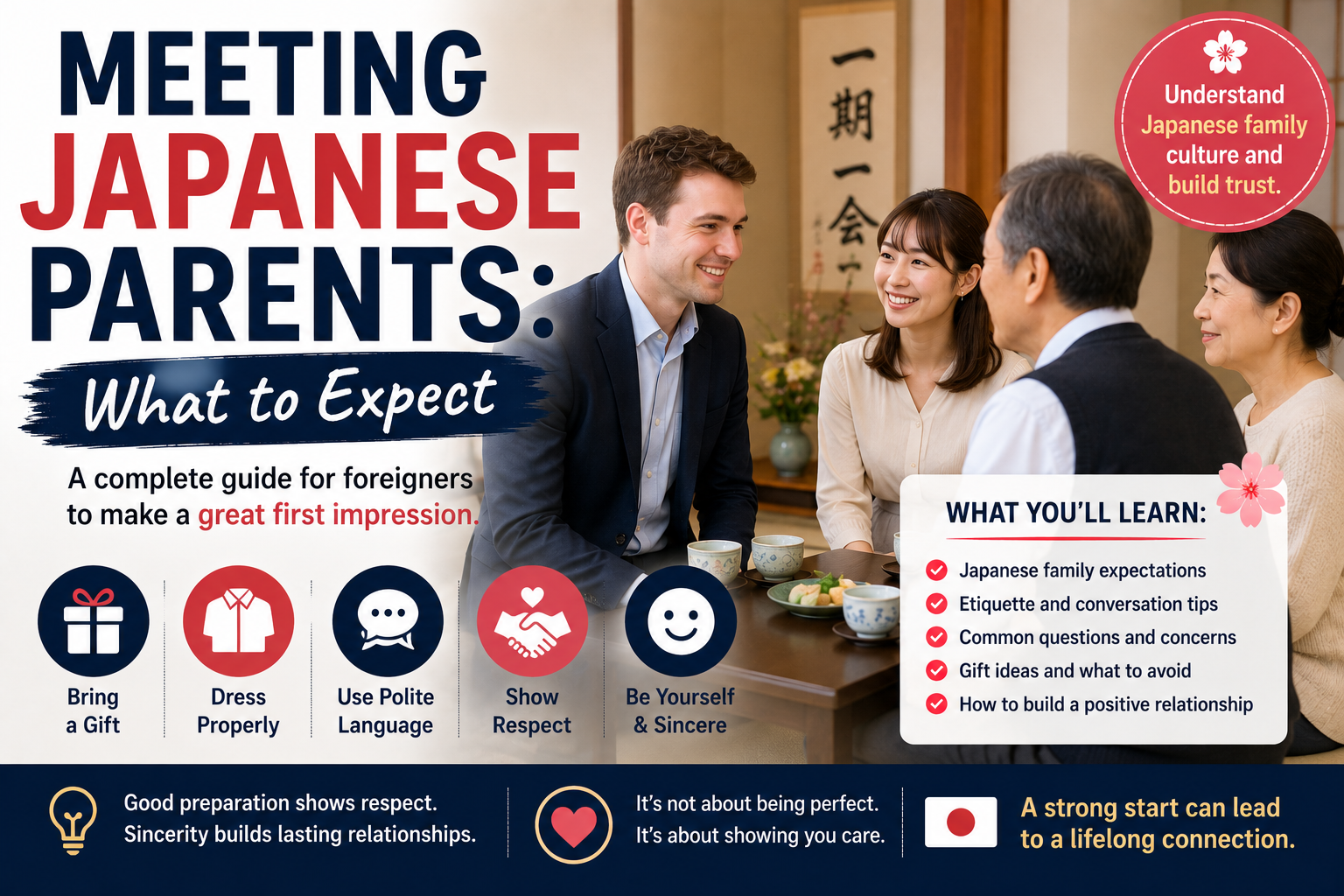
Dress Conservatively
First impressions matter.
For men, it’s generally safer to dress slightly more formally than you normally would.
Good choices include:
- A collared shirt
- Slacks or clean trousers
- A blazer or jacket
- Clean shoes
Avoid:
- Ripped jeans
- Flashy clothing
- Excessive jewelry
- Casual sandals
- Clothing with offensive designs
You don’t need to wear a business suit, but looking respectful is important.
Bring a Gift
In Japan, bringing a small gift is considered good manners.
Popular gifts include:
- High-quality sweets
- Local specialties from your home country
- Tea or coffee
- Regional souvenirs
- Premium snacks
Avoid gifts that are:
- Extremely expensive
- Overly personal
- Politically sensitive
- Difficult to share
The gesture itself matters more than the price.
Learn a Few Japanese Phrases
Even if you don’t speak Japanese, making an effort is highly appreciated.
Useful phrases include:
Hajimemashite.
“Nice to meet you.”
Yoroshiku onegaishimasu.
“Please take care of me.” (A polite introduction phrase.)
Ojamashimasu.
“Thank you for allowing me into your home.”
Arigatou gozaimasu.
“Thank you very much.”
Perfect pronunciation is not necessary.
Showing effort demonstrates respect.
Expect Questions About Your Future
Japanese parents often want to understand:
- Your job
- Your education
- Your future plans
- Your family background
- Why you live in Japan
- Your intentions toward their child
This is usually not an interrogation.
Rather, many parents simply want reassurance that their child will be happy and secure.
Marriage May Come Up
If your relationship is serious, parents may ask questions about:
- Marriage plans
- Where you will live
- Career goals
- Children
- Financial stability
You don’t need to have every answer.
However, demonstrating maturity and responsibility often makes a positive impression.
Family Approval Still Matters in Japan
Compared to some Western countries, family approval often remains important in Japan.
Parents may worry about:
- Language barriers
- Cultural differences
- Distance from family
- Future grandchildren
- Financial security
- Long-term compatibility
These concerns are usually based on care rather than prejudice.
What If They Don’t Speak English?
This situation is extremely common.
If your partner acts as translator:
- Speak slowly.
- Maintain eye contact with the parents.
- Smile often.
- Be patient.
- Avoid complicated jokes.
Remember:
Communication is about respect and attitude, not just language.
Should You Use Honorifics?
If speaking Japanese, use polite language.
Examples include:
- Otousan (father)
- Okaasan (mother)
However, many couples prefer waiting before using these terms.
When unsure, follow your partner’s advice.
Dining Etiquette Matters
If you eat together:
Before eating:
“Itadakimasu.”
After eating:
“Gochisousama deshita.”
Additional tips:
- Wait until others begin eating.
- Don’t stick chopsticks vertically into rice.
- Avoid speaking loudly.
- Compliment the food sincerely.
Small gestures of politeness leave strong impressions.
Common Concerns Japanese Parents Have About Foreign Partners
Parents sometimes worry about:
- Cultural differences
- Divorce rates
- Financial stability
- Communication problems
- Immigration issues
- Living abroad
- Future family life
These concerns are usually practical rather than personal.
Over time, trust often becomes more important than nationality.
What If the Meeting Feels Awkward?
Don’t panic.
Many first meetings in Japan feel:
- Formal
- Quiet
- Reserved
- Slightly uncomfortable
This is normal.
Japanese families often become much warmer after several meetings.
The first meeting is usually about demonstrating respect rather than building deep emotional connections.
The Biggest Mistake Foreign Men Make
The biggest mistake is trying too hard to impress.
Avoid:
- Showing off
- Talking excessively
- Making controversial jokes
- Criticizing Japan
- Discussing politics
- Acting overly casual
Instead:
- Be polite.
- Be humble.
- Be sincere.
- Show respect for their daughter and family.
These qualities are often valued more than wealth or status.
What Japanese Parents Usually Care About Most
Contrary to popular belief, many Japanese parents care less about nationality than about character.
They often want to know:
- Are you kind?
- Are you responsible?
- Can you support your partner emotionally?
- Do you have a stable future?
- Will you treat their child well?
If the answer to those questions is yes, nationality often becomes much less important.
Final Thoughts
Meeting Japanese parents can feel stressful, but it is often a positive sign.
It usually means:
- The relationship is serious.
- Your partner trusts you.
- Their family wants to know you better.
The key is not to be perfect.
The key is to be:
- Respectful
- Honest
- Patient
- Humble
- Genuine
In Japan, first impressions matter.
But sincerity matters even more.
FAQ
Is meeting Japanese parents a serious step?
Usually yes. Many Japanese people introduce partners to their parents when the relationship is becoming serious.
Should I bring a gift when meeting Japanese parents?
Yes. Bringing a small, thoughtful gift is considered good manners.
Do Japanese parents approve of foreign partners?
Many do. Concerns are often related to practical issues rather than nationality itself.
What should I wear when meeting Japanese parents?
Dress neatly and conservatively. Business casual attire is usually a safe choice.
What if I don’t speak Japanese?
Making an effort to learn a few polite phrases is appreciated, but respect and sincerity matter more than fluency.