If you’ve ever visited Japan, watched Japanese movies, or spoken with Japanese people, you’ve probably noticed one word being repeated over and over: “Sumimasen.”
You hear it everywhere.
At first, many foreigners assume that Japanese people are constantly apologizing.
But here’s the surprising part:
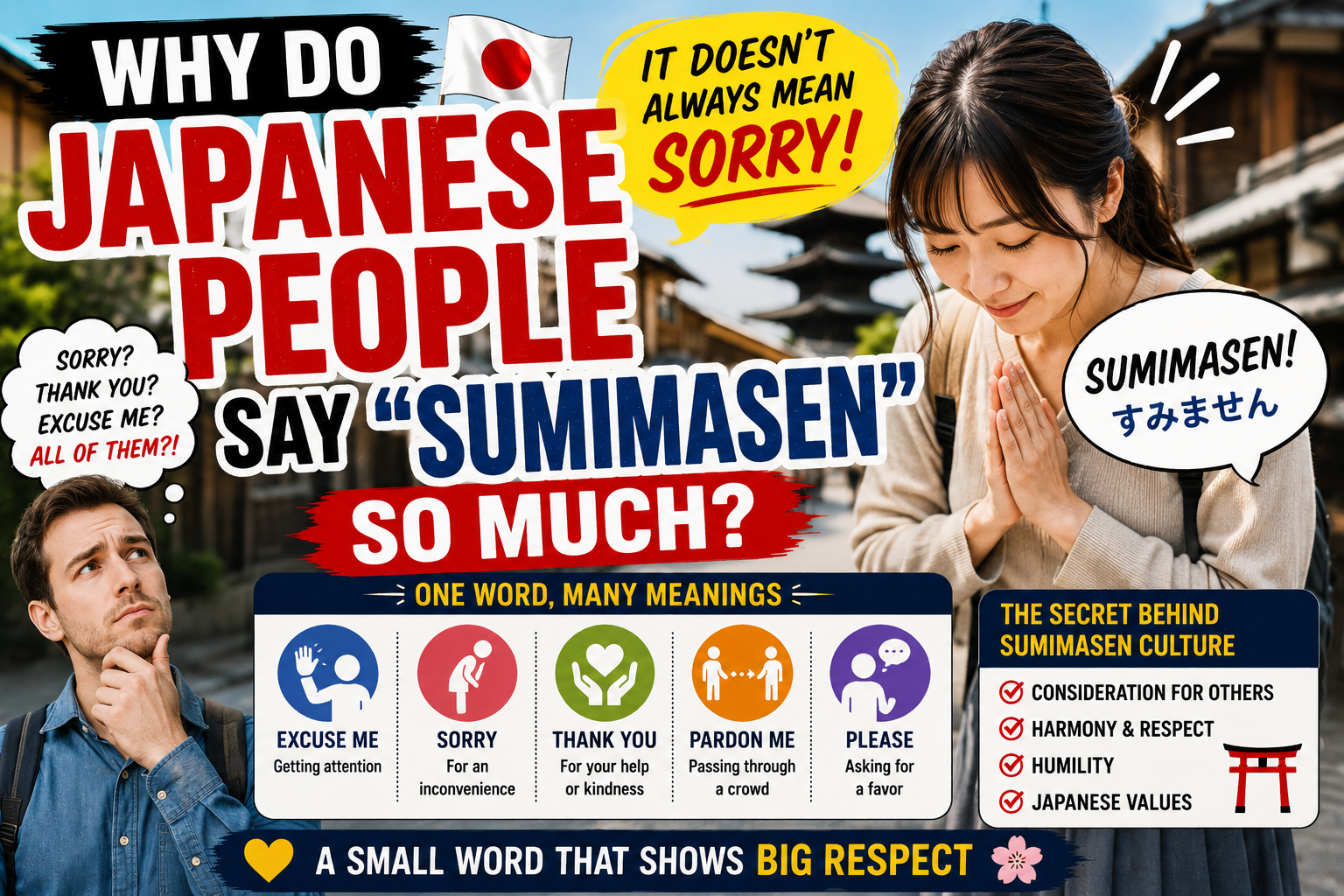
“Sumimasen” doesn’t always mean “I’m sorry.”
In fact, it may be one of the most versatile words in the Japanese language.
Understanding how Japanese people use “sumimasen” offers fascinating insight into Japanese culture, communication, and social values.
What Does “Sumimasen” Actually Mean?
The word sumimasen (すみません) is often translated into English as:
“I’m sorry.”
However, depending on the situation, it can also mean:
- Excuse me
- Thank you
- Sorry
- Pardon me
- May I have your attention?
- I appreciate your help
In other words, there is no perfect English translation.
Instead, “sumimasen” functions as a social tool that helps maintain politeness and harmony.
Why Do Japanese People Use It So Often?
Japanese communication places a strong emphasis on:
- Respect
- Humility
- Consideration
- Social harmony
When someone says “sumimasen,” they are often acknowledging that:
- They have interrupted someone.
- They have caused a small inconvenience.
- Someone has done something for them.
- They are asking for help.
- They appreciate another person’s effort.
The focus is not necessarily on guilt.
Instead, it is about showing awareness of other people.
Common Situations Where You’ll Hear “Sumimasen”
Foreign visitors are often surprised by how many situations involve this single word.
Getting Someone’s Attention
If you want to ask a stranger a question, you usually begin with:
“Sumimasen…”
For example:
- Asking for directions
- Calling a waiter
- Getting someone’s attention
In this case, it means:
“Excuse me.”
When Someone Helps You
Imagine someone holds the door open for you.
In many countries, you would simply say:
“Thank you.”
In Japan, many people say:
“Sumimasen.”
The feeling behind the word is often:
“Thank you, and sorry for causing you trouble.”
This combination of gratitude and humility is very Japanese.
Accidentally Bumping Into Someone
Even a very small physical contact may result in:
“Sumimasen!”
This does not necessarily indicate serious guilt.
It simply acknowledges the other person’s presence and feelings.
When Being Served
Foreigners are often surprised to hear customers saying “sumimasen” to restaurant staff.
For example:
- When ordering food
- When receiving food
- When asking for assistance
The word expresses appreciation while also recognizing that the employee is making an effort on their behalf.
Before Asking a Favor
Many requests in Japanese begin with:
“Sumimasen, but…”
This softens the request and shows humility.
For example:
- Asking for directions
- Requesting assistance
- Borrowing something
- Interrupting someone
Using “sumimasen” helps avoid sounding demanding.
Is “Sumimasen” About Apologizing?
Not exactly.
Many foreigners interpret the frequent use of “sumimasen” as evidence that Japanese people apologize excessively.
However, the concept behind the word is closer to:
- Respect
- Consideration
- Awareness of others
- Maintaining social harmony
The speaker is acknowledging that their actions affect other people, even in small ways.
This reflects one of the most important values in Japanese culture:
Avoiding inconvenience to others.
What’s the Difference Between “Sumimasen” and “Gomen Nasai”?
This is one of the most common questions asked by Japanese learners.
Sumimasen (すみません)
Usually used:
- In public
- With strangers
- At work
- In formal situations
- To express politeness
Gomen nasai (ごめんなさい)
Usually used:
- With family
- With friends
- In emotional situations
- In personal relationships
For example:
You might say:
“Sumimasen” to a store employee.
But you would likely say:
“Gomen” to your best friend after accidentally stepping on their foot.
Why Are Foreigners Fascinated by “Sumimasen”?
Many foreigners find “sumimasen” fascinating because it reflects a different way of thinking about communication.
In many Western cultures, communication emphasizes:
- Individual expression
- Directness
- Personal responsibility
Japanese communication often emphasizes:
- Social harmony
- Humility
- Indirectness
- Awareness of others
As a result, one small word can communicate several different emotions at the same time.
Should Tourists Use “Sumimasen”?
Absolutely.
In fact, many people consider “sumimasen” to be the single most useful Japanese word for travelers.
You can use it when:
- Asking questions
- Getting attention
- Apologizing
- Thanking someone
- Entering a crowded area
- Requesting help
Even if your pronunciation isn’t perfect, Japanese people will usually appreciate the effort.
FAQ
What does “sumimasen” literally mean?
There is no perfect English translation. Depending on the context, it can mean “sorry,” “excuse me,” or “thank you.”
Why do Japanese people say “sumimasen” instead of “thank you”?
Because the word also expresses appreciation while acknowledging another person’s effort.
Is “sumimasen” an apology?
Sometimes, but not always. It often expresses politeness and consideration rather than guilt.
What’s the difference between “sumimasen” and “gomen nasai”?
“Sumimasen” is generally more formal and versatile, while “gomen nasai” is more personal and emotional.
Should tourists use “sumimasen”?
Yes. It is one of the most useful and appreciated Japanese words that travelers can learn.