If you’ve ever visited Japan, watched Japanese television, or seen photos of Tokyo, you’ve probably noticed something that surprises many foreigners: A lot of Japanese people wear face masks.
Even before the COVID-19 pandemic, it was common to see people wearing masks on trains, at work, and on the street.
This often raises an important question:
Why do Japanese people wear masks so often?
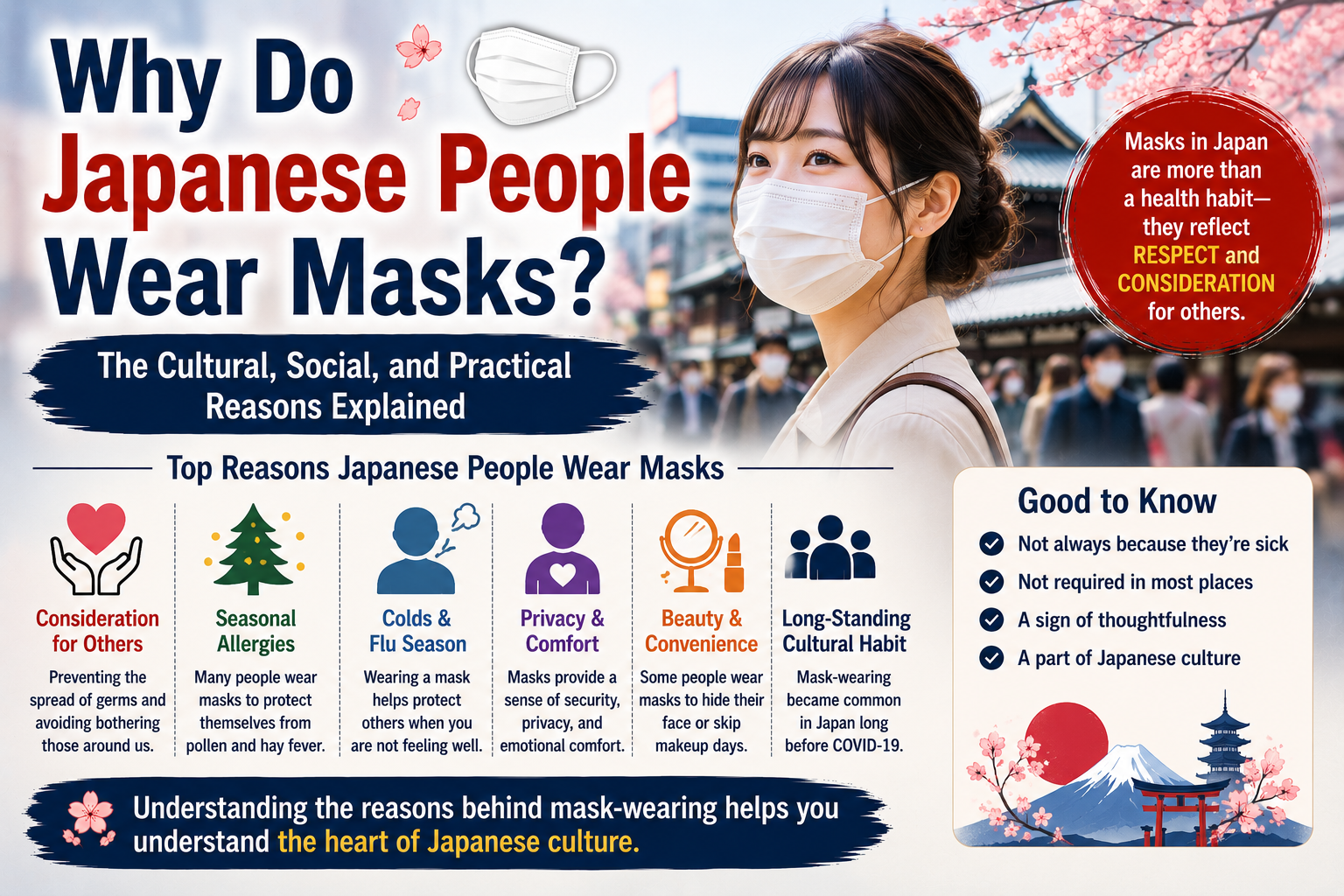
The answer has very little to do with fear or government pressure. In fact, mask-wearing in Japan reflects many of the country’s core cultural values, including consideration for others, social responsibility, and personal privacy.
In this article, we’ll explore the real reasons why masks became such an important part of everyday life in Japan.
Did Japanese People Wear Masks Before COVID-19?
Yes—absolutely.
One of the biggest misconceptions is that mask-wearing in Japan started during the COVID-19 pandemic.
In reality, Japanese people had been wearing masks regularly for decades before COVID-19.
Long before 2020, you could easily see masks being worn:
- On trains
- In schools
- At workplaces
- During flu season
- During allergy season
- In crowded public places
For many Japanese people, masks were already a normal part of daily life.
The Biggest Reason: Protecting Others
Perhaps the most important reason Japanese people wear masks is:
Consideration for others.
In Japan, if someone has:
- A cold
- A cough
- Flu symptoms
- Seasonal allergies
they often wear a mask to avoid spreading germs to other people.
This reflects a cultural value known as:
Meiwaku wo kakenai (迷惑をかけない)
which means:
“Do not cause trouble or inconvenience for others.”
Rather than asking:
“How do I protect myself?”
many Japanese people traditionally ask:
“How do I avoid affecting other people?”
Masks Became Popular During the Spanish Flu Pandemic
The modern habit of mask-wearing in Japan began during the 1918 influenza pandemic.
During this period:
- Masks were heavily promoted.
- Public health campaigns encouraged mask use.
- Wearing masks gradually became socially accepted.
Over the following decades, mask-wearing became normalized in Japanese society.
This historical experience helped establish masks as an everyday health practice.
Seasonal Allergies Are Extremely Common in Japan
Another major reason Japanese people wear masks is:
Hay fever.
Japan has millions of people who suffer from seasonal allergies caused by:
- Cedar pollen (sugi)
- Cypress pollen (hinoki)
During spring, pollen levels can become extremely high.
Many people wear masks to reduce exposure and relieve symptoms such as:
- Sneezing
- Runny nose
- Itchy eyes
- Congestion
For allergy sufferers, masks can significantly improve daily comfort.
Masks Help During Flu Season
Influenza season remains an important reason for mask use.
People may wear masks:
- To protect vulnerable family members.
- To avoid spreading illness.
- To reduce exposure in crowded environments.
- To demonstrate social responsibility.
Schools, offices, and public transportation systems often see increased mask use during winter months.
Privacy and Emotional Comfort
Many foreigners are surprised to learn that masks can also provide psychological comfort.
Some Japanese people wear masks because they feel:
- More relaxed
- Less socially anxious
- More private
- Less self-conscious
A mask can create a sense of personal space and emotional security, especially in crowded urban environments.
This is particularly common among:
- Young adults
- Students
- Introverted individuals
Masks and Japanese Beauty Culture
Masks have also become part of everyday beauty routines.
Some people wear masks because:
- They don’t want to wear makeup.
- They are having a bad skin day.
- They prefer additional privacy.
- They feel more comfortable covering part of their face.
For some individuals, masks function almost like an accessory.
Why Did Mask-Wearing Increase During COVID-19?
Although masks were already common, the COVID-19 pandemic dramatically increased mask use.
Several factors contributed:
- Existing cultural acceptance
- Social responsibility
- Government recommendations
- Public health concerns
- Respect for others
Because mask-wearing was already normalized, many Japanese people adopted widespread mask use relatively quickly.
Do Japanese People Still Wear Masks Today?
Yes, although usage has decreased since the height of the pandemic.
Today, you can still commonly see masks worn:
- On trains
- In hospitals
- During allergy season
- When someone has a cold
- In crowded indoor spaces
For many Japanese people, mask-wearing remains a personal choice based on comfort and consideration.
Is Mask-Wearing Required in Japan?
Generally, no.
Most mask mandates have ended.
Today, wearing a mask is largely a matter of:
- Personal preference
- Health concerns
- Social consideration
Visitors are usually not expected to wear masks unless specific facilities request it.
Does Wearing a Mask Mean Someone Is Sick?
Not necessarily.
A person wearing a mask in Japan may be:
- Protecting others from illness
- Protecting themselves from allergies
- Seeking privacy
- Feeling socially anxious
- Following seasonal habits
- Simply feeling more comfortable
It’s usually best not to make assumptions.
What Mask-Wearing Reveals About Japanese Culture
The widespread use of masks reflects several important Japanese values:
- Consideration for others
- Social responsibility
- Respect
- Cleanliness
- Privacy
- Social harmony
Rather than viewing masks purely as medical tools, many Japanese people see them as part of everyday social etiquette.
Understanding why Japanese people wear masks offers a deeper understanding of how Japanese society balances individual behavior with collective responsibility.
FAQ
Did Japanese people wear masks before COVID-19?
Yes. Mask-wearing was already common in Japan for decades before the pandemic.
Why do Japanese people wear masks when they’re sick?
Many people wear masks to avoid spreading illness to others.
Why do Japanese people wear masks during spring?
Spring allergies caused by cedar and cypress pollen affect millions of people in Japan.
Are masks still common in Japan?
Yes, although less common than during the pandemic, masks remain widely accepted.
Is it rude not to wear a mask in Japan?
Generally, no. However, some medical facilities or businesses may still request mask use.