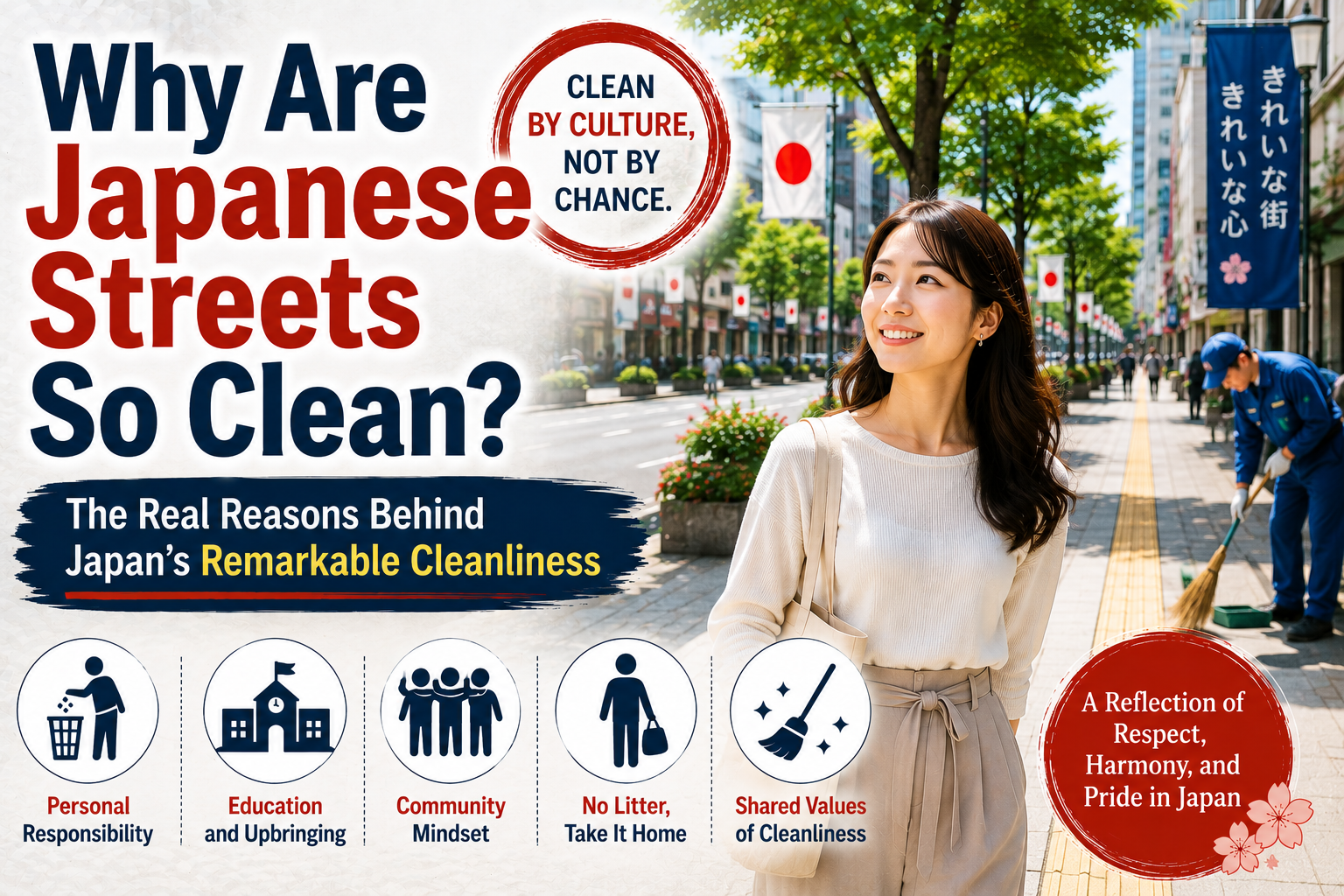
One of the first things many visitors notice when arriving in Japan is how incredibly clean everything is.
The streets are spotless. Train stations are tidy. Public spaces rarely have litter. Even more surprising, Japan has relatively few public trash cans compared to many Western countries.
So, how are Japanese streets so clean?
The answer isn’t simply because Japan hires more cleaners. Instead, Japan’s cleanliness reflects deep cultural values, education systems, social expectations, and everyday habits that have developed over centuries.
In this article, we’ll explore the real reasons why Japanese streets are considered some of the cleanest in the world.
Are Japanese Streets Really Cleaner Than Other Countries?
Many international visitors and travelers believe so.
In cities like:
- Tokyo
- Kyoto
- Osaka
- Yokohama
- Fukuoka
it’s common to see:
- Very little litter
- Clean public transportation
- Well-maintained sidewalks
- Minimal graffiti
- Organized public spaces
While no country is completely free of trash or pollution, Japan’s level of public cleanliness often surprises first-time visitors.
The Biggest Reason: Japanese People Clean Up After Themselves
One of the most important cultural values in Japan is personal responsibility.
Many Japanese people grow up believing:
“If you make something dirty, you should clean it yourself.”
This mindset applies to:
- Homes
- Schools
- Workplaces
- Public spaces
- Neighborhoods
Instead of expecting someone else to clean up after them, many people simply avoid creating mess in the first place.
Japanese Schools Teach Children to Clean
Perhaps the most famous example of Japanese cleanliness culture is found in schools.
Unlike many countries, Japanese students often participate in daily cleaning activities called:
“Souji” (掃除)
Students regularly clean:
- Classrooms
- Hallways
- Bathrooms
- School grounds
- Cafeterias
The goal is not to save money on janitors.
Instead, schools teach children:
- Responsibility
- Respect for shared spaces
- Cooperation
- Discipline
- Gratitude
Many Japanese adults carry these habits throughout their lives.
Why Are There So Few Public Trash Cans?
This is one of Japan’s greatest paradoxes.
Visitors often ask:
“If there are no trash cans, why isn’t there more litter?”
After several security incidents in the 1990s, many public trash cans were removed from train stations and public areas.
As a result, Japanese people became accustomed to:
- Carrying their own trash home
- Keeping small bags for garbage
- Taking responsibility for their own waste
Rather than throwing trash on the ground, most people simply keep it with them until they find an appropriate place to dispose of it.
Cleanliness Has Deep Cultural and Religious Roots
Japanese attitudes toward cleanliness have been influenced by both:
Shinto
In Shinto belief, purity and cleanliness are important spiritual concepts.
Removing impurities through cleaning and purification rituals has been practiced for centuries.
Buddhism
Buddhist traditions also emphasize:
- Simplicity
- Self-discipline
- Respect for one’s environment
These religious influences helped shape Japan’s modern attitudes toward cleanliness and order.
Social Pressure Plays an Important Role
Japan is often described as a society that values:
- Harmony (wa)
- Cooperation
- Consideration for others
Creating inconvenience for others is generally discouraged.
Littering may not always result in legal punishment, but it often carries strong social disapproval.
Many Japanese people avoid littering because they don’t want to:
- Disturb others
- Damage public spaces
- Appear inconsiderate
This social expectation reinforces clean behavior.
Community Cleaning Is Common in Japan
Many neighborhoods organize regular community cleaning activities.
Residents often volunteer to clean:
- Streets
- Parks
- Rivers
- Sidewalks
- Public facilities
Businesses also frequently clean the areas surrounding their buildings.
This shared responsibility helps maintain clean environments throughout the country.
Why Is Public Transportation So Clean?
Japan’s trains and stations are famous for their cleanliness.
Several factors contribute:
- Eating is uncommon on many commuter trains.
- Passengers usually take their trash with them.
- Railway companies maintain strict cleaning standards.
- Social norms discourage disruptive behavior.
The result is a public transportation system that remains remarkably clean despite serving millions of passengers every day.
Japanese Sports Fans Also Clean Stadiums
One behavior that often surprises international audiences occurs after sporting events.
Japanese fans frequently remain after games to clean:
- Seats
- Walkways
- Trash areas
This behavior gained worldwide attention during several international sporting tournaments.
For many Japanese people, cleaning shared spaces is simply considered good manners.
Is Japan Perfectly Clean?
No.
Japan still faces environmental challenges, including:
- Plastic waste
- Ocean pollution
- Illegal dumping
- Urban pollution
Some neighborhoods are cleaner than others, and litter certainly exists.
However, compared to many countries, public cleanliness remains one of Japan’s most distinctive characteristics.
What Japanese Cleanliness Reveals About Japanese Culture
The cleanliness of Japanese streets reflects several core values:
- Personal responsibility
- Respect for others
- Social harmony
- Discipline
- Community cooperation
Japanese people generally don’t keep public spaces clean because they fear punishment.
Instead, many do so because maintaining clean environments is viewed as a shared social responsibility.
Understanding why Japanese streets are so clean helps explain many other aspects of Japanese society as well.
FAQ
Why are Japanese streets so clean without trash cans?
Many Japanese people carry their trash home instead of expecting public trash bins to be available.
Do Japanese schools really make students clean?
Yes. Students commonly participate in daily cleaning activities to learn responsibility and respect.
Is littering illegal in Japan?
Littering laws exist, but social pressure and cultural values often play a greater role than legal enforcement.
Why do Japanese sports fans clean stadiums?
Cleaning shared spaces is considered a sign of respect and good citizenship.
Is Japan the cleanest country in the world?
There is no official ranking, but Japan is widely regarded as one of the cleanest countries globally.