One of the first things many visitors notice when they come to Japan is how polite everyone seems to be.
People bow when greeting each other. Store employees greet customers enthusiastically. Train passengers speak quietly. Even when problems occur, many Japanese people remain calm and respectful.
This often leads foreigners to ask:
Why are Japanese people so polite?
The answer goes far beyond simple manners. Japanese politeness is deeply connected to the country’s history, social values, education system, and cultural traditions.
In this article, we’ll explore the real reasons behind Japan’s reputation as one of the world’s most polite societies.
Are Japanese People Really More Polite?
Many international visitors certainly think so.
Common experiences include:
- Staff members bowing to customers
- People apologizing frequently
- Quiet behavior on public transportation
- Respectful customer service
- Organized public spaces
- Considerate behavior toward strangers
Of course, Japanese people are individuals with different personalities, just like people anywhere else.
However, politeness and consideration for others are generally highly valued throughout Japanese society.
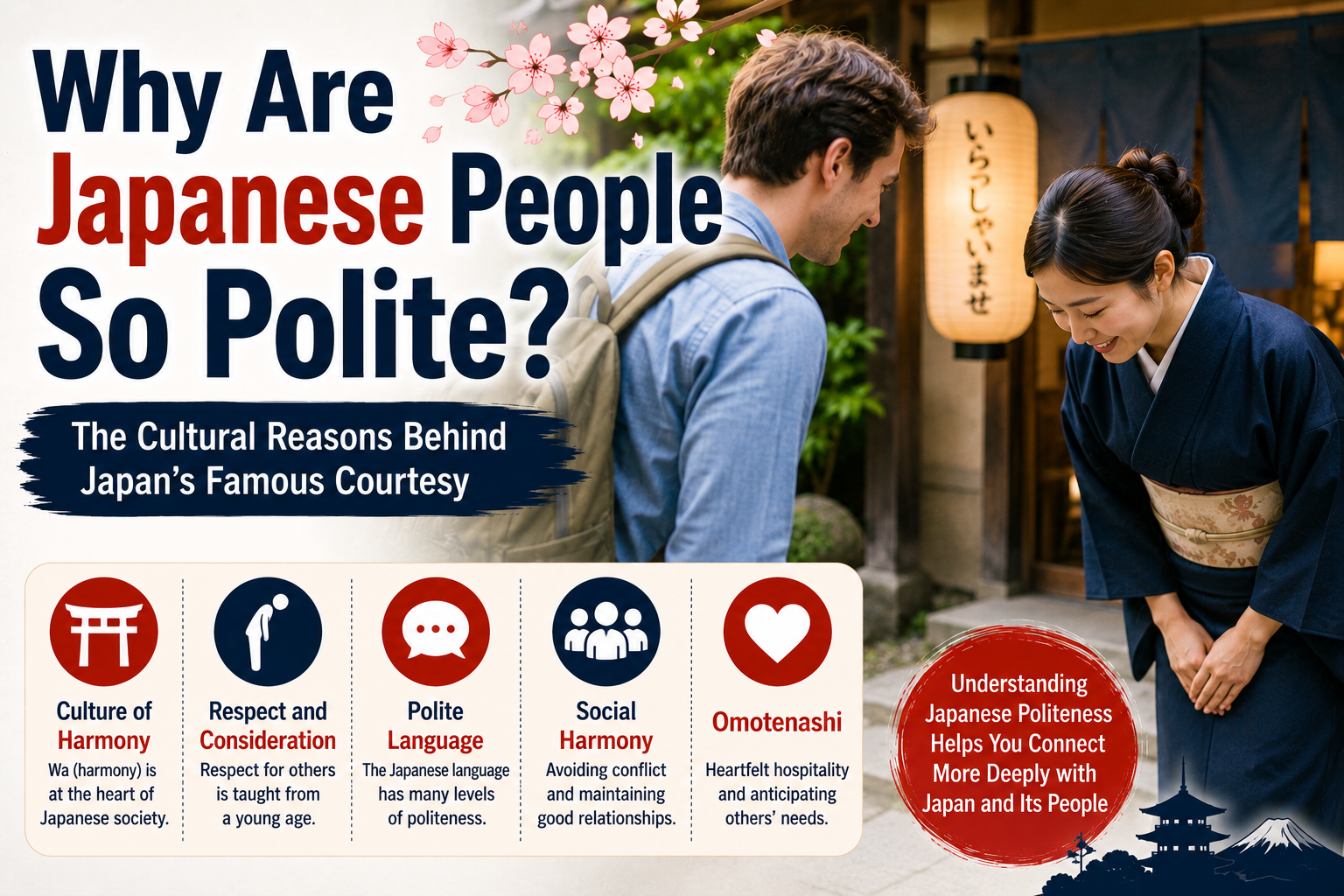
The Most Important Concept: Wa (Harmony)
Perhaps the most important concept for understanding Japanese politeness is:
Wa (和) — social harmony.
Japanese society traditionally places great importance on:
- Avoiding conflict
- Maintaining peaceful relationships
- Respecting group harmony
- Considering others’ feelings
- Cooperating with society
Rather than prioritizing individual expression, Japanese culture often emphasizes maintaining good relationships within the group.
Politeness serves as a tool to preserve social harmony.
Respect for Others Is Taught From Childhood
Japanese children learn manners and consideration from a very young age.
Parents and schools teach values such as:
- Respecting elders
- Speaking politely
- Taking responsibility
- Being considerate
- Cooperating with others
For example, many Japanese students participate in:
- Cleaning classrooms
- Serving lunch
- Group activities
- School ceremonies
These experiences help reinforce social responsibility and respect for others.
Japanese Language Itself Encourages Politeness
The Japanese language contains multiple levels of politeness.
For example, speakers often adjust their language depending on:
- Age
- Social status
- Workplace hierarchy
- Familiarity
- Formality of the situation
This system, known as:
Keigo (敬語)
includes special vocabulary and grammar used to show respect and humility.
As a result, politeness becomes part of everyday communication.
Bowing Is an Important Form of Respect
One of the most recognizable examples of Japanese politeness is bowing.
Japanese people bow to:
- Greet others
- Express gratitude
- Apologize
- Show respect
- End conversations
Bowing communicates humility and consideration without requiring words.
Even today, bowing remains one of the strongest symbols of Japanese courtesy.
Japanese Customer Service Culture
Many foreigners are amazed by Japanese customer service.
In Japan, customer service often emphasizes:
- Courtesy
- Professionalism
- Attention to detail
- Respect
- Hospitality
This concept is closely connected to:
Omotenashi (おもてなし)
which refers to wholehearted hospitality and anticipating the needs of others.
Examples include:
- Store employees greeting customers
- Hotel staff escorting guests
- Restaurant workers providing attentive service
- Train staff bowing to passengers
Why Do Japanese People Apologize So Much?
Visitors often notice that Japanese people apologize frequently.
Words such as:
- Sumimasen (すみません)
- Gomen nasai (ごめんなさい)
are used in many situations.
However, apologizing in Japan doesn’t always mean admitting serious wrongdoing.
Apologies can also express:
- Respect
- Gratitude
- Sympathy
- Consideration
- A desire to maintain harmony
For example, saying “sumimasen” may simply mean:
“Thank you for your trouble.”
Indirect Communication Helps Avoid Conflict
Japanese communication tends to be more indirect than communication styles found in many Western countries.
People may avoid:
- Open criticism
- Direct rejection
- Public disagreement
- Confrontation
Instead, they often communicate through:
- Context
- Tone
- Suggestion
- Implication
This approach helps preserve relationships and avoid embarrassment.
Understanding concepts like tatemae and honne can help foreigners better understand this style of communication.
Public Behavior Is Highly Regulated by Social Expectations
Japanese society often relies more on social expectations than legal enforcement.
Many people avoid disruptive behavior because they don’t want to:
- Disturb others
- Cause inconvenience
- Create embarrassment
- Damage social harmony
This contributes to behaviors such as:
- Quiet trains
- Clean streets
- Orderly queues
- Respectful public interactions
Are Japanese People Always Polite?
Not necessarily.
Japanese people experience the same emotions as anyone else:
- Anger
- Frustration
- Stress
- Disagreement
However, many people learn to manage these emotions in public settings to maintain social harmony.
In private settings, close friends and family often behave much more casually and openly.
Is Japanese Politeness Sometimes Difficult?
Yes.
While politeness creates social stability, it can sometimes lead to:
- Indirect communication
- Difficulty expressing true feelings
- Social pressure
- Emotional restraint
Some younger Japanese people are increasingly seeking more direct and authentic forms of communication.
Nevertheless, politeness remains a core part of Japanese culture.
What Japanese Politeness Reveals About Japanese Society
Japanese politeness reflects several fundamental cultural values:
- Respect
- Humility
- Self-control
- Harmony
- Responsibility
- Consideration for others
Japanese people are not necessarily polite because they are naturally kinder than others.
Rather, Japanese society has developed cultural systems that encourage people to prioritize social harmony and mutual respect.
Understanding why Japanese people are so polite helps explain many other aspects of Japanese culture as well.
FAQ
Why are Japanese people considered so polite?
Because Japanese culture strongly values respect, social harmony, and consideration for others.
Are Japanese people genuinely polite or just following social rules?
Both. Cultural expectations encourage polite behavior, but many people also sincerely value courtesy and respect.
Why do Japanese people bow so much?
Bowing is a traditional way of expressing respect, gratitude, apology, and social harmony.
Why do Japanese people apologize frequently?
Apologies often express politeness, gratitude, or consideration rather than admitting serious fault.
Are younger Japanese people becoming less polite?
Some communication styles are changing, but politeness remains an important cultural value in modern Japan.