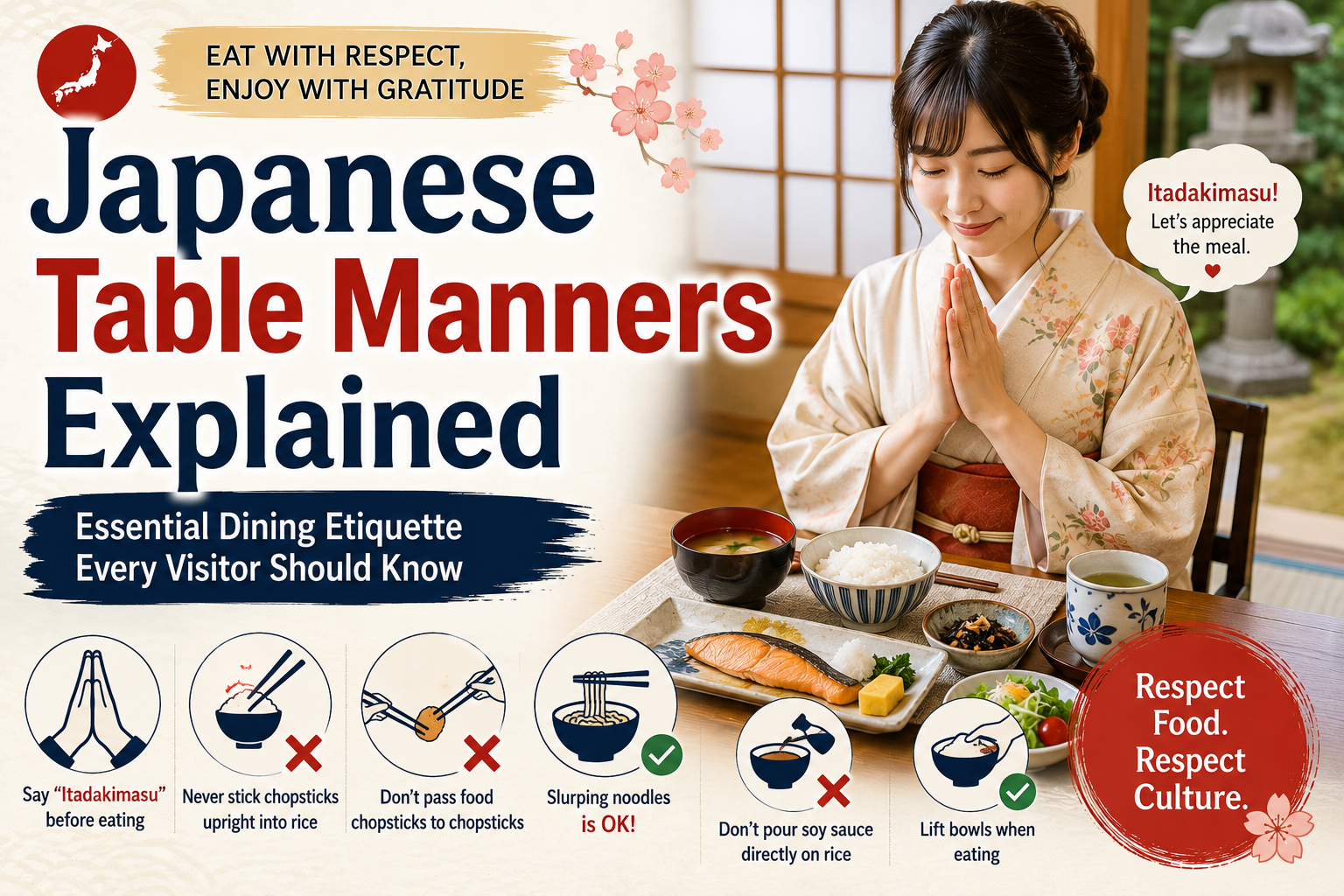
Do you know Japanese table manners?
Japanese food culture is famous around the world for its quality, presentation, and attention to detail. But if you’re visiting Japan for the first time, you may quickly realize that dining in Japan comes with its own set of rules and customs.
Do you have to slurp noodles? Is it rude to stick chopsticks into rice? Should you say something before eating?
Understanding Japanese table manners isn’t about memorizing dozens of complicated rules. It’s about showing respect, appreciation, and consideration for others.
In this guide, we’ll explain the most important Japanese dining etiquette rules every foreign visitor should know.
Why Are Table Manners Important in Japan?
In Japan, meals are not just about eating—they’re about showing gratitude and maintaining harmony with others.
Japanese table manners reflect several important cultural values:
- Respect for food
- Appreciation for the people who prepared it
- Consideration for others
- Cleanliness and order
- Social harmony (wa)
While Japanese people understand that foreigners may not know every rule, making an effort to follow basic etiquette is always appreciated.
Say “Itadakimasu” Before Eating
Before starting a meal, Japanese people traditionally say:
“Itadakimasu” (いただきます)
This phrase doesn’t have a direct English translation. It expresses gratitude to:
- The people who prepared the food
- The farmers and producers
- Nature and the ingredients themselves
Think of it as saying:
“I humbly receive this meal.”
Even in modern Japan, many families and restaurants still observe this custom.
Say “Gochisousama” After Eating
After finishing a meal, Japanese people often say:
“Gochisousama deshita” (ごちそうさまでした)
This means something similar to:
“Thank you for the wonderful meal.”
It’s a simple way to show appreciation and good manners.
Never Stick Chopsticks Upright Into Rice
This is one of the most important Japanese dining rules.
Never place chopsticks vertically into a bowl of rice.
Why?
Because this resembles a ritual performed during Japanese funerals, where rice is offered to the deceased.
Instead:
- Place chopsticks on the chopstick rest.
- Lay them horizontally across your bowl if no rest is available.
Don’t Pass Food From Chopsticks to Chopsticks
Another important chopstick rule:
Never transfer food directly from your chopsticks to someone else’s chopsticks.
This also resembles a funeral ritual involving cremated bones and can make Japanese people uncomfortable.
If sharing food:
- Use serving utensils.
- Use the opposite end of your chopsticks when appropriate.
Is It Okay to Slurp Noodles?
Yes—absolutely.
In fact, slurping noodles such as ramen, soba, and udon is completely acceptable in Japan.
Reasons include:
- It cools hot noodles.
- It enhances aromas.
- It signals enjoyment of the meal.
Unlike in many Western countries, slurping noodles is generally considered polite rather than rude.
However, this custom mainly applies to noodle dishes and not to all foods.
Don’t Pour Soy Sauce Directly on Rice
Many foreigners are surprised by this rule.
Pouring soy sauce directly onto plain white rice is generally considered poor etiquette because it can overpower the flavor and appearance of the rice.
Instead:
- Use soy sauce sparingly.
- Dip sushi or sashimi carefully.
- Appreciate the natural flavor of the rice.
Don’t Rub Disposable Chopsticks Together
Some visitors rub wooden chopsticks together after separating them.
In Japan, this may unintentionally imply that the restaurant uses cheap-quality chopsticks.
Unless there are obvious splinters, simply use the chopsticks as they are.
Lift Small Bowls While Eating
Unlike Western dining etiquette, it’s common and polite in Japan to lift small bowls closer to your mouth.
This applies especially to:
- Rice bowls
- Miso soup bowls
- Small side dishes
Doing so helps prevent spills and is considered proper table manners.
Finish Your Food If Possible
Japanese culture values avoiding food waste.
While nobody expects visitors to force themselves to eat everything, making an effort to finish your meal is generally seen as respectful.
Leaving excessive leftovers may suggest that you did not appreciate the food.
This cultural value is connected to the concept of:
“Mottainai” (もったいない)
which expresses regret over wastefulness.
Use the Provided Serving Utensils
When sharing dishes, avoid using your personal chopsticks directly in communal plates.
Instead:
- Use serving chopsticks if provided.
- Use serving spoons.
- Turn your chopsticks around if culturally appropriate.
This reflects Japanese values regarding cleanliness and consideration.
Drinking Etiquette in Japan
When drinking alcohol with others:
Wait Before Drinking
In social situations, people often wait until everyone has a drink before starting.
A toast is then made:
“Kanpai!” (乾杯!)
Pour Drinks for Others
In business and social gatherings, people often pour drinks for others rather than filling their own glass.
This tradition emphasizes hospitality and group harmony.
What Happens If You Make a Mistake?
Don’t worry.
Most Japanese people understand that visitors come from different cultural backgrounds.
What matters most is:
- Being respectful
- Showing appreciation
- Making an effort to follow local customs
Even if you accidentally break a rule, a polite attitude is usually more important than perfect etiquette.
What Japanese Table Manners Reveal About Japanese Culture
Japanese dining etiquette reflects many of the values that shape Japanese society:
- Respect
- Gratitude
- Cleanliness
- Harmony
- Consideration for others
Understanding these customs isn’t just about avoiding embarrassment—it’s about gaining deeper insight into how Japanese people think about community, hospitality, and everyday life.
FAQ
Is slurping noodles rude in Japan?
No. Slurping ramen, soba, and udon is generally considered acceptable and often encouraged.
Why can’t you stick chopsticks into rice?
Because it resembles a funeral ritual and is considered inappropriate at the dining table.
Do Japanese people always say “itadakimasu”?
Many Japanese people still say it before meals, especially at home and in traditional settings.
Is it rude to leave food in Japan?
Leaving a small amount is usually acceptable, but excessive leftovers may be viewed negatively.
What is the most important Japanese table manner?
Showing respect, gratitude, and consideration for others is more important than memorizing every rule.