If you’ve ever visited Japan, stayed at a Japanese home, or watched anime and Japanese dramas, you’ve probably noticed one important rule: people take off their shoes before entering certain spaces.
For many foreigners, this custom can feel unusual at first. Why do Japanese people remove their shoes? Is it simply about cleanliness, or is there a deeper cultural meaning?
The answer involves history, hygiene, religion, and Japanese values about respect and harmony. Understanding this custom can help you better understand Japanese culture itself.
Why Do Japanese People Remove Their Shoes?
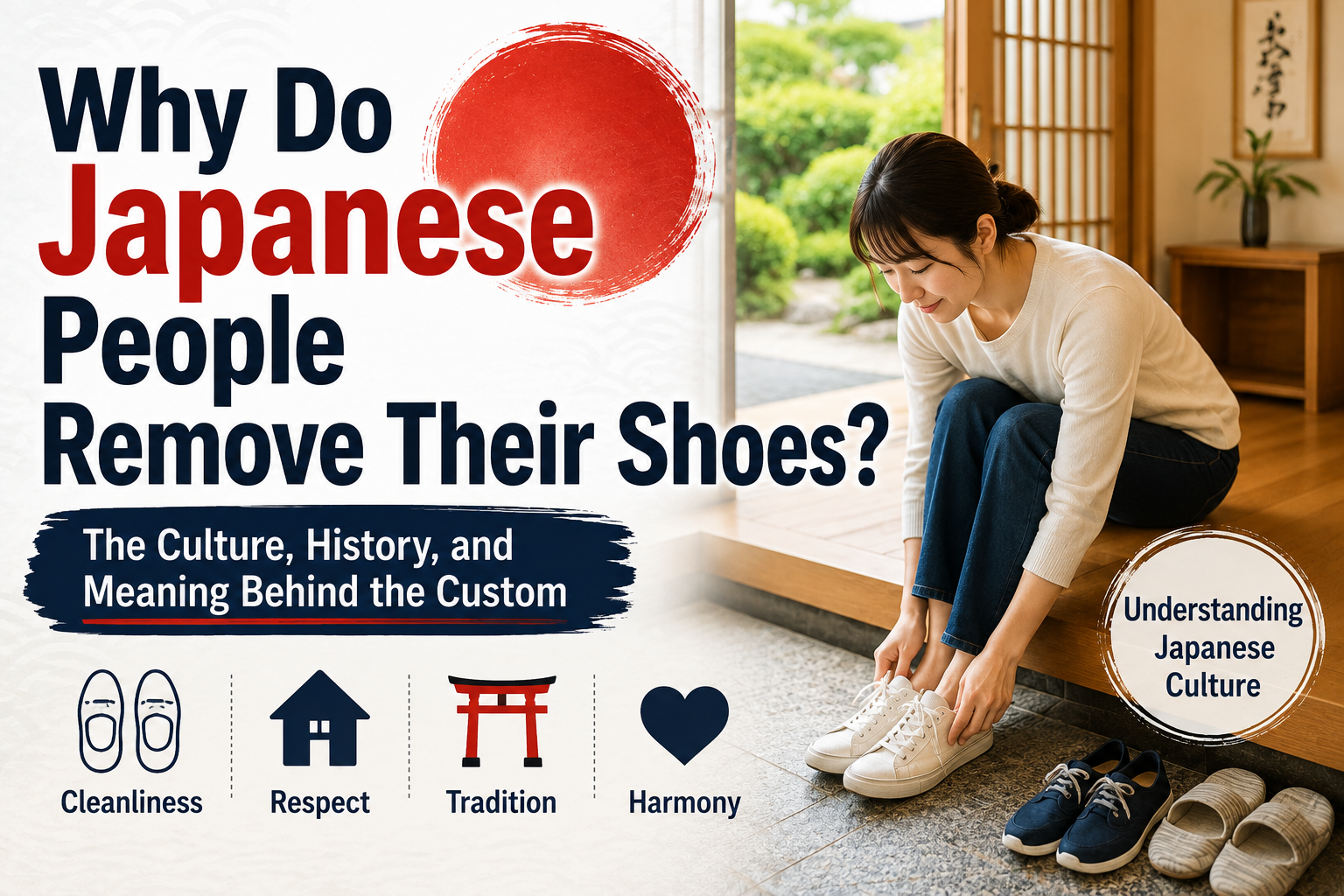
Japanese people remove their shoes primarily for four reasons:
- Cleanliness
- Respect for living spaces
- Historical tradition
- Cultural values and social harmony
Unlike many Western countries, Japan traditionally separates the “outside world” from the “inside world.” Shoes are considered dirty because they carry dust, mud, bacteria, and other contaminants from outside.
Removing shoes helps keep indoor spaces clean and comfortable.
The Historical Origins of Removing Shoes in Japan
The custom of removing shoes dates back hundreds of years.
Traditional Japanese houses were built with raised wooden floors and tatami mats made from woven straw. Tatami mats are delicate, expensive, and intended for sitting, eating, and sleeping.
Walking on tatami with outdoor shoes would quickly damage them and bring dirt into living spaces.
As a result, removing shoes became an essential part of daily life and gradually evolved into a cultural norm.
Even though modern homes often have hardwood floors, the tradition remains deeply rooted in Japanese society.
Cleanliness Is Extremely Important in Japanese Culture
One of the biggest reasons Japanese people remove their shoes is hygiene.
In Japan, indoor spaces are considered clean environments where people:
- Sit on the floor
- Relax with family
- Eat meals
- Sleep on futons
- Allow children to play
Bringing outdoor dirt inside is seen as unhygienic and inconsiderate.
This emphasis on cleanliness can also be seen in other aspects of Japanese culture, such as:
- Public spaces being kept remarkably clean
- Regular hand washing
- School cleaning routines
- Organized waste separation systems
For many Japanese people, removing shoes is simply common sense.
The Concept of “Inside” and “Outside” in Japanese Culture
Japanese culture often distinguishes between uchi (inside) and soto (outside).
This concept goes beyond physical spaces and extends to social relationships, family structures, and behavior.
The entrance area of a Japanese home, called the genkan, acts as a symbolic boundary between:
- The outside world (public space)
- The inside world (private and clean space)
Removing your shoes at the entrance represents respect for this boundary.
This cultural idea helps explain why shoe removal remains important even in modern apartments and houses.
Where Do You Need to Remove Your Shoes in Japan?
Many visitors are surprised to learn that shoe removal isn’t limited to private homes.
You may be expected to remove your shoes in:
Japanese Homes
This is the most common situation. Guests remove their shoes in the genkan and wear indoor slippers if provided.
Traditional Ryokan Inns
Traditional Japanese inns require guests to remove their shoes immediately upon entering.
Tatami rooms always require bare feet or socks.
Temples and Shrines
Some temples and religious buildings require visitors to remove their shoes before entering sacred areas.
Schools
Japanese schools typically require students and teachers to change into indoor shoes called uwabaki.
Traditional Restaurants
Restaurants with tatami seating areas usually require customers to remove their shoes.
Some Hospitals and Clinics
Certain medical facilities maintain separate indoor footwear policies.
What Are Japanese Slippers For?
After removing outdoor shoes, Japanese people often wear indoor slippers.
These slippers serve several purposes:
- Keeping floors clean
- Providing comfort
- Separating indoor and outdoor spaces
However, there is one famous exception.
Never Wear Bathroom Slippers Outside the Bathroom
Many Japanese homes and businesses provide special toilet slippers.
These slippers are only for use inside the restroom.
Accidentally wearing bathroom slippers into the living area is considered a classic foreigner mistake—and something that Japanese people often find amusing.
Is Removing Shoes Related to Religion?
Partly.
Both Buddhism and Shinto have influenced Japanese attitudes toward cleanliness and purity.
In Shinto belief, purity is an important spiritual concept. Removing dirt and impurities before entering sacred spaces reflects this value.
However, modern Japanese people generally remove shoes because of cultural tradition and practical hygiene rather than religious beliefs.
Do Japanese People Ever Wear Shoes Indoors?
Yes, in some situations.
For example:
- Most offices allow indoor shoes.
- Shopping malls and department stores do not require shoe removal.
- Modern restaurants often allow shoes.
- Public transportation naturally does not require removing shoes.
The rule mainly applies to spaces considered private, clean, or traditional.
Should Foreigners Remove Their Shoes in Japan?
Absolutely.
If you see shoes lined up near an entrance, it’s a clear sign that you should remove yours.
A few simple tips:
- Wear clean socks.
- Remove shoes neatly.
- Place your shoes facing the door.
- Wear slippers if provided.
- Never step directly onto tatami with slippers.
Japanese people understand that visitors may not know every rule, but making an effort is greatly appreciated.
What Removing Shoes Says About Japanese Culture
The practice of removing shoes reflects several important Japanese values:
- Respect for others
- Cleanliness
- Consideration
- Social harmony
- Respect for shared spaces
To many foreigners, removing shoes may seem like a small custom.
But for Japanese people, it’s one of the everyday habits that helps create a clean, respectful, and harmonious society.
Understanding this simple tradition provides a deeper insight into how Japanese culture values respect, boundaries, and community.
FAQ
Why do Japanese people remove their shoes at home?
Primarily for cleanliness, respect for indoor spaces, and cultural tradition.
What is a genkan?
A genkan is the entrance area of a Japanese home where people remove their shoes before entering.
Do tourists have to remove their shoes in Japan?
Yes. Visitors should remove their shoes whenever local customs require it.
Why do Japanese schools have indoor shoes?
Indoor shoes help keep classrooms clean and protect flooring.
Is it rude to wear shoes inside a Japanese house?
Yes. Wearing outdoor shoes inside someone’s home is generally considered disrespectful and unhygienic.