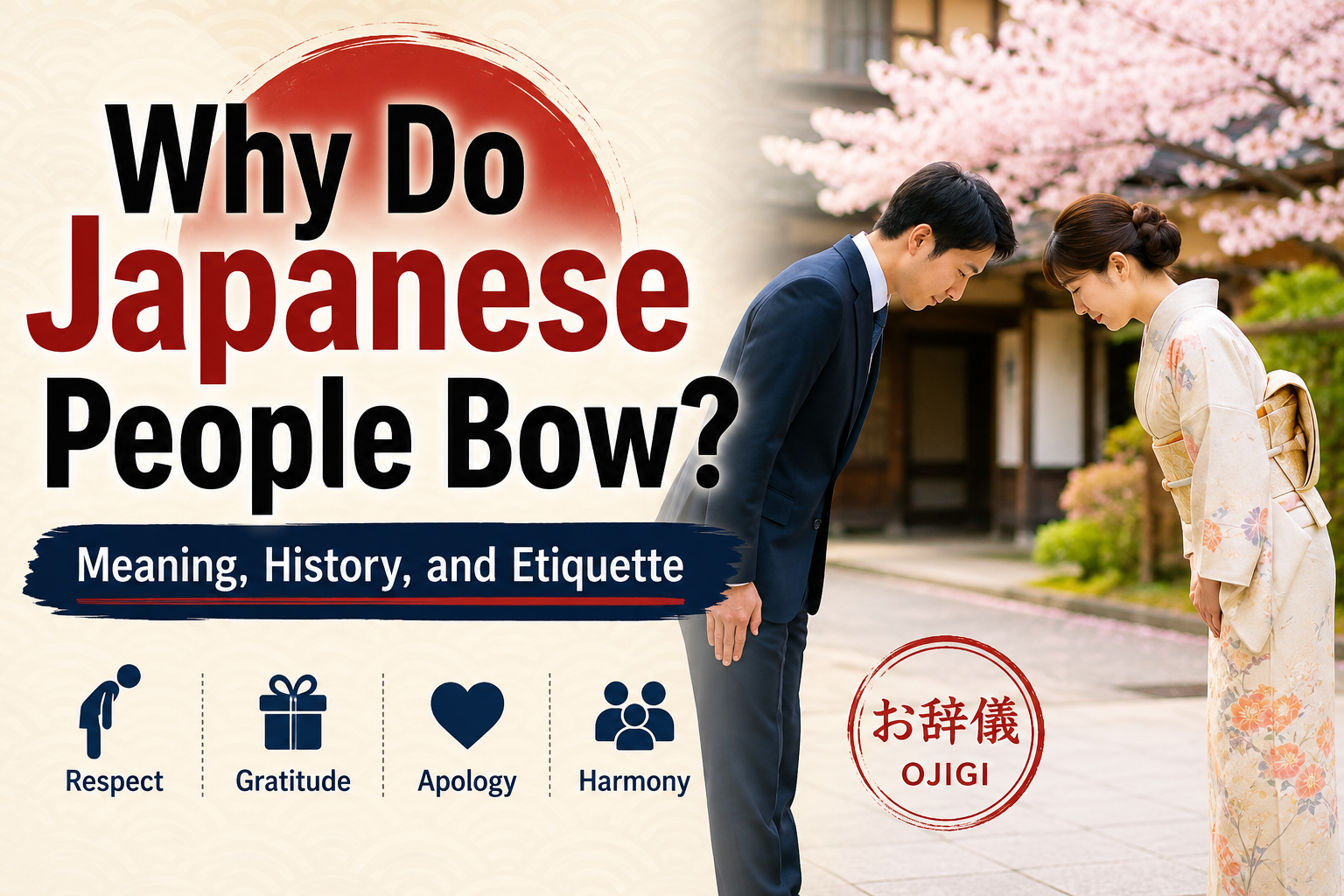
If you’ve ever visited Japan or watched Japanese movies and anime, you’ve probably noticed that Japanese people bow frequently. They bow when greeting others, saying thank you, apologizing, or even ending a business meeting.
But why do Japanese people bow? Is it simply a greeting, or does it have a deeper cultural meaning?
In this article, we’ll explore the history of Japanese bowing, what different types of bows mean, and how foreigners should respond when visiting Japan.
What Is Bowing in Japanese Culture?
Bowing, known as ojigi (お辞儀) in Japanese, is one of the most important forms of non-verbal communication in Japan. Unlike in many Western countries, where handshakes or hugs are common, bowing is used to express respect, gratitude, apology, and social harmony.
For Japanese people, bowing is more than a physical gesture—it’s a reflection of social relationships and mutual respect.
Even in modern Japan, where handshakes have become more common in international settings, bowing remains an essential part of everyday life.
Why Do Japanese People Bow?
There are several reasons why Japanese people bow.
To Show Respect
Respect is one of the core values of Japanese society. Bowing demonstrates acknowledgment of another person’s status, age, or position.
For example:
- Employees bow to customers.
- Students bow to teachers.
- Younger people often bow to elders.
- Business professionals bow to clients and colleagues.
To Express Gratitude
Japanese people often bow when saying “thank you.” The deeper and longer the bow, the more sincere the gratitude may appear.
You might notice shop staff bowing to customers when they enter or leave a store. This is a way of showing appreciation and respect.
To Apologize
Bowing is also used to express apologies and remorse. In Japan, a sincere apology often includes a bow.
In serious situations, public figures or company executives may perform a very deep bow to demonstrate accountability and regret.
To Maintain Social Harmony
Japanese culture places a strong emphasis on maintaining harmony (wa). Bowing helps create smooth social interactions by showing humility and consideration for others.
Rather than asserting individuality, bowing reinforces mutual respect within society.
Where Did Japanese Bowing Originate?
The tradition of bowing dates back more than 1,000 years.
Historians believe bowing practices were influenced by Chinese culture and Buddhist teachings introduced to Japan between the 5th and 8th centuries. Bowing became associated with showing humility, respect, and social hierarchy.
During the samurai era, bowing etiquette became highly formalized. Different social classes and situations required different styles of bows.
Today, while modern Japanese society is less rigid than in the past, bowing remains deeply embedded in everyday life.
The Three Main Types of Japanese Bows
Not all bows are the same. Japanese people adjust the angle and duration of a bow depending on the situation.
Eshaku (15 Degrees)
This is a casual bow used for:
- Greeting acquaintances
- Saying thank you casually
- Acknowledging coworkers
It’s the most common bow you’ll see in everyday situations.
Keirei (30 Degrees)
This is a formal bow commonly used in:
- Business settings
- Customer service
- Formal greetings
Foreign visitors often encounter this type of bow in hotels, restaurants, and department stores.
Saikeirei (45 Degrees or More)
This is the deepest and most respectful bow.
It is used for:
- Serious apologies
- Expressing deep gratitude
- Showing respect to important individuals
This bow is relatively rare in everyday life but remains an important cultural practice.
Do Japanese People Still Bow Today?
Absolutely.
Despite globalization and Western influence, bowing remains a fundamental part of Japanese culture. In fact, many Japanese people bow instinctively, even while speaking on the phone when the other person cannot see them.
You will encounter bowing in many situations, including:
- Convenience stores
- Restaurants
- Business meetings
- Schools
- Train stations
- Hotels
- Traditional ceremonies
Bowing continues to play an essential role in maintaining politeness and social harmony in Japan.
Should Foreigners Bow in Japan?
Yes, but don’t worry about doing it perfectly.
Japanese people generally appreciate when foreigners make an effort to respect local customs. A simple, slight bow when greeting someone or thanking them is usually enough.
There is no expectation that visitors master formal Japanese bowing etiquette. In fact, trying too hard to perform an elaborate bow may feel unnatural.
A good rule is simple:
- Small bow for greetings.
- Slight bow when saying thank you.
- Respectful posture and sincerity matter more than technique.
Is Bowing Replacing Handshakes in Japan?
Not exactly.
In international business settings, Japanese people often combine bowing with handshakes. However, among Japanese people themselves, bowing remains the preferred form of greeting and showing respect.
After the COVID-19 pandemic, bowing gained even more international recognition as a contact-free form of greeting.
What Bowing Teaches Us About Japanese Culture
Bowing reflects many of the values that shape Japanese society:
- Respect for others
- Humility
- Social harmony
- Gratitude
- Responsibility
Understanding why Japanese people bow helps foreigners better understand how Japanese society functions beyond simple etiquette.
For many visitors, learning about bowing becomes a gateway to appreciating the deeper cultural values of Japan.
FAQ
Why do Japanese people bow instead of shaking hands?
Bowing has been part of Japanese culture for over a thousand years and is used to express respect, gratitude, and social harmony. Handshakes are mainly used in international settings.
Do tourists need to bow in Japan?
No. However, making a small bow when greeting or thanking someone is considered polite and appreciated.
How deep should you bow in Japan?
For most situations, a slight bow of around 15 degrees is sufficient for visitors.
Why do Japanese employees bow to customers?
Customer service in Japan emphasizes respect and hospitality. Bowing is a way to show appreciation and professionalism.
Do Japanese people bow when apologizing?
Yes. Bowing is an important part of expressing sincerity and remorse in Japanese culture.