Why is Japan’s birth rate so low? This question has become one of the most important discussions about modern Japan. The country has one of the world’s lowest fertility rates, and its population has been declining for more than a decade.
The reasons why Japan’s birth rate is so low are complex. Economic pressures, changing attitudes toward marriage and family, demanding work culture, and social expectations all contribute to the country’s demographic challenges.
In this article, we’ll explore why Japan’s birth rate is so low, what factors are driving the decline, and what this means for Japan’s future.
What Is Japan’s Current Birth Rate?
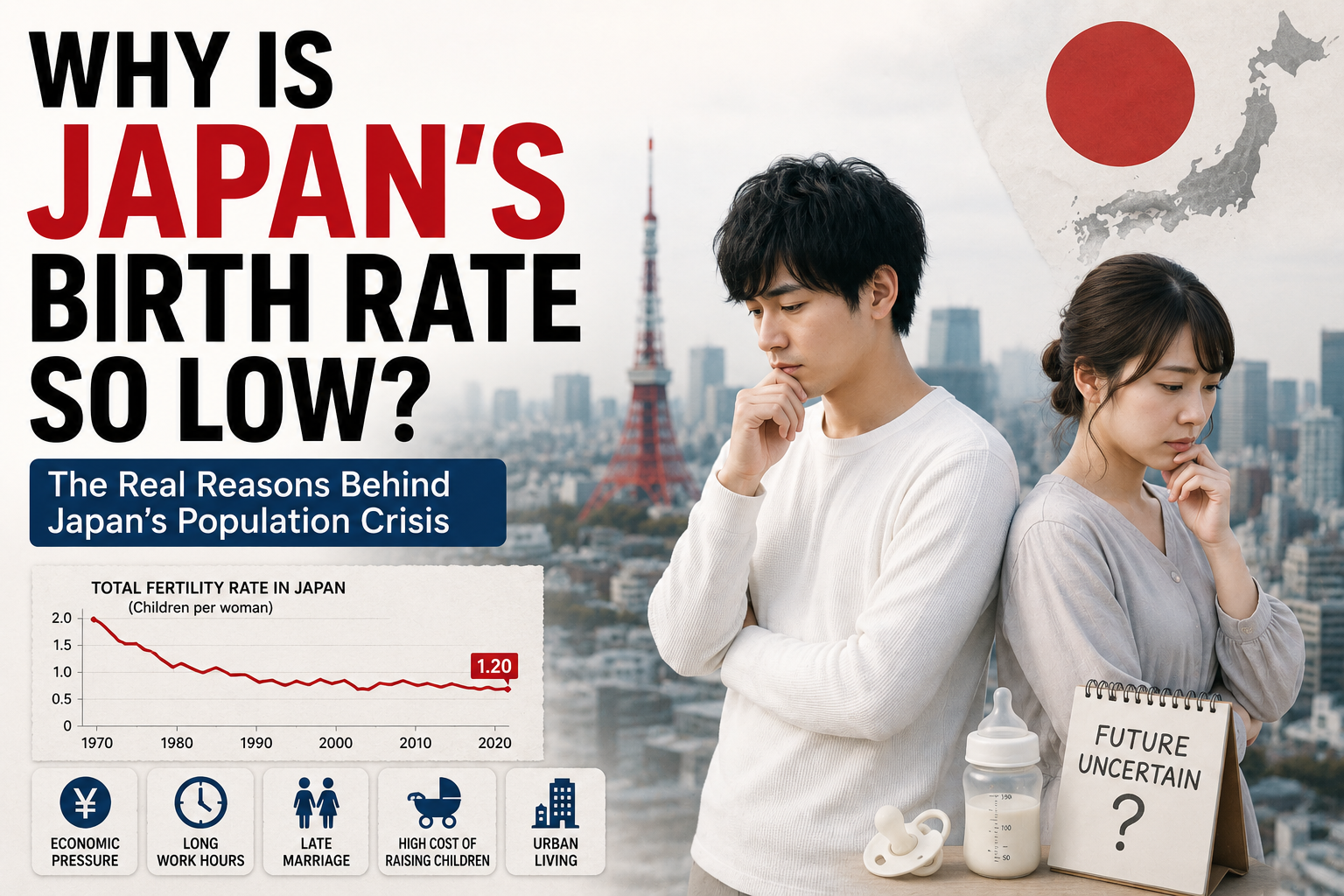
Japan’s fertility rate has fallen well below the replacement level of 2.1 children per woman required to maintain a stable population. In recent years, Japan’s fertility rate has hovered around 1.2, one of the lowest among developed nations.
At the same time, Japan’s population continues to age rapidly, creating concerns about the country’s economy, workforce, and social welfare system.
But why are fewer babies being born in Japan?
Economic Pressure Makes Having Children Expensive
One of the biggest reasons for Japan’s low birth rate is economic insecurity.
The Cost of Raising Children Is High
Many young couples believe they cannot afford to raise children comfortably. Expenses include:
- Housing costs
- Childcare services
- Education expenses
- Private tutoring and extracurricular activities
- Everyday living costs
Japanese parents often feel enormous pressure to provide the best possible future for their children, making parenthood seem financially overwhelming.
Wage Growth Has Been Slow
Although living costs have increased, wage growth in Japan has remained relatively stagnant for decades. Many young workers feel financially insecure and postpone major life decisions such as marriage and parenthood.
Fewer Japanese People Are Getting Married
One unique aspect of Japan’s birth rate problem is that most children are still born within marriage.
Marriage Rates Continue to Decline
As fewer young Japanese people get married, fewer children are born. Several factors contribute to declining marriage rates:
- Financial insecurity
- Long working hours
- Changing social values
- Difficulty finding partners
- Increased preference for single lifestyles
Because childbirth outside marriage remains relatively uncommon in Japan, declining marriage rates directly impact birth rates.
People Are Marrying Later
Even those who choose marriage often wait until their 30s. Delayed marriage naturally shortens the period during which couples are likely to have children.
Japan’s Work Culture Makes Family Life Difficult
Japan’s demanding work culture is another major factor.
Long Working Hours Reduce Family Time
Many employees work long hours and commute significant distances. This creates several challenges:
- Less time to meet potential partners
- Difficulty balancing work and childcare
- Increased stress and fatigue
- Limited opportunities for family life
For many young adults, having children appears incompatible with maintaining a successful career.
Women Face Additional Challenges
Japanese women today are highly educated and increasingly career-oriented. However, balancing professional ambitions with traditional expectations surrounding motherhood remains difficult.
Some women delay or avoid having children because they fear:
- Career interruptions
- Reduced earning potential
- Unequal household responsibilities
- Limited childcare support
Changing Attitudes Toward Marriage and Family
Japanese society has undergone significant cultural changes over the past several decades.
Marriage Is No Longer Required for Happiness
Previous generations often viewed marriage and parenthood as essential life milestones. Younger generations increasingly prioritize:
- Personal freedom
- Career goals
- Financial independence
- Hobbies and travel
- Self-fulfillment
As attitudes toward happiness evolve, fewer people feel pressured to start families.
More People Are Choosing to Remain Child-Free
Some young Japanese adults consciously decide not to have children. For them, remaining child-free represents a lifestyle choice rather than a social problem.
Urban Living Makes Raising Children More Difficult
Japan’s population is concentrated in major cities such as Tokyo and Osaka.
Small Homes and High Costs
Urban families often face:
- Expensive housing
- Limited living space
- Long commutes
- High childcare costs
- Competitive educational environments
These factors make raising multiple children especially challenging.
Is Japan’s Population Crisis Unique?
Japan is not the only country experiencing low birth rates.
Other developed countries, including South Korea, Italy, Spain, and China, also face declining fertility rates due to similar economic and social changes.
However, Japan’s situation is particularly severe because:
- Immigration remains relatively low.
- The population is aging rapidly.
- Birth rates have remained low for decades.
As a result, Japan has become one of the world’s most closely watched demographic case studies.
What Is the Japanese Government Doing?
The Japanese government has introduced various policies to encourage childbirth, including:
- Financial support for families
- Expanded childcare services
- Parental leave programs
- Marriage support initiatives
- Housing assistance for young families
Despite these efforts, birth rates have continued to decline, suggesting that deeper social and economic issues remain unresolved.
Can Japan Reverse Its Low Birth Rate?
There is no simple solution.
Experts argue that increasing birth rates would require major reforms, including:
- Higher wages
- Better work-life balance
- Affordable housing
- Expanded childcare support
- Greater gender equality
- Reduced economic uncertainty
Without structural changes, Japan’s population decline is likely to continue.
Conclusion
The answer to the question “Why is Japan’s birth rate so low?” involves much more than simply choosing not to have children.
Economic pressures, declining marriage rates, demanding work culture, changing social values, and evolving lifestyles have all contributed to Japan’s demographic crisis.
Understanding Japan’s birth rate problem provides valuable insight not only into Japanese society but also into broader demographic changes affecting many developed countries around the world.
FAQ
What is Japan’s current birth rate?
Japan’s fertility rate is around 1.2 children per woman, well below the replacement level of 2.1.
Why don’t Japanese people have more children?
Economic insecurity, work culture, changing social values, and declining marriage rates are among the primary reasons.
Is Japan’s population shrinking?
Yes. Japan’s population has been declining for more than a decade due to low birth rates and an aging population.
Can Japan solve its birth rate crisis?
Experts believe that major economic and social reforms would be necessary to significantly increase birth rates.